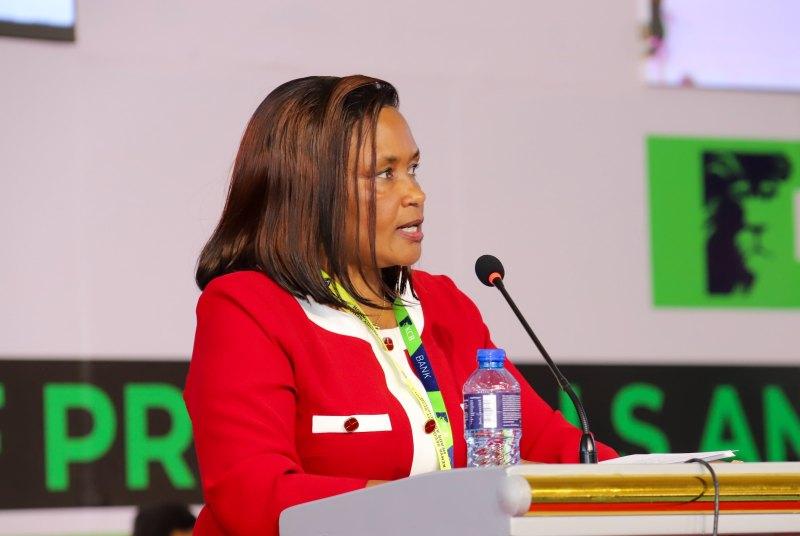
- Elgeyo Marakwet is strengthening implementation of national reforms aimed at reducing unnecessary separation of children from families.
- Stakeholders are seeking stronger coordination between schools, government agencies, communities and child protection services.
- The reforms prioritise family preservation while providing suitable family-based alternative care where children cannot safely remain at home.
Elgeyo Marakwet County has stepped up efforts to implement Kenya’s child care reforms, with stakeholders calling for stronger coordination and family support to reduce unnecessary separation of children from their families.
Officials said the reforms would require government agencies, schools, communities and families to work together to identify children at risk and ensure vulnerable households receive the support they need.
The stakeholders met in Kapsowar during a one-day engagement organised by the State Department for Children Services in partnership with the Lumos Foundation.
The meeting brought together representatives from the National Government Administration, County Government, Ministry of Education, Civil Registration Services, security agencies, probation services, faith-based organisations, community groups and the media.
Assistant County Commissioner Dickson Agoi said effective implementation would depend on collaboration between government structures and communities.
“Care reform requires all of us to work together. As administrators, we have a responsibility to ensure that vulnerable children and families are identified and linked to relevant services so that children are not separated from their families unnecessarily,” Agoi said.
Shift towards family and community-based care
County Coordinator for Children Julius Yator said the government was shifting its approach from institutional care towards strengthening families and community-based systems.
“Care reform is for the best interest of the child. The government has taken steps to ensure that children are not unnecessarily separated from their families,” Yator said.
Yator said the county has one recognised children’s home, located in Kapsowar Ward, Marakwet West Sub-County.
He said the National Care Reform Strategy for Children 2022–2032 did not call for the immediate closure of children’s homes, but sought to promote family preservation and suitable family- and community-based alternative care.
He said children currently living in residential facilities would be assessed and prepared before any transition, with the aim of ensuring they return to safe family environments or are placed in appropriate alternative family-based care.
Moses Kutere, representing the Ministry of Education, said schools could strengthen the child protection system by identifying vulnerable children early.
“The education sector is an important partner in care reform because children spend a significant amount of their time in school. Teachers can help identify children who are vulnerable and ensure that cases requiring intervention are referred to the appropriate agencies,” Kutere said.
Schools and communities have a role
At the community level, Kapsowar Location Chief Paul Kosgei urged residents to take greater responsibility for protecting children.
“Child protection begins at the family and community level. We must work together to identify families that need support and ensure children are protected, cared for and given an opportunity to grow within safe family environments,” he said.
The meeting further focused on improving referral mechanisms and inter-agency coordination so that children facing abuse, neglect, exploitation or possible family separation receive timely intervention.
Probation Officer Julius Mokua said coordination among agencies would be particularly important in ensuring children receive appropriate protection during the transition process.
Stakeholders also pointed to social protection programmes, including cash transfers, as an important tool for supporting vulnerable families and easing economic pressures that can contribute to children being separated from their families.
The National Care Reform Strategy for Children 2022–2032 is being implemented in phases across Kenya and seeks to move the child protection system from dependence on residential institutional care towards family preservation and family- and community-based alternative care.
READ ALSO: Beyond grades: How school leadership unlocks every learner’s potential
Stakeholders said continued community sensitisation and stronger links between government services and grassroots structures would be necessary to make the reforms effective in Elgeyo Marakwet.
By Kimutai Langat
Get more stories from our website: Education News
To write to us or offer feedback, you can reach us at: editor@educationnews.co.ke
You can also follow our social media pages on Twitter: Education News KE and Facebook: Education News Newspaper for timely updates.
>>> Click here to stay up-to-date with trending regional stories