- Teachers have risen from classrooms and lecture halls to occupy some of the world’s highest political offices.
- Ashford Kimani examines how educators including Julius Nyerere, John Magufuli and Mwai Kibaki moved into national leadership.
- Their stories demonstrate how skills developed through teaching can extend far beyond the classroom.
Leadership is often associated with lawyers, economists, military commanders, businesspeople and career politicians. Yet history offers another remarkable pathway to the highest offices of government: the classroom.
Across Africa, Asia and other parts of the world, men and women who once stood before learners, prepared lessons, marked books and explained difficult concepts eventually rose to become presidents and prime ministers.
Their journeys demonstrate that teaching is not merely a profession concerned with examinations and academic grades. It is an institution that develops communication, patience, organisation, critical thinking, mentorship and the ability to influence society.
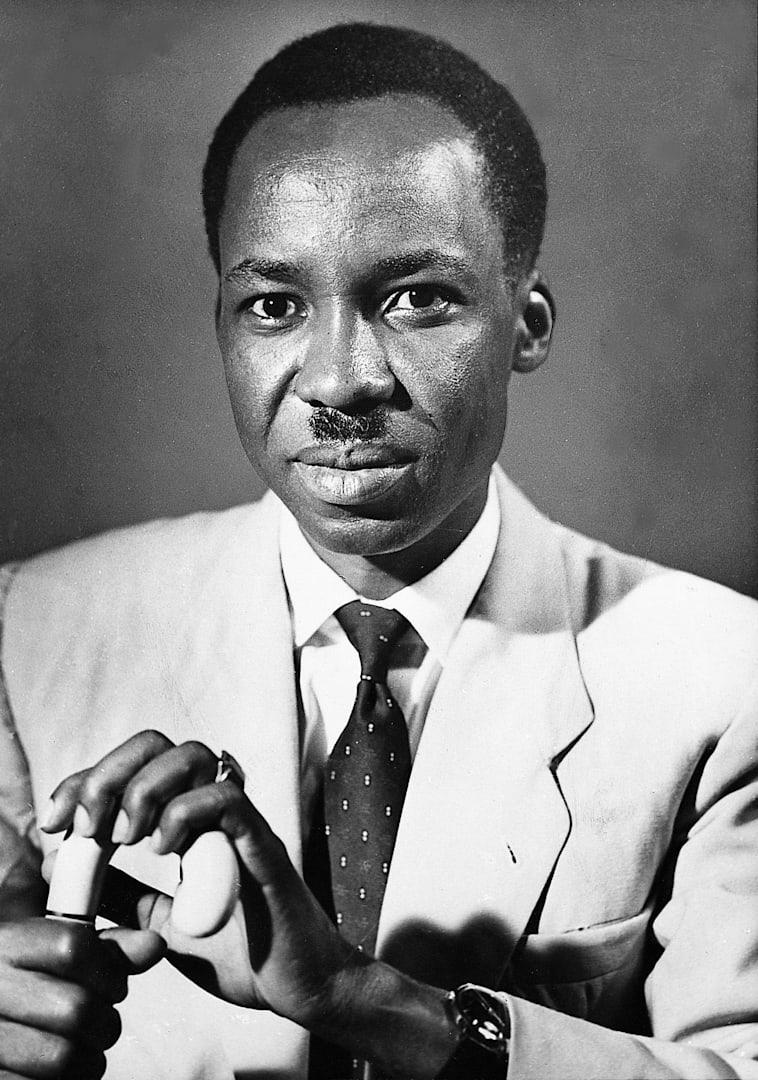
One of the most remarkable examples is Julius Nyerere, the founding President of Tanzania. Before entering politics, Nyerere trained as a teacher and taught subjects including mathematics and biology.
His teaching career influenced his understanding of society and his belief in education as a foundation for national development. After independence, he placed education at the centre of Tanzania’s nation-building programme.
Nyerere’s story is particularly relevant to mathematics teachers because it demonstrates that the analytical discipline developed through mathematics can coexist with a deep concern for human welfare, social justice and national unity.
Another outstanding example is John Pombe Magufuli, also of Tanzania. Before becoming a politician, Magufuli was a teacher of mathematics and chemistry.
His classroom experience became an important part of his public identity. He later became a Member of Parliament, minister and eventually President of Tanzania.
His rise from the classroom to State House provides a powerful reminder that teachers can possess leadership qualities that extend far beyond the school compound. The ability to explain concepts, solve problems, demand discipline and evaluate performance can be transferred to public administration and national leadership.
From teaching to independence leadership
Zimbabwe also provides a striking example through Robert Mugabe. Before becoming the country’s President, Mugabe worked as a teacher, including in Zimbabwe, Ghana and Zambia.
Politics eventually became his principal occupation, but his background as an educator remained an important part of his story.
His career illustrates how teachers can move from influencing a classroom of learners to influencing an entire generation through politics, although his long presidency and controversial legacy also demonstrate that educational achievement alone does not guarantee good political leadership.
Across West Africa, Ghana’s Kwame Nkrumah also followed an educational path. Nkrumah worked as a teacher before becoming one of the central figures in Ghana’s independence movement and eventually the country’s first Prime Minister and President.
His experience in education helped him appreciate the transformative power of knowledge and political consciousness.
Similarly, Kenneth Kaunda, Zambia’s first President, began his professional life as a teacher. He later became one of Africa’s most prominent independence leaders.
His transition from teaching to politics illustrates the important role educators played in the struggle against colonial rule.
Nigeria offers another example in Goodluck Jonathan. Before becoming President, Jonathan worked in education, including as a lecturer and education officer, after studying zoology.
He subsequently entered public administration and politics, eventually rising through the political system to become Vice-President and then President.
His journey is a reminder that working in education provides professionals with opportunities to develop public-speaking skills, confidence, interpersonal relationships and a strong understanding of young people and communities.
From university lecture halls to national leadership
The connection between teaching and leadership is not limited to Africa.
India produced a leader with a strong academic background in Manmohan Singh, who served as Prime Minister and had a distinguished career as an economist and university professor.
His academic life involved teaching, research and intellectual engagement before his entry into high-level government.
His career demonstrates another route through which educators can reach national leadership: expertise. In a complex modern state, leaders require the capacity to understand evidence, analyse competing arguments and make decisions based on long-term consequences.
Kenya, too, has experienced this connection between education and national leadership.
Mwai Kibaki, who served as the country’s third President, had an academic background and worked as an economics lecturer at Makerere University before entering politics.
His transition from university teaching to government reflected the movement of intellectuals and academics into public service.
Kibaki’s career is a reminder that the classroom can serve as a training ground for national policy-making because teachers and lecturers routinely deal with planning, assessment, research, communication and the development of human capital.
The stories of these leaders raise an important question: Why do teachers so often possess qualities that are useful in political leadership?
The answer lies partly in the nature of teaching itself.
A teacher must communicate ideas to people with different abilities and backgrounds. A teacher must manage time, resolve conflicts, motivate individuals, evaluate performance and respond to unexpected challenges.
Every school day requires hundreds of small leadership decisions.
Teachers also interact with parents, administrators, colleagues and communities. In many societies, particularly in rural areas, the teacher is among the most educated and influential members of the community.
Teaching also develops patience.
A politician may deliver one speech and leave the platform, but a teacher may explain the same concept repeatedly until a learner understands it.
That persistence can be valuable in public leadership, where major national problems rarely have immediate solutions. Teachers understand that meaningful transformation takes time. They also understand that people respond differently to the same message, and therefore effective communication requires adaptation.
Teaching alone does not guarantee good leadership
There is, however, an important caution.
Being a teacher does not automatically make someone a good President or Prime Minister.
Some former teachers have left admirable legacies, while others have attracted serious criticism.
Political leadership involves constitutional responsibility, economic management, human rights, institutional accountability and difficult ethical choices. The classroom provides valuable leadership skills, but those skills must be accompanied by integrity, humility and respect for democratic institutions.
The stories of teacher-leaders nevertheless offer a powerful message to educators everywhere.
The work of a teacher should never be viewed as insignificant simply because it happens inside a classroom.
A lesson can influence a learner’s career; a teacher can shape a generation; and a generation can eventually shape a nation.
From Julius Nyerere teaching mathematics and biology to John Magufuli teaching mathematics and chemistry, and from educators such as Robert Mugabe and Kenneth Kaunda to university academics such as Mwai Kibaki and Manmohan Singh, the classroom and lecture hall have proved to be unlikely but powerful launching grounds for national leadership.
For today’s teachers, the lesson is not that every educator should seek political office.
Rather, it is that teaching itself is leadership.
Every time a teacher inspires a learner to think critically, solve a problem, speak confidently, respect others or pursue excellence, that teacher is contributing to the future leadership of society.
Presidents and prime ministers may occupy State Houses, but many of their earliest lessons about discipline, responsibility, communication and perseverance may have been learned from teachers.
READ ALSO: CS Ogamba seeks stronger church partnership in expanding access to quality education
The road from the classroom to the highest office in the land may be uncommon, but history shows that it is real — and sometimes, it begins with something as ordinary as a mathematics lesson.
By Ashford Kimani
Ashford Kimani is a teacher of English and Literature and writes on education and social affairs.
Get more stories from our website: Education News
To write to us or offer feedback, you can reach us at: editor@educationnews.co.ke
You can also follow our social media pages on Twitter: Education News KE and Facebook: Education News Newspaper for timely updates.
>>> Click here to stay up-to-date with trending regional stories