- A new list of 242 Kenyans proposed for national hero status features prominent political, academic and sporting figures.
- Education, scholarship and research command considerable attention, with teachers, university scholars, TVET leaders and researchers among the nominees.
- Kenyans have until September 15, 2026, to lodge objections or representations before the Council prepares its final list.
The National Heroes Council has placed 242 Kenyans before the public for consideration as national heroes, drawing nominees from education, scholarship, politics, liberation, sports, arts, peacebuilding, culture, philanthropy, industry, environmental conservation and other fields.
The expansive 2026 list includes former Prime Minister Raila Odinga, former Cabinet Secretary Amina Mohammed, former Attorney-General Prof. Githu Muigai, Central Bank Governor Dr. Kamau Thugge, former Senate Speaker Ekwe Ethuro, playwright Prof. Francis Imbuga, scientist Prof. Calestous Juma, historian Prof. Bethwell Ogot and athletics stars Beatrice Chepkoech and Timothy Cheruiyot.
It also gives considerable prominence to teachers, university scholars, TVET leaders, researchers and people credited with opening educational opportunities in marginalised communities.
Kenyans now have until September 15, 2026, to scrutinise the proposed names and lodge objections or representations before the Council draws up its final list. The objections are required to be supported by sworn affidavits.
Education is one of the strongest threads running through the nominations.
Thirty-seven nominees, numbered 151 to 187, fall under the Scholarship, Professionalism and Research category, while several others in philanthropy, arts, culture, statesmanship and spiritual leadership are also recognised partly for contributions to education.
Irene Koli Kwoko is proposed for her contribution to education development, beginning as a Mathematics and Business Studies teacher before moving into TVET leadership.
The Council says she was “instrumental in shaping holistic national TVET curriculum and policy”.
Dr. Glory Kambaja Mutungi is cited for leadership that helped elevate Nairobi Technical Training Institute to national polytechnic status, while Sammy Kipkemoi Chemoiwa is recognised for advancing TVET and Competency-Based Education and Training at Rift Valley National Polytechnic.
Sophia Wambui Kimani is proposed for her contribution to pedagogical and digital transformation, including publication of The Litmus Test Grade 10 Transition to Senior School and her work in ICT integration and teacher mentorship.
Dr. Luka Yano Kuto is recognised for establishing Sambirir Secondary School in 1979 and helping establish educational institutions in Elgeyo Marakwet, while Fredrick Kosgei Kwambai is cited for scholarships and school-development initiatives at Chesewew Boys Secondary School.
Marion Mukenyi Mwaniki, an educator and ICT champion, is nominated for using technology to transform curriculum delivery and encouraging learners and teachers to embrace digital learning.
At university level, former Kisii University Vice-Chancellor Prof. John Sorana Akama is recognised for institution building and higher education leadership.
The nomination document credits him with overseeing growth from about 300 students and two degree programmes to more than 30,000 students and over 200 accredited programmes, as well as major expansion of university infrastructure.
Sir Robert Mokaya is proposed following his historic assumption of office in 2026 as the first Black President of the Royal Society of Chemistry in its 185-year history. The document says the society represents more than 60,000 chemical scientists globally.
Posthumous nominees in scholarship include renowned historian Prof. Bethwell Allan Ogot, scientist Prof. Calestous Juma, climate scholar Prof. Shem Oyoo Wandiga and former education administrator Omar Sheikh Farah Maalim.
Maalim is particularly recognised for expanding education in North Eastern Kenya. He served as a teacher, headmaster and education officer before holding senior public-service positions and is credited with founding Garissa Secondary School and North Eastern Province Girls Secondary School.
The document also identifies colonial-era Chief Odera-Akango for posthumous recognition, saying his push for formal schooling in present-day Siaya County helped make the region a major centre of education.
Raila among prominent posthumous nominees
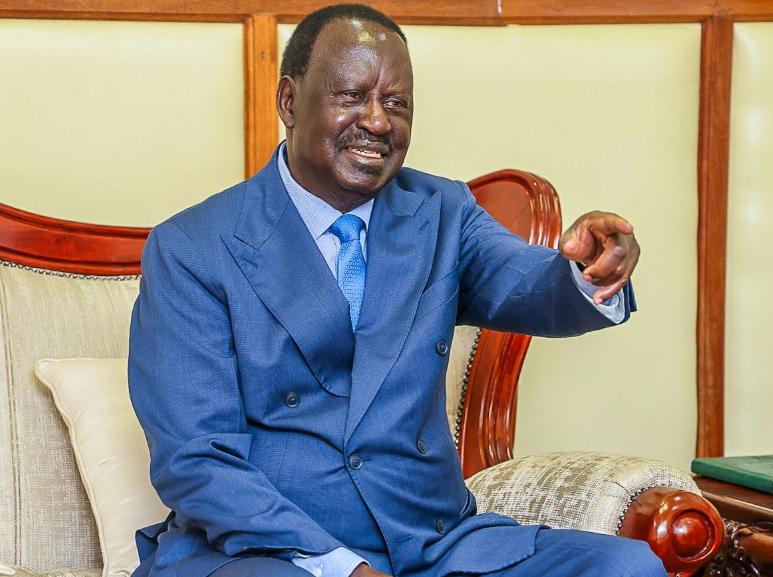
Among the most prominent names is former Prime Minister Raila Amolo Odinga, who appears in the statesmanship category.
The Council proposes to honour Raila posthumously for his role in the country’s democratic and constitutional reforms, describing him as a “statesman, a patriot and constitutional reformer”.
It cites his involvement in the struggle for multiparty democracy in the 1990s, his tenure as Prime Minister between 2008 and 2013 and his role in reforms culminating in the Constitution of Kenya 2010.
According to the document, Raila “consistently championed electoral justice, inclusivity, and the rights of the marginalized”.
Other statesmanship nominees include Amina Mohammed, Prof. Githu Muigai, Dr. Kamau Thugge and former Senate Speaker Ekwe Ethuro.
Amina is cited for a public-service career spanning diplomacy, education and international organisations. She served as Cabinet Secretary in several portfolios, including Foreign Affairs and International Trade, Education, Science and Technology, and Sports, Culture and Heritage, as well as Kenya’s Permanent Representative to the United Nations and World Trade Organization.
Prof. Muigai is proposed for recognition for his contribution to constitutional and legal reforms, including his membership of the Constitution of Kenya Review Commission and his tenure as Attorney-General from 2011 to 2018.
Ethuro, Kenya’s first Senate Speaker under the 2010 Constitution, is recognised for governance, devolution, peacebuilding and advocacy for marginalised and pastoralist communities.
The posthumous statesmanship list also includes former Bomet Governor Dr. Joyce Laboso, former MP Chelagat Mutai, Pio Gama Pinto, former Cabinet minister William Odongo Omamo, former West Mugirango MP George Morara and former Kabras Chief Clement Chimutani Kawere.
Nominees drawn from across national life
The Arts category opens the 85-page document and contains 31 nominees.
Prof. Francis Davis Imbuga is proposed for posthumous recognition for his contribution to literature, drama and theatre.
The Council cites Betrayal in the City, The Successor, Man of Kafira and Aminata, saying the playwright “used theatre as a powerful vehicle for examining Kenya’s social, political and cultural realities”.
Other nominees span gospel and secular music, theatre, film, visual art, dance, arts education and creative-industry financing.
They include Ian Mbugua, whose career covers acting, singing, directing, adjudication and education; Victor Mbuvi; contemporary artist Adrian Kinyua Nduma; creative-economy financier George Gachara; and Fernando Omondi Anuanga, recognised for fusing contemporary dance with indigenous Maasai traditions.
Posthumous arts nominees include musician Diana Chelele, broadcaster and entertainer Edward Carey Francis Kwach and Ohangla musician Maureen Achieng’ Otiato.
Raphael Kipchamba Arap Tapotuk is described in the document as the “Father of Kalenjin Music”, with his music credited with promoting education, hard work, public health, peaceful coexistence and cultural preservation.
The Cultural Values and Practices category features 12 nominees, including people safeguarding Maragoli, Abagusii, Isukuti, Ilchamus, Kalenjin, Samburu, Gabbra and Maasai heritage.
Among them is Nemwel Mishael Mogere Atemba, whose writings document Ekegusii proverbs, poetry, traditions, values and indigenous knowledge.
Prof. Gideon Saulo Were and former Cabinet minister William ole Ntimama are proposed for posthumous recognition for cultural and historical contributions.
Thirteen nominees appear under Entrepreneurship and Industry, representing aviation, pharmaceuticals, finance, technology, agriculture, leather production, dairy farming and other sectors.
They include retired Col. Hussein Ahmed Farah and retired Major Hussein Unshur Mohammed, both associated with the establishment of BlueBird Aviation; Dr. Hitan Chhagan Majevdia of Biopharma Limited; agribusiness entrepreneur Mercy Mwende Kinyua; and Nahashon Kabiru Mungai, recognised for financial-market innovation.
Joel Onditi Odhigo is cited for AI-driven technology solutions in governance, agriculture, finance, climate and education, while Willy Kirwa is recognised for dairy farming and farmer training.
Environmental Conservation contains 13 nominees.
They include 2012 Goldman Environmental Prize winner Ikal Angelei, recognised for protecting Lake Turkana and advocating for communities dependent on the lake.
Other nominees are involved in water-catchment restoration, tree growing, agroforestry, indigenous medicinal plants, bamboo afforestation, school-based agroecology and restoration of the Cherang’any ecosystem.
John Njoroge Michuki is proposed for posthumous recognition for conservation work, including the rehabilitation of the Nairobi River and protection of forests and water towers.
Eleven nominees fall under Human Rights, with much of their work involving persons with disabilities, women, girls, children and other vulnerable groups.
The list includes Ali Abdille Abdi, who advocates for deaf learners and employment opportunities for deaf people; Margaret Mageso Chepkoech, who supports persons with disabilities; and Lucie Chogo, recognised for advocacy for children with disabilities, particularly those with cerebral palsy.
Prof. Crispin Odhiambo Mbai and human-rights lawyer Pheroze Nowrojee are proposed for posthumous recognition for their contributions to constitutionalism, devolution, democracy and human rights.
Seven nominees are listed under Indigenous Knowledge.
Their work ranges from Turkana beadwork and preservation of sacred sites to documentation of African traditions and protection of community intellectual assets.
Mercy Ekaran Adupu, for instance, is credited with training more than 5,000 women and young people in traditional Turkana beadwork.
The Liberation Struggle category recognises people associated with anti-colonial resistance, including Mau Mau supporters who supplied food, intelligence, medicine and other materials.
Cianthia Justa Kanampiu, Ng’ang’a wa Karatu and Wambaki wa Kiguru are among the nominees, alongside several posthumous freedom fighters.
The list extends beyond Mau Mau, including figures associated with early nationalist organisation and resistance to colonial policies.
Peace, reconciliation and national cohesion account for another large share of the nominations.
Five people are placed under National Cohesion and Integration, while 24 are listed under Peace Making.
They include peace actors from the Kerio Valley, Wajir, Mandera, Marsabit, Isiolo, Garissa, Tana River and communities along Kenya’s borders with Somalia and Ethiopia.
Rev. Dr. David Kipsoi Kiptalai is recognised for inter-ethnic dialogue involving Pokot and Marakwet communities and efforts to persuade armed groups to surrender weapons.
Cosmas PChumba is recognised for undertaking a 500-kilometre peace walk through West Pokot, Baringo, Elgeyo Marakwet and Eldoret to campaign against banditry and violence.
The category also includes elders, religious leaders, journalists, community organisers and former administrators who have mediated clan and ethnic conflicts.
Twenty-two nominees fall under Philanthropy, with education featuring prominently in their citations.
Viola Jemutai Barsulah supports school uniforms, feeding programmes and child-safety campaigns; Jackline Saleiyan’s “A Pack A Month” programme distributes sanitary pads to keep girls in school; while Magdalene Jelagat Chemirmir provides scholarships to disadvantaged children through Kiram Academy.
Wajir High School Principal Kassim Farah Adan is credited with mobilising Sh113 million for school infrastructure, including an ICT hub, library, laboratories, mosque, borehole, perimeter wall and improved kitchen and dining facilities.
One particularly striking posthumous nomination is Cecilia Wanjiku, whom the document says died while trying to rescue fellow students during a dormitory fire at Utumishi Girls Academy.
Her citation describes her actions as an example of “courage, sacrifice and unwavering concern for others”.
Thirteen people are listed under Spiritual Leadership, covering Christian, Muslim and Hindu communities.
They include Rev. Fr. Fredrick Mutinda, Mohamed Abdikeir, Dr. Stanley Wanyangu Mukolwe, Nehemiah Moriasi Oriku, Sujatha Kotamraju and Bishop Dr. Luka Cheruiot Kimaiyo.
Bishop Alexander Muge and Dr. Ernie Steury, the pioneering Tenwek Hospital physician, are proposed for posthumous recognition.
Sports has 25 nominees and includes athletics, football, para-sport, chess, skating, netball, karate and sports administration.
Among the best-known is Beatrice Chepkoech, recognised for her achievements in the 3,000 metres steeplechase, including her world-record performance and World Championships gold.
Timothy Cheruiyot is cited for his world and Olympic achievements in the 1,500 metres, while Paul Kipsiele Koech, Mercy Cherono, William Sigei and Reynold Cheruiyot also feature.
The nominees also include Harambee Starlets goalkeeper Annedy Kundu, head coach Beldine Odemba and Fasila Adhiambo Omondi following Kenya’s qualification for the Women’s Africa Cup of Nations.
Disability sport has a strong presence, with nominees including deaf chess player Janet Atieno, para-athlete Travis Njoroge and Michelle Chepngetich Yegon.
The 242 proposed heroes are spread across 14 categories: Arts; Cultural Values and Practices; Entrepreneurship and Industry; Environmental Conservation; Human Rights; Indigenous Knowledge; Liberation Struggle; National Cohesion and Integration; Peace Making; Philanthropy; Scholarship, Professionalism and Research; Spiritual Leadership; Sports; and Statesmanship.
The current exercise follows a nomination process opened earlier this year. The Council had invited members of the public, organisations, groups and institutions to propose individuals, with nominations closing on July 1, 2026.
But appearing on the 242-person list does not mean an individual has already been declared a national hero.
Under Section 23 of the Kenya Heroes Act, the Council must publish proposed names and summaries of their achievements and invite objections and representations from the public. After considering those submissions, it prepares a final list of people it considers qualified and forwards the names to the President for formal declaration.
The National Heroes Council says a person may be nominated by an individual, organisation, group or institution and is assessed using criteria contained in the First Schedule to the Kenya Heroes Act.
Those eventually declared national heroes are formally invested by the President on Mashujaa Day on October 20 and may receive commendation certificates and medals, while monuments, statues or symbolic tombs may also be established where appropriate.
The Council is a State corporation established under the Kenya Heroes Act No. 5 of 2014 and is mandated to identify, recommend and facilitate the recognition of national heroes.
READ ALSO: Five KMTC Board members secure fresh three-year terms as College enters centenary chapter
For the current round, members of the public have until September 15 to submit objections or representations before the Council proceeds to the next stage of determining who among the 242 nominees should ultimately be recommended for declaration as Kenya’s national heroes.
By Joseph Mambili
Get more stories from our website: Education News
To write to us or offer feedback, you can reach us at: editor@educationnews.co.ke
You can also follow our social media pages on Twitter: Education News KE and Facebook: Education News Newspaper for timely updates.
>>> Click here to stay up-to-date with trending regional stories