- KMTC programmes demonstrate that scoring below C+ does not necessarily end a learner’s healthcare ambitions.
- Hillary Muhalya explains that certificate and diploma routes provide opportunities for students with different KCSE grades.
- He cautions applicants to check individual course requirements and official KUCCPS application windows before making decisions.
Students who scored C and D in KCSE have been presented with another pathway into professional healthcare training, following a major KUCCPS opportunity involving 34 Kenya Medical Training College (KMTC) programmes.
The development has renewed hope among thousands of Form Four leavers who may have missed earlier placement opportunities or believed that their KCSE grades had effectively ended their chances of pursuing a career in the medical and health sector.
The Kenya Universities and Colleges Central Placement Service (KUCCPS) opened applications for the September 2026 KMTC intake, providing vacancies in a wide range of diploma and certificate programmes.
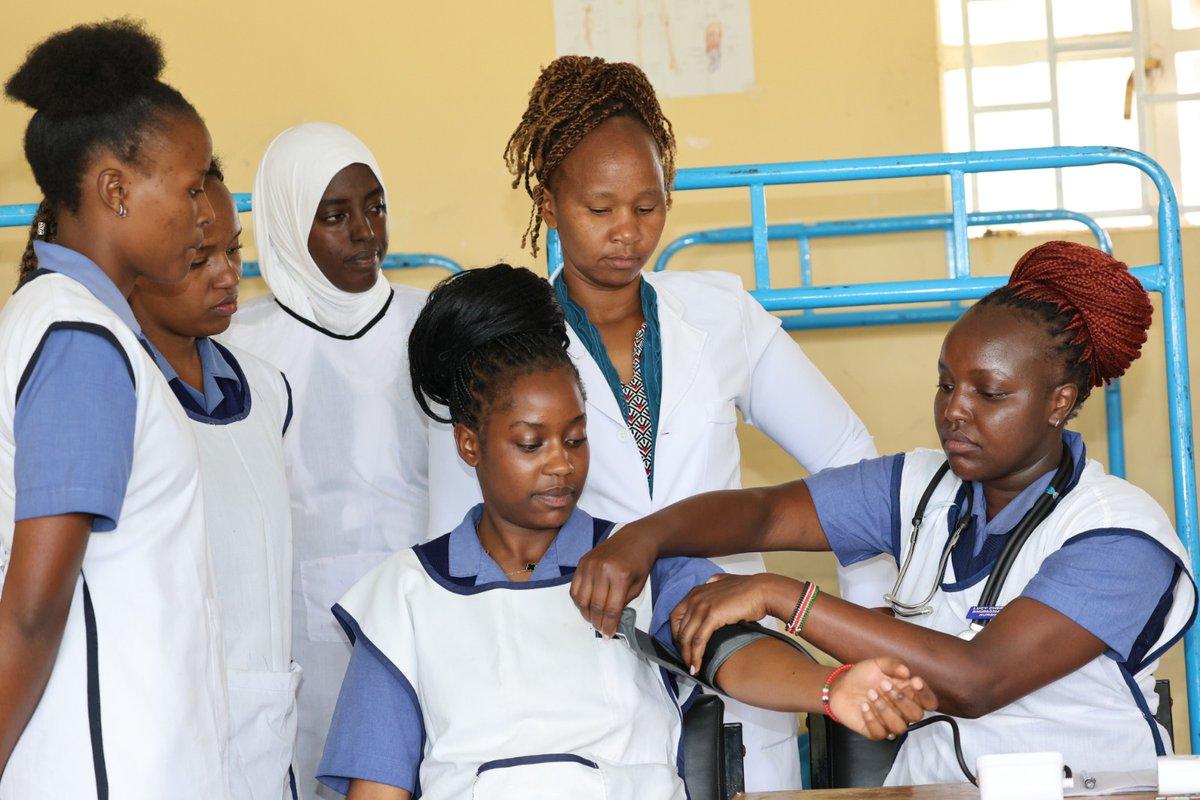
The opportunity was particularly important because KMTC offers practical, professionally oriented training in areas ranging from clinical medicine and nursing to laboratory sciences, physiotherapy, public health, medical engineering and community health.
However, students and parents need to understand an important distinction: a C or D grade does not automatically qualify a student for every KMTC programme.
Each course has its own minimum academic and subject requirements. Students therefore need to check the requirements of their preferred programme carefully before making an application.
KUCCPS announced vacancies in 34 KMTC programmes, consisting of 24 diploma programmes and 10 certificate programmes.
The diploma programmes included Clinical Medicine and Surgery, Kenya Registered Community Health Nursing, Pharmacy, Community Health, Community Oral Health, Dental Technology, Emergency Medical Technology, Health Counselling, Health Insurance Management, Health Promotion, Health Records and Information Technology, Medical Engineering, Medical Laboratory Sciences, Medical Social Work, Mortuary Science, Nutrition and Dietetics, Occupational Therapy, Optometry, Orthopaedic Technology, Orthopedic and Trauma Medicine, Physiotherapy, Public Health, Radiography and Imaging, and Speech and Language Therapy.
The certificate programmes included Kenya Enrolled Community Health Nursing, Community Health Assistant, Emergency Medical Technician, Health Insurance Management, Health Records and Information Technology, Medical Engineering, Mortuary Science, Nutrition and Dietetics, Orthopaedic Trauma Medicine and Public Health.
The wide range of programmes means students with different academic backgrounds can explore health-related careers according to their qualifications and interests.
C and D students should not give up
For years, many students have viewed a C+ as the dividing line between university and other forms of professional training.
While the C+ requirement remains important for many degree programmes, it does not mean that students who scored below C+ have no opportunities for further education.
KMTC and other professional institutions provide alternative routes through diploma and certificate programmes.
A student who scored C, C-, D+ or D should therefore not automatically conclude that a career in healthcare is impossible.
Instead, the student should check individual programme requirements.
For instance, highly competitive programmes such as Clinical Medicine and Surgery, Nursing and Pharmacy have specific academic and subject requirements. Meeting the overall mean grade alone may not be sufficient.
This is why students are being encouraged to examine their individual KCSE subject grades before selecting a programme.
The latest opportunity also places responsibility on parents, guardians, teachers and career advisers to help students make informed choices.
Rather than selecting a course simply because it sounds prestigious, students should consider their strengths, interests and the actual requirements of the profession.
A student interested in laboratory work, for example, may find Medical Laboratory Sciences more suitable than another healthcare programme.
Another learner interested in technology may consider Medical Engineering, while someone passionate about rehabilitation could explore Physiotherapy or Occupational Therapy.
Career guidance should therefore go beyond the question of whether a student qualifies and also address whether the selected programme matches the student’s abilities and long-term ambitions.
Don’t wait for the final day
Students who qualify for an application window are also advised to avoid waiting until the last minute.
Errors in personal information, incorrect course selection or failure to complete the application within the stipulated period can jeopardise an applicant’s chances.
Applicants should carefully verify their details, review available programmes and confirm the requirements before submitting their choices.
KUCCPS has also encouraged applicants who need assistance to seek guidance through its official channels and designated support centres.
There is, however, an important update for anyone planning to apply under the September 2026 intake.
The official KUCCPS application window for the KMTC programmes opened on July 24, 2026 and closed on August 11, 2026.
This means students should not assume that the application portal remains open on the strength of social-media posts or recycled articles.
As of August 31, 2026, applicants should first confirm from KUCCPS whether any subsequent reopening or additional application window has been announced before attempting to apply.
This distinction is important because misleading information about deadlines can cause students to miss genuine opportunities.
A new route beyond university
The KMTC opportunity also highlights the growing importance of professional and technical education in Kenya.
Not every KCSE candidate needs to follow the traditional university degree route immediately after secondary school.
For some students, a certificate or diploma can provide a practical foundation from which they can build professional experience and pursue further education later.
The key is choosing a programme that matches one’s academic qualifications and career ambitions.
For students who scored C and D, therefore, the message is not to give up.
Your KCSE grade may determine which doors open first, but it does not necessarily determine how far your education and career can go.
READ ALSO: Kapenguria Boys enters new era as Omayio brings fresh leadership, record of excellence
The latest KMTC opportunity demonstrates that there are multiple pathways into Kenya’s health sector—provided students understand the requirements, choose carefully and use official placement channels.
By Hillary Muhalya
Get more stories from our website: Education News
To write to us or offer feedback, you can reach us at: editor@educationnews.co.ke
You can also follow our social media pages on Twitter: Education News KE and Facebook: Education News Newspaper for timely updates.
>>> Click here to stay up-to-date with trending regional stories