- Hillary Muhalya argues that Kenya should rethink how education resources are allocated and managed at institutional level.
- He proposes needs-based funding that recognises differences among learners, programmes, schools and geographical circumstances.
- Greater financial authority for institutional heads, he argues, must be accompanied by stronger professional accountability.
Kenya’s education sector needs a fundamental financial management revolution.
The country does not necessarily need to begin by asking how much more money should be poured into education. It should first ask a more important question: How can the resources already designated for education be allocated according to need, managed professionally at institutional level and converted into better outcomes for learners?
At the heart of that reform should be a bold proposition: Heads of institutions should be empowered to manage and budget for all funds designated to their institutions, within the law, approved institutional plans and strong accountability systems.
The headteacher, principal or institutional head is closest to the classroom. They understand the institution’s daily realities, the condition of its infrastructure, the needs of learners, the strengths and weaknesses of departments, the requirements of teachers and the immediate priorities that may not be visible from offices far away.
If these leaders are held responsible for institutional performance, they should have meaningful authority over the resources required to deliver that performance.
Responsibility must go hand in hand with authority.
This does not mean giving heads a blank cheque. It means replacing excessive centralised financial control with accountable institutional autonomy.
Government should determine the national funding framework, establish equity safeguards, set standards and monitor the use of public resources. Institutions, under their governing structures, should then have meaningful responsibility for planning and managing the resources allocated to them.
That is the direction Kenya should take.
The world is moving towards needs-based funding
International experience provides powerful lessons.
The OECD identifies four major building blocks for effective school funding formulas: a basic allocation, additional funding for learner needs, funding linked to curriculum or educational programmes, and funding that recognises school characteristics such as location and operating costs. Well-designed formulas can improve transparency, efficiency and equity.
Australia provides perhaps one of the clearest examples.
Its Schooling Resource Standard (SRS) starts with a base amount and adds needs-based loadings for students with disability, Aboriginal and Torres Strait Islander students, socio-educational disadvantage and low English proficiency, as well as school-size and location loadings.
That is a powerful lesson for Kenya.
The principle is not that every school should receive exactly the same amount. The principle is that every learner deserves a basic level of public investment, while greater educational need should attract additional resources.
The Netherlands offers another important lesson through its approach to educational disadvantage.
Finland and the Nordic countries demonstrate the importance of taking demographic, socioeconomic and geographical circumstances into account. Poland offers useful lessons on equalisation between areas with different resource capacities. Britain provides another important reference through its formula-based school and academy funding arrangements, where funding is determined through established rules rather than simply through discretionary bargaining.
Kenya should not copy any of these systems wholesale. It should borrow their strongest principles and build a distinctly Kenyan model.
Kenya’s future funding model should be built around Weighted Learner Funding.
Every learner should attract a basic allocation. But that should only be the foundation.
Additional resources should follow additional need.
A Kenyan formula could therefore contain a Basic Learner Grant, Learner Equity Weight, Special Educational Needs Weight, Geographical Hardship Weight, CBE Programme Weight, School Infrastructure Grant, Equalisation Grant and Institutional Improvement Grant.
Such a model would recognise the fact that schools do not operate under identical circumstances.
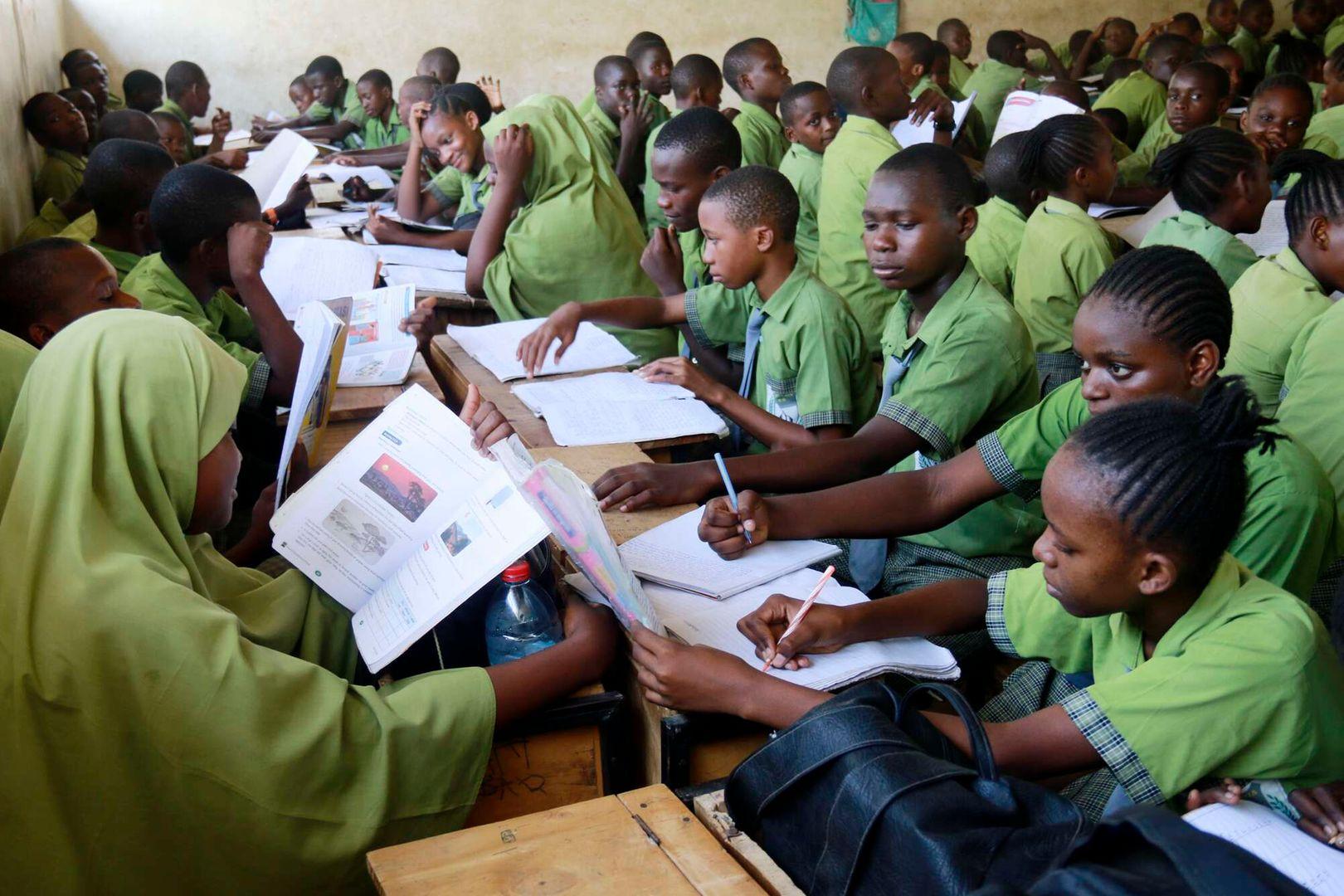
A school serving 800 learners in an affluent urban setting may have very different costs and challenges from a school serving 800 learners in a remote, economically disadvantaged or infrastructure-deficient community.
Equal numbers do not necessarily mean equal costs. And equal funding does not necessarily produce equal opportunity.
Equity sometimes requires different levels of investment.
Money should follow the learner
The central philosophy should therefore be:
Money should follow the learner, but need should determine the weight.
This would move Kenya from a blunt school-financing model towards a more sophisticated system of educational investment.
A learner facing severe socioeconomic disadvantage may require additional interventions. A learner with disability may require specialised resources. A school in a remote region may incur higher operating costs. A small school may lack economies of scale. An institution delivering specialised CBE or technical programmes may require expensive equipment.
The funding formula should recognise these realities.
Australia’s current model is instructive because its SRS explicitly includes loadings for disability, disadvantage, school size and regional or remote location.
The OECD similarly notes that location, school size and other structural factors can affect the cost of education.
Kenya can adapt this principle to its own circumstances.
Kenya should consider creating a Learner Equity Premium for institutions serving learners facing significant educational disadvantage.
The premium could target objectively identified socioeconomic and educational needs.
The purpose would not be to create permanent labels. It would be to ensure that public investment responds to genuine barriers to learning.
Additional resources should follow the learner and institution where the educational challenge is greater.
This is the essence of vertical equity: different levels of need can legitimately justify different levels of public support.
Geography should influence funding
Kenya’s geography makes this reform even more urgent.
The cost of delivering education in a remote ASAL community can be substantially different from delivering education in a densely populated urban area.
Teacher recruitment and retention can be harder. Transport costs can be higher. Infrastructure can be more expensive. Connectivity can be limited. Specialised services may be far away.
The funding formula must therefore include a Geographical Hardship Weight.
Schools in remote, sparsely populated, arid and semi-arid areas should receive additional resources according to transparent criteria.
This is not preferential treatment. It is compensation for structural differences in the cost of providing education.
Australia’s location loading follows a similar logic, recognising that regional and remote schools generally face higher costs than city-based schools.
The transition to Competency-Based Education makes this reform unavoidable.
Kenya cannot demand practical learning while financing schools as though education is simply about classrooms and textbooks.
CBE requires laboratories, workshops, digital resources, practical activities, creative learning, technology, career guidance and new forms of assessment.
Different programmes have different costs.
The funding model must therefore recognise the actual resources required to deliver them.
The OECD specifically identifies curriculum and educational programmes as one of the major components that can be built into funding formulas.
The principle should be simple:
Do not impose an educational programme without financing the resources required to deliver it effectively.
Let heads budget for the institution
This is where Kenya’s reform must become much more ambitious.
Once resources have been allocated through a transparent national formula, heads of institutions should have meaningful authority to prepare and manage the institution’s comprehensive budget.
The head should know the full financial picture.
What has been allocated? What is available? What is ring-fenced? What are the institution’s priorities? What must be maintained? What requires investment? What interventions will produce the greatest benefit for learners?
These are questions best answered by people who understand the institution from the inside.
A principal may know that the most urgent need is a laboratory. Another may know that sanitation is the priority. Another may need to invest in digital connectivity. Another may require specialised support for learners with disabilities. Another may need to strengthen practical CBE programmes.
A centrally prescribed spending plan cannot always anticipate these differences.
Institution-led budgeting can.
All designated funds should be seen as one institutional picture
Where legally permissible, schools should move towards consolidated institutional budgeting.
This does not mean abolishing statutory ring-fencing where it is required.
It means that the head and governing body should be able to see the institution’s complete resource picture and plan strategically rather than manage disconnected financial streams in isolation.
The annual institutional budget should show the resources available, their legal or policy restrictions, the institution’s priorities, planned expenditure, expected outcomes and the mechanisms for accountability.
The result would be a clear chain: Needs assessment → institutional development plan → budget → expenditure → outcomes.
That is far more strategic than simply telling institutions what they are allowed to spend without giving them sufficient room to plan.
Australia’s funding framework is especially relevant to this debate.
Its government states that approved authorities are best placed to understand the individual needs of their students and schools, and approved authorities with multiple schools can distribute Commonwealth funding among their schools according to the SRS or their own needs-based arrangements.
That principle deserves serious attention in Kenya.
Those closest to the learner often have the best information about where resources are most needed.
Kenya should therefore build a system where national government establishes the funding entitlement and equity framework, while institutional leadership determines how available resources can best support the institution’s approved educational priorities.
This is not decentralisation without controls. It is professional decision-making within a transparent national framework.
Autonomy must come with accountability
Giving heads greater financial authority naturally raises concerns about misuse.
Those concerns are legitimate.
But the answer should not be permanent centralisation. The answer should be stronger accountability.
Every institution should have an annual approved budget, governing-body oversight, digital financial records, transparent procurement, separation of financial duties, regular internal controls, independent auditing, periodic financial reporting, conflict-of-interest safeguards and firm consequences for misuse of public resources.
Technology can make this system significantly stronger.
A digital education-finance platform could allow government and oversight institutions to see allocations, budgets, expenditure and balances while allowing school leaders to make legitimate operational decisions.
The principle should be:
Give institutions room to manage, but give the public the ability to verify.
Greater autonomy must be matched by greater professional preparation.
The head of a modern educational institution should not be viewed merely as an administrator.
The head should be an educational leader, strategic planner, human-resource manager and financial steward.
Leadership preparation should therefore include budgeting, procurement, financial controls, risk management, strategic planning and data analysis.
A country cannot give institutional leaders greater financial responsibility and then fail to equip them to exercise it.
Responsibility without authority is unfair. Authority without accountability is dangerous.
Kenya needs both.
Infrastructure needs a different window
Routine institutional financing should not be expected to solve major capital deficits.
A school requiring classrooms, laboratories, workshops, libraries, sanitation facilities or major digital infrastructure needs an appropriate infrastructure-financing mechanism.
Kenya should establish a transparent School Infrastructure Grant based on objectively assessed need.
Institutions should not have to rely on political connections to obtain legitimate infrastructure.
A national database could rank infrastructure needs according to urgency, condition, enrolment and educational impact.
That would replace discretionary lobbying with evidence-based investment.
Need—not political proximity—should determine public investment.
Kenya should also consider an Institutional Improvement Grant, but should avoid crude performance-based financing.
Rewarding schools solely for examination results can penalise institutions serving the most difficult communities.
A school that moves dramatically from poor performance to strong improvement may be achieving greater transformation than a well-resourced school that simply maintains high results.
Funding should therefore recognise learning progress, retention, attendance, transition, competency development, inclusion, learner wellbeing and sustained institutional improvement.
The principle should be:
Reward excellence, but also reward transformation.
School clusters can multiply the value of public money
Kenya could further strengthen the model through school clusters.
Neighbouring institutions could share selected facilities, specialised teachers, laboratories, libraries, digital infrastructure, maintenance services and professional development programmes.
This would create economies of scale, particularly in rural and marginalised areas.
A school should not have to purchase every specialised resource independently if a neighbouring institution can share it.
The goal should be to make every public shilling work harder.
Political influence should not determine funding
A transparent funding formula and institutional budgeting model would also help protect education from political interference.
A school should not receive better treatment because it has a powerful political patron.
A head should not have to cultivate political relationships to secure legitimate educational resources.
Infrastructure should not become a political reward.
Funding should follow transparent criteria.
Need should determine investment—not political proximity.
This is particularly important during electioneering periods, when public institutions can become vulnerable to competing political interests.
Predictable, formula-based financing can help protect institutions from arbitrary decisions.
Kenya has an opportunity to create a genuinely modern education funding architecture.
From Australia, it can borrow needs-based loadings for disadvantage, disability, school size and location. From the Netherlands, it can draw lessons about directing additional resources towards educational disadvantage. From Finland and the Nordic systems, it can learn the importance of recognising local and demographic circumstances. From Poland, it can draw lessons about equalisation between areas with different resource capacities. From Britain, it can learn about formula-based funding and institutional responsibility within a regulated public system.
From the OECD, it can draw the broader framework of combining basic learner funding, needs-based funding, programme-based funding and school-characteristic funding.
But Kenya must ultimately build its own model.
The country has its own constitutional obligations, CBE ambitions, county disparities, demographic realities and development priorities.
The proposed Kenyan funding architecture
The model could therefore be structured around a Basic Learner Grant, Learner Equity Premium, Special Educational Needs Weight, Geographical Hardship Weight, CBE Programme Weight, School Size/Structural Cost Weight, Infrastructure Grant, Equalisation Grant and Institutional Improvement Grant, followed by institution-led budgeting, governing-body oversight, professional financial management, digital tracking, independent audit and measurable educational outcomes.
This would represent a major transformation.
It would move Kenya from simply allocating money to schools towards financing educational opportunity and empowering institutions to use resources strategically.
Ultimately, education financing should not be judged by the complexity of its formulas.
It should be judged by what happens to the learner.
Does the money arrive on time? Does it reach the institution? Does the institution have sufficient flexibility to address its genuine priorities? Does the learner have the resources needed to learn? Does the child with additional needs receive additional support? Does a remote school receive compensation for its structural disadvantages? Does CBE receive the resources required to become meaningful rather than theoretical? And can the public trace every shilling?
These are the real tests.
Kenya does not simply need more education funding.
It needs better-designed funding, better-targeted funding and better-managed funding.
The country should move from centralised financial control towards accountable institutional autonomy.
From fragmented allocations to coherent institutional budgets. From equal distribution to equitable investment. From political discretion to transparent formulas. From expenditure compliance alone to measurable educational impact. And from treating heads merely as custodians of institutions to recognising them as professional educational and financial leaders.
The philosophy should be unmistakable:
Money must follow the learner. Need must determine the weight. Institutions must have the authority to plan and manage their resources. Governing bodies must provide oversight. And every shilling must ultimately answer to the learner.
Kenya does not need to copy Australia, the Netherlands, Finland, Poland or Britain.
It needs to learn from them, combine their strongest ideas and build a funding model designed for Kenya.
The country’s education future will depend not only on how much government allocates, but on whether resources reach the right institution, whether institutional leaders can deploy them intelligently and whether the public can see what those resources have achieved.
That is the education funding revolution Kenya should now embrace.
Allow heads of institutions to manage all funds designated to their institutions—within the law, within approved institutional plans and under rigorous professional accountability.
READ ALSO: He taught, he led, he mentored, he served – West Pokot mourns veteran educationist Mzee Rotich
Give them the authority to plan. Give them the resources to act. Give them the responsibility to deliver. And hold them accountable for the results.
Kenya must stop merely funding schools. It must start empowering institutions to finance educational opportunity.
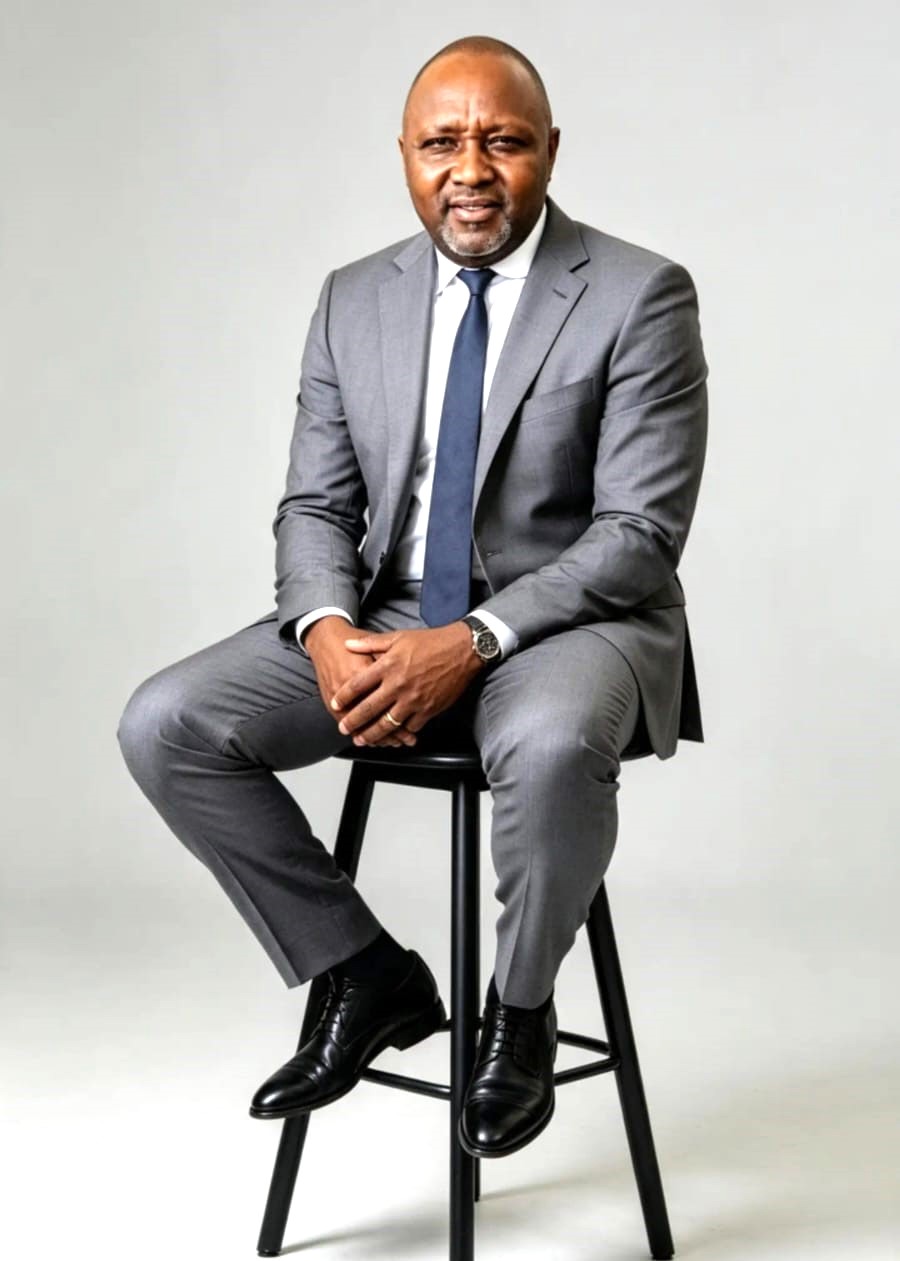
By Hillary Muhalya
Get more stories from our website: Education News
To write to us or offer feedback, you can reach us at: editor@educationnews.co.ke
You can also follow our social media pages on Twitter: Education News KE and Facebook: Education News Newspaper for timely updates.
>>> Click here to stay up-to-date with trending regional stories