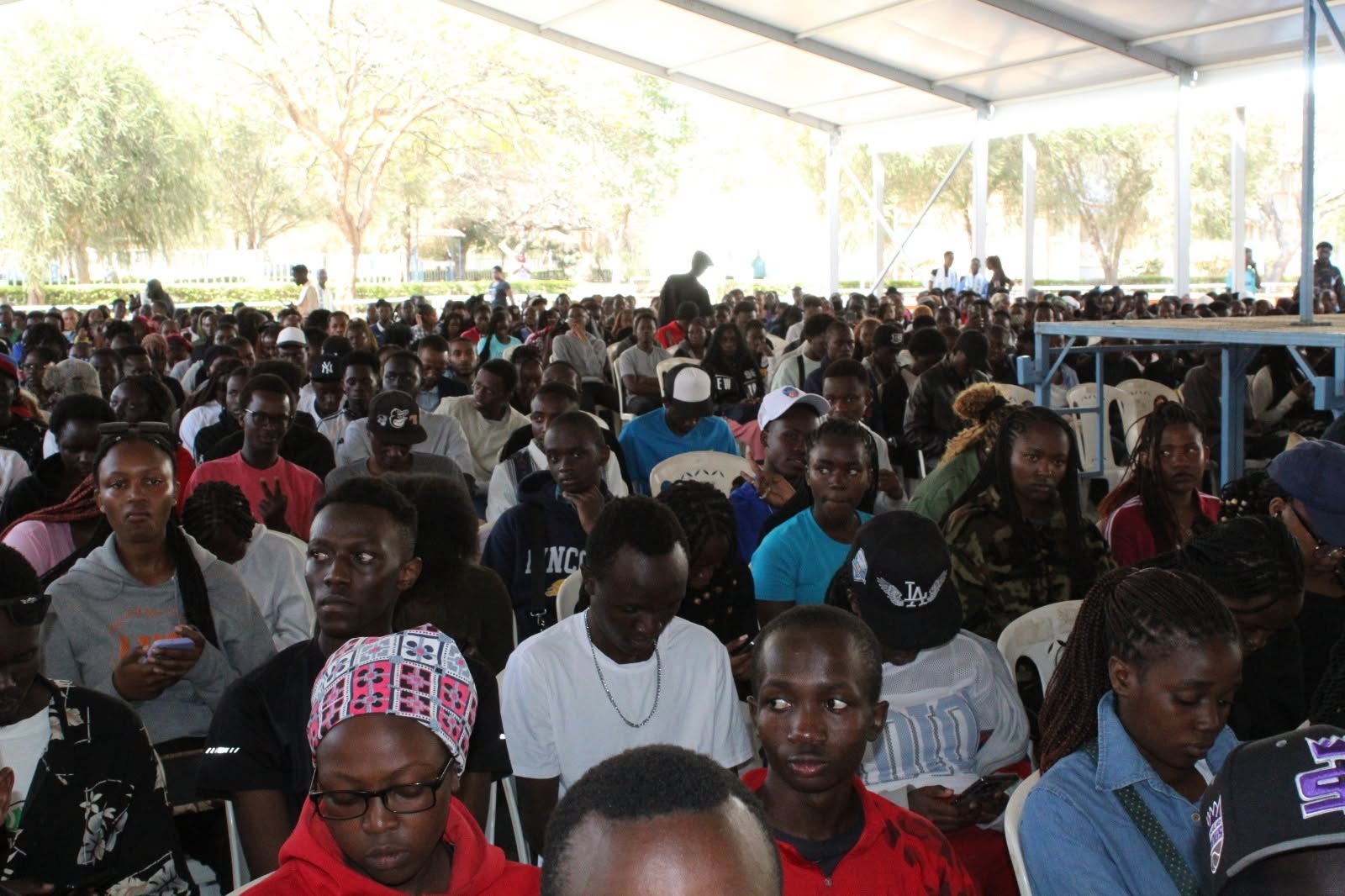
- First-year Kenyatta University students have been urged to embrace independence responsibly, with the matriculation ceremony highlighting that success now depends on self-discipline rather than external supervision.
- The KU orientation has introduced freshers to career development, ICT certification, library services, health and wellness support, and Student Affairs and security services.
- Students have been encouraged to build professional skills and networks early, choose friends wisely, and seek help when needed, rather than waiting until final year to take university seriously.
The admission letter opened the door. What happens next could determine who you become.
For years, somebody was watching. A teacher reminded you when to attend class. A parent asked whether you had completed your homework. A school timetable dictated when you woke up, studied, ate, played and slept. Then came the admission letter: Kenyatta University. Suddenly, everything changed. Nobody may knock on your door every morning to ask whether you are going to an 8 am lecture, chase you to the library, demand that you revise, or stop you from choosing the wrong friends. And nobody can make the right decisions for you.
That is the uncomfortable reality awaiting thousands of young people entering university, and it formed the backdrop of the 2026/2027 Kenyatta University matriculation ceremony held at the Graduation Square. The occasion was both a celebration and a warning: the excitement of becoming a university student comes with a level of independence that many freshers have never experienced before. Vice-Chancellor Prof. John Okumu addressed the incoming students after Ag. Deputy Vice-Chancellor (Academic Affairs) Prof. Bernard Kivunge welcomed the first-years and members of staff and invited the Vice-Chancellor to deliver the matriculation address. The ceremony came at a significant moment for the university, with Prof. Okumu also being formally installed as Kenyatta University’s seventh Vice-Chancellor at the Graduation Square.
For the freshers, however, the significance went beyond speeches, photographs and celebration. They were crossing an invisible line: on one side was a world where teachers, parents and timetables constantly reminded them what to do, and on the other was university life, where independence would increasingly determine whether they succeeded or stumbled. The orientation programme introduced the new students to the academic and support structures available to them, including career development and mentoring, ICT professional training and certification, library services, health and wellness, Student Affairs and security services. But beneath the presentations was a much bigger lesson: getting into university is an achievement; getting out successfully is another. The admission letter opens the door. What happens after walking through it is largely up to you.
ALSO READ:
Kiambu Woman Rep Wamuratha equips graduates with tools to start businesses
Freedom, Friendships and the First-Year Foundation
University gives students something they have wanted for years: freedom. You can decide when to study, whether to attend class, who to spend time with, how to use your money, and whether to seek help. But freedom without responsibility can quickly become a trap. A single decision may look harmless; repeated decisions become habits, habits shape character, and character influences outcomes. University does not remove consequences. It simply gives you more freedom to create them.
This is one of the biggest shocks of university life: nobody will follow you to class. At secondary school, missing class could attract immediate attention. At university, a lecturer may teach for two hours and leave, and whether you understood the lesson, read the prescribed material, visited the library or skipped everything is largely your responsibility. The university can provide the timetable, the lecturer and the classroom, but it cannot force you to care. Self-discipline now replaces constant supervision, and if you need somebody to push you every morning, university will expose that weakness quickly.
The first important decision a fresher makes may not be academic; it may be social. Who will you sit with, trust, and let influence you? The right friends can introduce you to mentors, internships, leadership opportunities and professional networks. The wrong circle can make absenteeism, reckless spending, academic dishonesty and destructive behaviour appear normal. You do not need to isolate yourself; you need to choose wisely. Your circle can become your launchpad or your trap.
One of the most dangerous beliefs a fresher can carry is that first year does not really matter. It does. The habits established during the first semester can follow a student throughout the degree. The student who learns to attend lectures, read consistently, manage time and ask questions early is building a foundation; the student who begins with endless postponement is also building one, and the difference eventually appears in academic performance. Do not wait for third year to become serious. Start serious. Stay serious.
ALSO READ:
Beyond the Classroom: Skills, Health and Professional Identity
A degree can open doors, but it cannot walk through them for you. The modern workplace demands more than academic qualifications, increasingly rewarding communication, critical thinking, problem-solving, digital competence, teamwork, adaptability, creativity and leadership. University should therefore not simply be about collecting examination marks; it should be about building a professional identity. Your degree answers “What did you study?” Your skills answer the more important question: “What can you actually do?”
One of the most expensive questions a student can postpone is what they are going to do after graduation. By the time the question becomes urgent in final year, some opportunities may already have passed. KU’s orientation included career development and mentoring, giving students an opportunity to begin thinking about their future early. A first-year student has an advantage a finalist cannot recover: time. Use it to seek internships, volunteer, build professional networks, find mentors, participate in research, take certifications, develop practical skills, explore entrepreneurship and build a portfolio, rather than spending four years preparing for graduation while doing nothing to prepare for life after it.
Two students can graduate with the same degree, yet one may struggle to demonstrate practical value while another quickly becomes useful to an employer, organisation or business. Sometimes the difference is digital competence, the ability to use professional software, analyse information, work with data, create digital content, communicate professionally online and adapt to new technologies. KU’s orientation included ICT professional training and certification, highlighting the importance of skills beyond the classroom.
University is also where many students discover that nobody is going to spoon-feed knowledge forever. You have to research, read, compare, question, analyse, write and defend your ideas. The library therefore becomes much more than a building filled with books; it becomes a training ground for independent thinking, teaching you to identify credible information, distinguish fact from assumption, construct an argument and learn how to learn, a skill that may prove more valuable than any single examination.
University should not be four years of misery. Make friends, join clubs and societies, play sports, attend events, explore your interests and create memories. But entertainment can become dangerous when it becomes the main purpose of university life. There is nothing wrong with enjoying university; the problem begins when entertainment becomes your only achievement. Make memories, but make progress too.
A brilliant academic plan means little when your wellbeing is neglected. University can bring academic pressure, financial difficulties, homesickness, relationship problems, family expectations and uncertainty about the future, which is why knowing where to seek help matters. The KU orientation introduced students to health and wellness support available within the university environment. Use it, speak to somebody when necessary, and do not allow a manageable problem to become a crisis because you were afraid to ask for help. Asking for help is not a weakness.
University may give you greater independence, but it does not give you immunity from consequences. Students were introduced to Student Affairs and Security Services during the orientation programme, and understanding university regulations and responsibilities matters. Do not assume that because nobody is watching, nobody cares. You can be independent without being reckless.
For Bachelor of Laws students at KU’s Parklands campus, university is also the beginning of professional formation. Law demands research, reasoning, precision, communication, discipline, integrity and attention to detail, and since a lawyer’s decisions can affect people’s liberty, property, businesses, families and futures, professional character cannot be postponed until after graduation. The advocate you hope to become tomorrow is being shaped by the student you are today.
University can sometimes make students believe they must solve everything themselves. That is a mistake. There are lecturers, academic advisers, mentors, career services, Student Affairs, health services, wellness support and the library. The smartest student is not necessarily the one who never encounters problems; it is often the student who knows where to go when a problem appears. Ask early. Seek guidance. Act before a small problem becomes a crisis.
Imagine graduating with a degree but without confidence, a certificate but without practical skills, a transcript but without professional networks, academic knowledge but no ability to communicate. That is why university should be viewed as transformation, not simply qualification. Leadership can build confidence, sports can teach teamwork, research can sharpen thinking, innovation can develop creativity, mentorship can redirect a career, student organisations can strengthen communication, and networking can open doors. The certificate may carry the university’s name, but the person holding it must carry something more: character.
Four years sounds like a lifetime to a fresher. It is not. Today you are looking for your lecture room; soon you will be sitting examinations, applying for internships, working on final-year projects, preparing for graduation, and suddenly the university gates you entered as a nervous first-year student will be behind you. The questions will change from “Did you get into KU?” (you did) to: what did you learn, what did you build, what skills did you acquire, who did you meet, who did you become, and what can you do now?
The ceremony at the Graduation Square marked a major milestone for the incoming students, but it will not determine their future. The university can provide lecturers, classrooms, laboratories, a library, technology, health and wellness support, career guidance, and opportunities for leadership, sports, networking and professional development. But it cannot attend lectures for them, read their books, sit their examinations, choose their friends, manage their money, control their habits or make their career decisions. That responsibility belongs to the student.
Ksh4 Billion Maseno School project set to replace ageing infrastructure
Thousands of young people have entered Kenyatta University together. They may share the same orientation, walk through the same gates and sit in the same lecture halls, but four years from now, their stories will be different. One may graduate with excellent grades, another may discover an entrepreneurial talent, another may become a student leader, another may build a professional network that changes their career, another may find a mentor who transforms their life, and another may struggle because they never learned how to manage freedom. The difference will not always be intelligence. Sometimes it will be discipline, choices, friends, resilience, or simply the decision to keep going when things become difficult.
And that is the uncomfortable truth every KU fresher should understand from the beginning: nobody is coming to live your university life for you. Lecturers can teach, parents can support, friends can encourage, mentors can guide, and the university can provide. But you must choose to attend the lecture, read the book, ask the question, use the library, learn technology, choose your friends carefully, choose your health, discipline, integrity, opportunity and growth. Because four years from now, nobody will care that you once stood proudly at your matriculation ceremony. They will want to know what happened after you left the Graduation Square. What did you do with the opportunity? That is the real KU test, and it starts now.
By Hillary Muhalya
Get more stories from our website: Education News
To write to us or offer feedback, you can reach us at: editor@educationnews.co.ke
You can also follow our social media pages on Twitter: Education News KE and Facebook: Education News Newspaper for timely updates.
>>> Click here to stay up-to-date with trending regional stories