- IEBC has clarified that a university degree is not currently a mandatory legal requirement for candidates seeking elective office in the 2027 General Election.
- The debate has reframed the central question for voters from academic qualification to demonstrated competence, integrity and results.
- Both President Ruto and opposition candidates have been called upon to be judged by the same standard of record, performance and accountability ahead of 2027.
Kenya’s 2027 General Election has acquired a new and potentially transformative dimension. The question is no longer simply who will run, which coalition will unite, or who will challenge whom. A much deeper question has emerged: what should qualify a Kenyan to lead? Should Kenyans look first at the university degree hanging on a candidate’s wall, be more impressed by political experience, wealth, popularity or regional influence, or should the ultimate test be something more demanding: excellence?
The debate has been reignited after the Independent Electoral and Boundaries Commission clarified the current legal position on academic qualifications for elective positions ahead of 2027. IEBC Chairperson Erastus Edung Ethekon leads a commission that has indicated a university degree is currently not a mandatory requirement for candidates seeking elective positions covered by the relevant legal provisions.
That development should not be interpreted as an attack on education. Instead, it should trigger a bigger national conversation: if the law does not currently make a university degree the compulsory gateway to elective office, what should voters demand instead? The answer should be competence, integrity, character, experience, judgment and demonstrated excellence.
There is nothing wrong with demanding educated leaders. Kenya needs people capable of understanding legislation, public finance, economics, technology, constitutional matters, international relations and the increasingly complicated machinery of government. But there is a fundamental difference between being academically qualified and being an excellent leader. A degree can demonstrate that someone completed a programme of study; it cannot guarantee that the person will protect public resources, possess wisdom or integrity, exercise sound judgment, manage a crisis, or deliver better government for ordinary citizens. A certificate tells us what someone studied. A record tells us what someone can do. That distinction should become central to Kenya’s 2027 political conversation.
ALSO READ:
Kenya deepens Australia partnership as TVETs target international skills standards
History has already challenged the degree-first argument. The world has produced influential leaders whose paths did not follow the conventional university route. Abraham Lincoln had very little formal schooling and was largely self-educated before becoming one of America’s most consequential presidents. George Washington never attended university yet became the first president of the United States. Harry Truman attended business college but did not complete a four-year degree before eventually becoming president. Winston Churchill trained at the Royal Military Academy Sandhurst rather than attending a conventional university before becoming Britain’s wartime prime minister. Former Uruguayan president José Mujica did not attend university yet became internationally recognised for his distinctive political leadership. These examples do not prove degrees are unnecessary; many outstanding leaders have also possessed excellent academic qualifications. They demonstrate something more precise: there is no single educational pathway to leadership excellence. Kenya should not become anti-degree. It should become anti-mediocrity.
This is where Kenyan voters must become much more demanding. Instead of beginning with “What degree does this candidate have?”, the voter should begin with “What has this candidate done?” What institutions have they managed? What problems have they solved? What have they built or improved? How have they handled responsibility, managed money, or treated people who disagreed with them? What did they do when things went wrong? And perhaps most important: what evidence exists that this person can successfully handle greater responsibility? Those questions are far more difficult to answer than producing a certificate.
A certificate can be displayed. A political title can be displayed. A campaign rally can be filled. Money can generate visibility, and social media can generate noise. But genuine excellence is much harder to manufacture; it leaves evidence, visible in functioning institutions, completed projects, improved services, responsible management of resources, communities transformed, jobs created and difficult decisions handled responsibly. That is the evidence voters should demand.
Yet the end of the degree-first argument must not become the beginning of a no-standards argument. A non-degree holder is not automatically incompetent, just as a degree holder is not automatically incompetent. A young politician is not automatically visionary, nor is an older politician automatically wise. A wealthy or famous politician is not automatically capable, and decades of political experience do not automatically translate into effectiveness. Everyone must sit the same examination — one built on character, competence, integrity, judgment, experience, performance and results.
Kenya must also stop treating political longevity as proof of competence. Someone can spend 30 years in politics without producing 30 years of excellent leadership; longevity is not achievement. The important question is what that experience produced — did institutions become stronger, did public services improve, did citizens benefit, were resources protected, did the leader learn from mistakes and leave the institution better than they found it? That is meaningful experience. Anything less may simply be years spent occupying an office.
All of this is unfolding as Kenya approaches what could become one of its most fiercely contested elections. President William Ruto is expected to seek another mandate, while opposition leaders work to construct a credible alternative. The opposition has no shortage of political personalities; its challenge is whether those personalities can produce one candidate with sufficient national appeal, credibility and governing capacity to challenge an incumbent. Different politicians bring different strengths — regional influence, national visibility, long political experience, professional credentials, powerful grassroots networks, but none of that automatically answers the most important question: who can actually lead Kenya excellently? That question should be applied to both sides.
The excellence argument cannot be used only against opposition candidates. President Ruto must also be judged by the same standard, and he has something challengers do not: a record in office. That record should be examined, what has worked, what has failed, what has improved, what remains unresolved, what has happened to household economic pressures, employment, public services and government accountability, and what should continue or change. The incumbent cannot simply ask Kenyans to judge the future; he must also defend the past.
Opposition politicians face an equally difficult examination. They cannot simply campaign on “We are not Ruto.” Kenyans deserve to know what they would do differently, how they would manage the economy, improve public services, create employment, protect public resources, build institutions, and who they would appoint, along with their governing philosophy and, most importantly, why Kenyans should believe they can perform better. A coalition can unite political parties. It cannot automatically create competence.
The most consequential voter in 2027 may ultimately be the Kenyan who has not yet chosen a side, one who may be tired of political theatre, unimpressed by rallies or political insults, and not particularly interested in the number of degrees a candidate holds. That voter may simply ask: can you improve my life, create jobs, improve healthcare, strengthen education, protect public money, reduce waste, make government institutions work, and create opportunities for young people? These are not questions about certificates. They are questions about performance.
The leadership question begins before voters reach the polling station; it begins with party nominations. Political parties must stop treating money, fame and mobilisation ability as substitutes for competence, and should examine integrity, competence, experience, performance, policy understanding, financial accountability, leadership character and the ability to work with others before handing out a nomination certificate. A candidate who can fill a stadium is not necessarily capable of running a government. A crowd is not competence.
Nkabune residents renew protests demanding transfer of TTI principal, deputy
This may be the most important political shift Kenya needs: the voter becoming harder to manipulate, harder to buy, harder to deceive and harder to impress with slogans. A politician should not be allowed to make ten new promises after failing to explain what happened to the previous ten. A wealthy aspirant should not automatically be considered capable, a famous candidate should not automatically be considered presidential material, and neither a degree nor its absence should automatically be treated as proof of competence or its opposite. The voter should demand evidence: show us your record, your competence, your character, your results, and only then ask for the vote.
Perhaps Kenya should approach the next election as a national leadership audit. For every serious candidate, the questions should be: what did they inherit, what did they change, what did they build or improve, what did they get wrong, did they accept responsibility, protect public resources, respect institutions, listen to criticism and treat political opponents as fellow citizens? And finally: would Kenya be better governed if this person were given more power? That should be the examination.
Kenya does not have to choose between education and excellence. It needs educated leaders, experienced leaders, professionals and practical thinkers who understand law, economics, technology and public administration, but above all, it needs people who can turn knowledge into results. Education should provide the tools, experience should sharpen judgment, integrity should restrain power, and excellence should determine whether someone deserves greater responsibility.
IEBC’s position has changed the political conversation. The degree may currently not be the compulsory legal gateway to several major elective positions in the 2027 election, but that does not lower the standard for leadership; it should raise the standard for the voter. Kenyans should not ask only “Is this person legally qualified to run?” They should ask, “Is this person worthy of our trust?” Eligibility and excellence are two different things: a person can be legally eligible and still be a terrible leader, while another with fewer academic credentials can demonstrate extraordinary competence. The voter must distinguish between the two.
Over 450 TVET staff trained on governance, financial management and student welfare
The 2027 election may eventually be framed as Ruto versus the opposition, but beneath that contest is a deeper national question: will Kenyans choose certificates, personalities, money and political noise, or demonstrated excellence? Kenya should not become anti-education. It should become anti-mediocrity. It should not reject degrees, but it should reject the belief that degrees automatically equal leadership. It should not glorify non-degree holders, but judge them by the same demanding standard. And it should not ask only who is eligible to run; it should ask who is worthy of being trusted with power. The law may decide who can run. The voter must decide who deserves to lead.
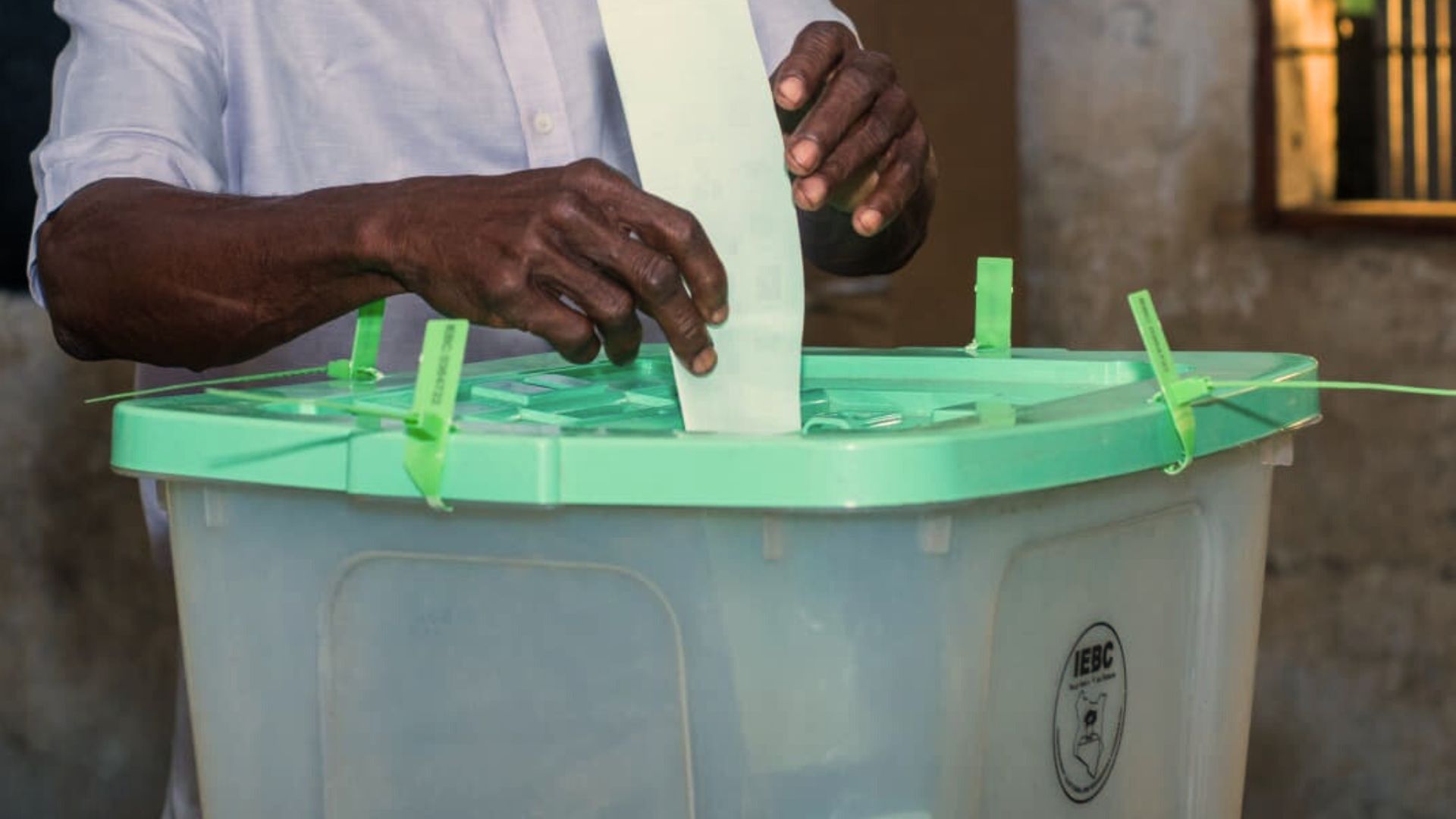
When the campaign speeches end, the rallies disappear, and the ballot paper is finally placed before the voter, the most important question should be brutally simple: show us what you have done, and then tell us why we should trust you with what comes next. Kenya will not be governed by certificates. It will be governed by decisions, and transformed not by academic titles but by people capable of turning knowledge, experience and integrity into measurable results.
The degree may not be mandatory. Excellence should be.
By Hillary Muhalya
Get more stories from our website: Education News
To write to us or offer feedback, you can reach us at: editor@educationnews.co.ke
You can also follow our social media pages on Twitter: Education News KE and Facebook: Education News Newspaper for timely updates.
>>> Click here to stay up-to-date with trending regional stories