- Astiba Kebong’o warns that wetter conditions could disrupt learning and examination access in vulnerable parts of Kenya.
- She urges education authorities to identify high-risk schools, map alternative routes and establish contingency plans before emergencies occur.
- Schools, counties, parents and examination authorities must turn weather warnings into early action that prioritises learner safety.
I have always been fascinated by documentaries that portray the extraordinary journeys some children undertake to get to school. Some of the most disturbing are those showing learners navigating treacherous terrain, crossing swollen rivers and battling unforgiving weather conditions simply to access education. The images are frightening, yet they reveal an extraordinary determination: for these children, education is worth confronting seemingly impossible odds.
But such documentaries also leave me with an uncomfortable question: how prepared are we in Kenya when nature itself becomes an obstacle to education?
The question is particularly pertinent now as the country approaches a critical examination period and weather forecasters warn of increasingly wet conditions in parts of the Greater Horn of Africa.
The World Meteorological Organization reported on July 31 that a strong El Niño is developing and is expected to strengthen during August–October 2026. More recently, on August 19, the organisation reported that the Greater Horn of Africa is expected to be warmer and wetter than usual during the final quarter of the year. The regional forecast gives a high likelihood of wetter-than-normal conditions in parts of Kenya and warns that excessive rainfall could result in flooding, loss of life, damage to infrastructure and disruption of essential services.
These are not figures to be filed away in government offices. They are early-warning signals.
The time to prepare is before the rains arrive, not after disaster strikes.
When nature interrupts education
Kenya has made significant strides in expanding access to education, but the physical environment in which learning takes place remains vulnerable to extreme weather.
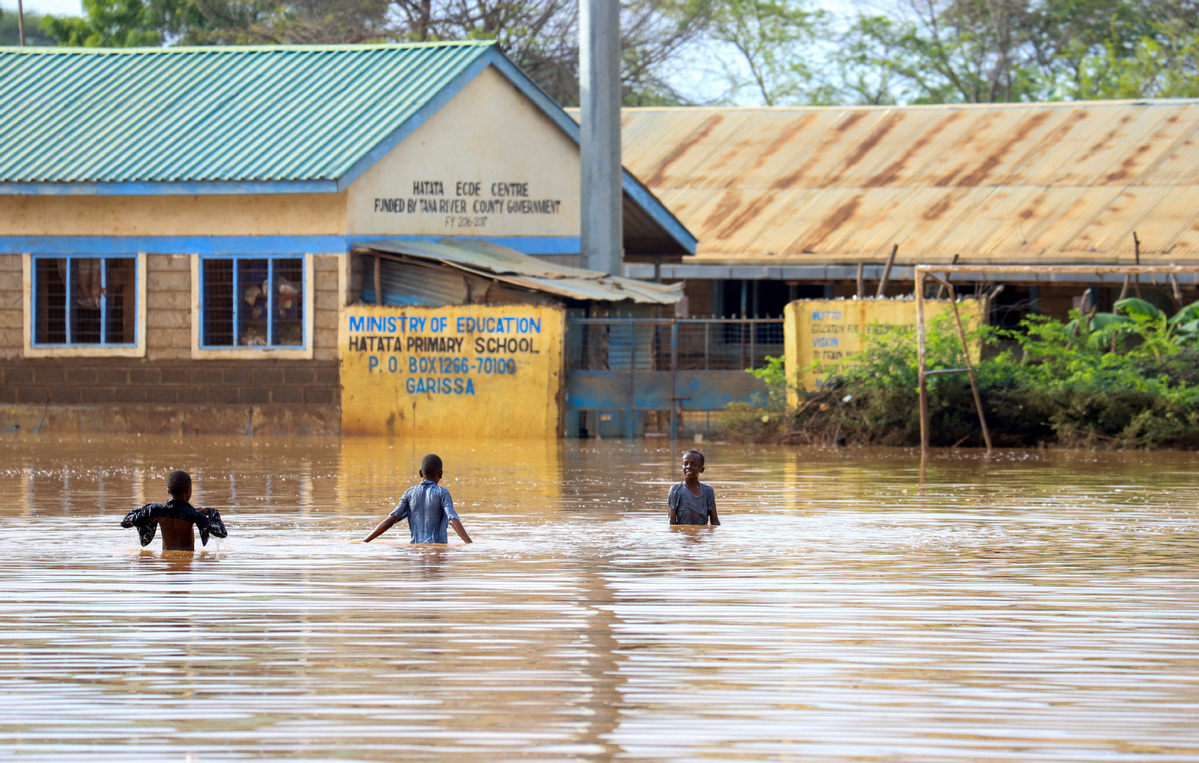
Flooded roads can prevent learners and teachers from reaching school. Swollen rivers can cut off entire communities. Bridges can become impassable. Landslides can isolate schools in hilly areas. Boarding schools can face serious safety challenges when drainage systems are overwhelmed. In some areas, families may be displaced, forcing children to abandon their homes and temporarily interrupt their education.
The situation around Lake Baringo offers a sobering reminder of how environmental changes can disrupt ordinary life. Rising lake waters have affected communities, infrastructure, homes and livelihoods. Such developments demonstrate that climate-related hazards are not distant possibilities; they can directly interfere with access to education and the safety of learners.
This becomes even more consequential during examinations.
For many candidates, an examination is the culmination of years of sacrifice. It is therefore distressing to imagine a learner failing to sit an examination because a road has been submerged, a bridge has collapsed or a school has become inaccessible.
Examination preparedness must go beyond examination papers
When we talk about examination security, our conversation often revolves around the custody of examination papers, invigilation, supervision and prevention of malpractice. These remain fundamental.
But examination preparedness should also include disaster preparedness.
An examination centre is only useful if candidates and examination personnel can safely reach it.
Over the years, Kenyans have watched examination officers and other personnel endure difficult conditions to ensure that candidates sit their papers. Their dedication deserves recognition. However, we should not build a system that depends on individuals risking their lives to solve predictable logistical challenges.
If weather forecasts indicate an increased possibility of heavy rainfall, vulnerable examination centres should be identified early. Alternative routes and venues should be mapped. Emergency transport arrangements should be considered. Communication channels should be tested.
Preparedness should become institutional rather than heroic.
Schools must know their risks
Schools in flood-prone areas cannot afford to wait for water to enter classrooms before asking what should be done.
Every institution should undertake a simple but serious risk assessment.
Which roads become impassable during heavy rains?
Which bridges are vulnerable?
Are there rivers, dams or water channels near the school?
Are classrooms, laboratories, dormitories or examination rooms located in areas susceptible to flooding?
Are drainage systems adequate?
Where would learners assemble during an emergency?
What alternative route could be used if the main access road is cut off?
Which nearby facility could serve as an alternative examination centre if the school becomes inaccessible?
These questions should be answered before the emergency.
School management should also maintain updated emergency contacts for county disaster-management teams, police, health facilities, humanitarian agencies and local administrators. Boarding schools should review evacuation procedures and emergency supplies, while learners and staff should be familiarised with emergency procedures through practical drills.
A disaster plan should not be a document that gathers dust in the principal’s office. It should be a living plan understood by the entire school community.
The Ministry and counties must work from the same script
Disaster management cannot be left to school heads alone.
The Ministry of Education, county governments, the Kenya National Examinations Council, the Kenya Meteorological Department, security agencies and local administrators must establish effective coordination mechanisms before emergencies escalate.
The World Meteorological Organization makes an important point: seasonal forecasts provide a window for early action and decision-making.
This means that weather information should trigger action.
If meteorologists identify an area at heightened risk of flooding, education officials should know which schools are likely to be affected. If a bridge is considered vulnerable, alternative routes should be identified. If a school is likely to become inaccessible, contingency arrangements should be activated early.
County governments also have a crucial responsibility. Roads, drainage, bridges, emergency response and public health are all connected to the continuity of education.
A county cannot wait until a school is surrounded by floodwater before mobilising.
Early warning must become early action
One of the greatest weaknesses in disaster management is the gap between receiving information and acting upon it.
A warning is valuable only when it changes behaviour.
The meteorological community is doing its part by providing increasingly sophisticated forecasts. WMO notes that seasonal forecasting can help authorities take early action and support decision-making.
The responsibility now lies with institutions and communities to convert that information into preparedness.
The message should therefore move from:
“Heavy rains are expected.”
to:
“What are we doing about it?”
That is the question every education stakeholder should be asking.
Parents and communities also have a role
Disaster preparedness cannot stop at the school gate.
Parents should know the safest routes their children use to school and should discourage learners from attempting to cross flooded rivers, dams or fast-moving water.
Community leaders should alert schools and authorities when bridges, roads or water bodies become dangerous.
Schools should establish reliable communication with parents so that decisions concerning movement, temporary closure or relocation can be communicated promptly.
No examination result is worth a child’s life.
No attendance register is more important than safety.
No timetable should be treated as more sacred than human life.
We should not wait for tragedy to teach us preparedness
Kenya has demonstrated remarkable resilience whenever confronted by adversity. Our examination officers have repeatedly shown commitment to ensuring that learners are not disadvantaged by circumstances beyond their control.
But resilience should not become an excuse for inadequate preparation.
We should not wait until an examination officer is stranded to begin looking for an alternative route. We should not wait until a school is flooded to establish an evacuation centre. We should not wait until a bridge collapses to ask how candidates will reach an examination centre.
Preparedness is cheaper, wiser and more humane than emergency response.
As the country enters a period in which weather-related risks could intensify, the Ministry of Education and county governments must work closely with schools and examination authorities to identify vulnerable institutions, establish contingency plans and ensure that early warnings reach those who need them most.
The warnings are already available.
The World Meteorological Organization says the Greater Horn of Africa could experience wetter-than-normal conditions during the October–December period. The underlying regional outlook, issued by ICPAC on August 18, indicates increased likelihood of wetter-than-normal conditions, with the strongest probabilities over eastern parts of the region, including eastern Kenya.
The lesson is unmistakable.
We must prepare before the water rises.
The children featured in those documentaries undertake dangerous journeys because they understand the value of education. In Kenya, we have an obligation to ensure that their determination is not undermined by preventable disasters.
The coming examination season should therefore be a test not only of our learners’ academic preparedness but also of our national preparedness.
Let every vulnerable school have a contingency plan.
Let every county identify its high-risk education zones.
Let examination authorities map vulnerable centres and establish alternatives.
Let parents, communities and schools communicate before emergencies occur.
And let us make learner safety the foundation of examination continuity.
The weather may be beyond our control, but preparedness is not.
The question is no longer whether the warnings have reached us.
READ ALSO: Learning at ECDE centres continues despite teachers’ strike, says Nyamira Education CEC
The question is whether we are ready to act before the rains arrive.
By Astiba Kebong’o
Get more stories from our website: Education News
To write to us or offer feedback, you can reach us at: editor@educationnews.co.ke
You can also follow our social media pages on Twitter: Education News KE and Facebook: Education News Newspaper for timely updates.
>>> Click here to stay up-to-date with trending regional stories