- Kenya’s CBE promises learner-centred education, but inadequate resources can fundamentally alter classroom practice.
- The article introduces “distorted pedagogy” to explain how implementation conditions can undermine curriculum intentions.
- It argues that meaningful competency development requires adequate teachers, infrastructure, technology, time and assessment capacity.
Kenya’s transition from the 8-4-4 system to Competency-Based Education (CBE) represents one of the country’s most ambitious attempts to transform the philosophy and practice of schooling. The reform seeks to move education beyond excessive emphasis on content acquisition and examination performance towards the development and application of competencies, including critical thinking, creativity, communication, collaboration, problem-solving and self-efficacy. The Basic Education Curriculum Framework consequently places the learner at the centre of the educational process and emphasises active, experiential and learner-centred approaches (Kenya Institute of Curriculum Development [KICD], 2019).
Yet, as Kenya moves into the Senior School phase of CBE implementation, an uncomfortable question deserves serious attention:
What happens to pedagogy when the conditions required for competency-based learning are absent?
The answer is more profound than simply saying that curriculum implementation becomes “difficult.” When teachers operate without adequate resources, infrastructure, specialist personnel, ICT facilities, instructional time and professional support, they are compelled to adapt curriculum intentions to the realities of their classrooms. If such adaptations become systematic, they can alter the pedagogy itself.
This article advances the proposition that a competency-based curriculum does not automatically produce competency-based pedagogy. Where the conditions required for competency-based learning are absent, teachers adapt the curriculum to the realities of their environment. When these adaptations become systematic, they can produce what this article conceptualises as distorted pedagogy—a condition in which a curriculum remains competency-based in policy while becoming increasingly teacher-centred in practice.
The argument is consistent with Kenyan scholarship identifying inadequate resources, teacher preparedness, infrastructure and implementation support as persistent challenges to CBC implementation (Muchira et al., 2023; Wambua & Waweru, 2019).
The concept of Distorted Pedagogy proposed in this article is an analytical model rather than an established theory in the international literature. It is developed to explain the gap that can emerge between curriculum prescription and classroom enactment under conditions of resource scarcity.
The model proposes the following sequence:
CBE policy intentions are dependent on required pedagogical conditions, including resources, infrastructure, teachers, ICT, time, manageable classes and assessment capacity. Resource and institutional deficits can consequently lead to teacher adaptation and coping, pedagogical distortion, increasingly teacher-centred practice, reduced learner agency and authentic engagement, and ultimately attenuated or uneven competency development.
This model is grounded in the broader understanding that curriculum implementation is mediated by teachers, school contexts and available resources. Muchira et al. (2023), for example, identify teacher preparedness, resources and systemic support as important factors influencing the implementation of CBE in Kenya.
The theoretical proposition is therefore straightforward:
Curriculum intentions do not determine classroom pedagogy independently of context; the conditions of implementation mediate the pedagogy that becomes possible.
CBE is more than a curriculum document
CBE represents more than a change in subject content or curriculum terminology. It reflects a different understanding of how learners acquire knowledge and develop competence.
The KICD (2019) framework emphasises learner-centred approaches, inquiry, collaboration, creativity, problem-solving and experiential learning. These approaches require learners to engage actively with tasks rather than merely receive information from teachers.
This means that CBE places new demands on the teacher. The teacher is expected to operate as a facilitator, learning designer, guide, assessor and provider of feedback.
However, these roles cannot be separated from the conditions in which teaching occurs. Wambua and Waweru (2019) observed that Kenyan teachers face various constraints in implementing competency-based curriculum, including resource limitations and inadequate preparation. Similarly, Muchira et al. (2023) argue that successful implementation requires appropriate teacher preparation, resources and systemic support.
Thus, CBE cannot be reduced to a policy instruction telling teachers to “be learner-centred.”
Learner-centredness is a pedagogical condition that must be enabled.
From learner-centred pedagogy to teacher-centred practice
The first major manifestation of distorted pedagogy occurs when learner-centred pedagogy gradually becomes teacher-centred pedagogy.
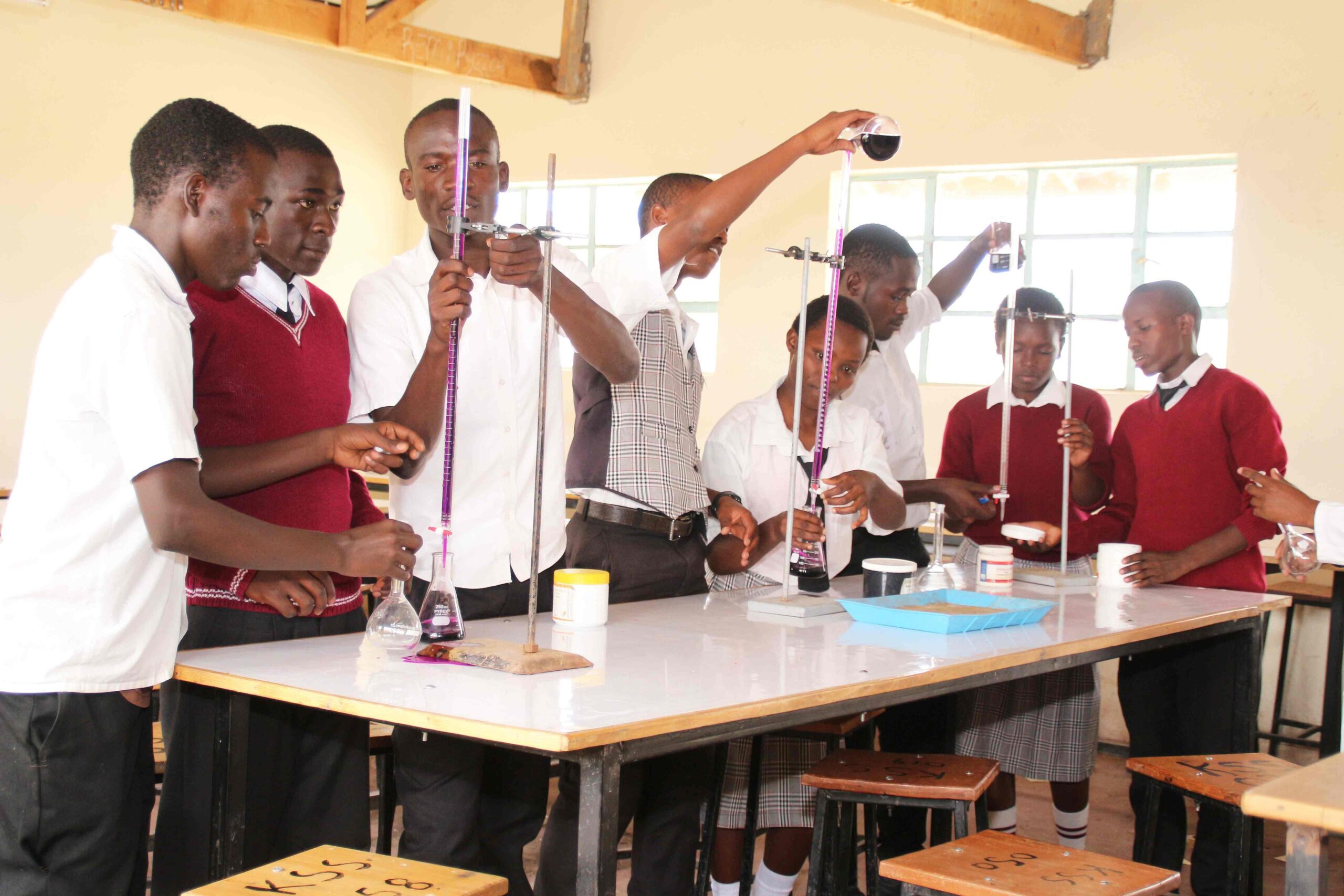
Consider a Senior School science teacher expected to facilitate inquiry-based experimentation.
In a well-resourced environment, learners can formulate questions, manipulate apparatus, collect evidence, analyse data and draw conclusions.
But what happens where there is insufficient laboratory equipment?
The teacher may perform the experiment while learners watch.
The curriculum has not changed.
The lesson may still be described as “practical.”
Yet the learner’s role has fundamentally changed: from doing to watching, investigating to receiving, and constructing knowledge to recording knowledge.
This represents pedagogical distortion.
The problem is not necessarily teacher unwillingness. Rather, the material conditions have altered what the teacher can realistically facilitate.
Research on Kenya’s competency-based reforms has repeatedly identified inadequate teaching and learning resources and infrastructure as constraints affecting implementation (Muchira et al., 2023; Wambua & Waweru, 2019).
When practical learning becomes demonstration
The laboratory therefore becomes a useful metaphor for the wider CBE project.
Practical learning requires practical conditions.
Where laboratories are inadequate, experimentation can become demonstration.
Where apparatus is insufficient, one learner or the teacher may perform the activity while others observe.
Where materials are unavailable, learners may read about an activity instead of undertaking it.
The consequence is a shift from experiential learning to observational learning.
This distinction matters because competencies are developed not merely by knowing how an activity is performed but by actually engaging in the cognitive, practical and social processes involved in performing it.
Sagwa et al. (2024) underscore the importance of infrastructure planning in Kenya’s transition to Senior School, demonstrating that expansion of competency-based education requires corresponding attention to infrastructure requirements.
Therefore, the existence of a pathway does not necessarily guarantee the existence of the pedagogical conditions necessary to deliver it.
Inquiry-based learning provides another example.
Authentic inquiry requires learners to formulate questions, investigate evidence, compare explanations and construct conclusions.
However, if learners lack access to adequate learning resources, the teacher may supply the information, questions, procedures and conclusions.
The lesson may retain the language of inquiry while losing its epistemic character.
The learner is no longer primarily a knowledge investigator but a knowledge recipient.
This is an important form of distorted pedagogy because critical thinking and problem-solving are not developed simply by telling learners to think critically. They require opportunities to encounter uncertainty, examine evidence, formulate explanations and defend conclusions.
The challenge is therefore not simply whether teachers have been instructed to use inquiry. The question is whether schools provide the resources and time that make sustained inquiry possible.
When collaboration becomes nominal
Collaboration is another important component of CBE.
Learners are expected to communicate, work in teams and solve problems collectively (KICD, 2019).
However, meaningful collaboration requires classroom space, adequate materials, sufficient time and manageable groups.
Where these conditions are absent, group work can become merely nominal.
A teacher may place learners into groups, but if one textbook is shared among a very large number of learners, or if there is insufficient space for groups to interact effectively, the collaborative task may produce limited interaction.
Thus, the form of collaborative learning may remain while its substance is weakened.
This is precisely what makes distorted pedagogy difficult to detect. A lesson may appear to follow CBE procedures while the quality of learner engagement has changed.
Class size is particularly important.
Learner-centred pedagogy requires teachers to observe learners, facilitate discussion, provide individual feedback, monitor projects and differentiate instruction.
These activities become increasingly difficult when class sizes are large.
Whole-class instruction becomes more attractive because it allows one teacher to reach many learners simultaneously.
Large classes can therefore result in reduced individual interaction, greater reliance on whole-class instruction, increased teacher control and reduced learner agency.
This does not mean that whole-class instruction is inherently incompatible with CBE. Rather, the problem arises when it becomes the dominant response to structural constraints.
The teacher-centred classroom can therefore emerge not because teachers have rejected CBE, but because structural conditions make alternative pedagogies increasingly difficult to sustain.
From authentic assessment to paper-based assessment
Assessment provides perhaps the clearest illustration of pedagogical distortion.
CBE requires evidence of what learners can do, not merely what they can recall. The KICD (2019) framework consequently gives considerable attention to formative assessment and evidence of competency development.
Authentic assessment may include projects, practical demonstrations, portfolios, presentations, observation, performance tasks and continuous feedback.
These approaches, however, are resource-intensive.
A teacher with a manageable class can observe learners performing tasks and provide detailed feedback. A teacher handling very large classes faces a different reality.
Written examinations and common tests become more administratively convenient.
Consequently, assessment can gradually shift from performance to written responses, application to recall, and demonstration of competence to reproduction of information.
This creates an assessment distortion that can ultimately reshape pedagogy itself. Teachers tend to teach what they can assess efficiently, while learners tend to prioritise what they believe will be assessed.
The danger is therefore that CBE may become competency-based in its assessment vocabulary while remaining heavily knowledge-oriented in its assessment practices.
ICT constraints and the digital pedagogy divide
The digital dimension introduces another layer of potential distortion.
CBE is being implemented in an educational environment in which digital literacy and technological competence have increasing importance. However, digital pedagogy depends upon electricity, connectivity, devices, digital resources, technical support and teacher competence.
Kinyua (2021) demonstrates that effective utilisation of open educational resources in Kenya is dependent on technological infrastructure and the capacity of teachers and other stakeholders to use those resources effectively.
Where digital infrastructure is inadequate, ICT may become peripheral rather than integral to learning.
This can create a digital pedagogical divide in which well-resourced schools provide opportunities for digital inquiry, collaboration and creation, while poorly resourced schools depend more heavily on teacher explanation and printed resources.
Thus, the same CBE curriculum can produce different pedagogical experiences depending upon the school’s technological environment.
Teacher preparedness: A professional resource
Resources should not be understood solely in physical terms.
Teacher knowledge is itself an educational resource.
Competency-based pedagogy requires teachers to understand how to design authentic learning experiences, facilitate inquiry, differentiate instruction and assess competencies.
Waweru (2018) found significant concerns regarding teacher preparedness and continuing professional support for curriculum implementation. Muchira et al. (2023) similarly identify teacher preparation as one of the central challenges affecting CBC implementation in Kenya.
Teacher professional development should therefore be understood as part of the infrastructure of CBE.
A teacher may possess a CBE curriculum design but lack sufficient preparation to translate its learning outcomes into effective inquiry, project-based learning or authentic assessment.
Consequently, curriculum knowledge without pedagogical capacity results in limited curriculum enactment.
The problem becomes even more significant at Senior School because CBE introduces greater specialisation through pathways.
STEM, Social Sciences, Humanities, Arts and Sports require different combinations of teachers, facilities, equipment, learning resources and pedagogical environments.
Sagwa et al. (2024) highlight the importance of forecasting infrastructural requirements for Senior Secondary School as Kenya moves towards full implementation of the competency-based system.
This creates an important distinction:
Pathway availability is not the same as pathway viability.
A school may officially offer a STEM pathway but lack the laboratory, equipment or specialist teachers necessary to provide rich STEM learning.
Similarly, offering Arts and Sports without adequate facilities and equipment can reduce practical learning to theoretical instruction.
The formal curriculum therefore risks becoming disconnected from the material conditions of curriculum enactment.
The teacher as the point of structural collision
The Distorted Pedagogy Model also changes how teachers should be understood.
Teachers are frequently blamed when curriculum reforms fail to achieve their intended outcomes. However, teachers operate between policy expectations and institutional realities.
The curriculum may require teachers to facilitate inquiry, while classrooms have insufficient learning materials.
The curriculum may require collaborative learning, while classrooms have insufficient space and teachers face excessive time pressure.
Teachers may be required to conduct authentic continuous assessment while simultaneously handling too many learners to assess individually.
Similarly, the curriculum may require ICT integration when connectivity and devices remain inadequate.
The teacher becomes the point at which policy ambition encounters structural reality.
It is therefore simplistic to interpret teacher-centred practice automatically as teacher resistance to CBE.
Sometimes teacher-centredness is a rational adaptation to constrained conditions.
From resource inequality to competency inequality
The most serious implication of distorted pedagogy concerns educational equity.
Imagine two Senior Schools implementing the same CBE curriculum.
School A possesses adequate laboratories, ICT facilities, learning materials, specialist teachers and manageable classes.
School B lacks these conditions.
Both schools may report CBE implementation.
Yet their learners are likely to experience fundamentally different pedagogies.
Resource inequality can consequently create pedagogical inequality, learning-experience inequality and ultimately competency-development inequality.
This is especially problematic because CBE is intended to provide opportunities for learners to develop their abilities, interests and potential.
If the conditions necessary for competency development are unequally distributed, the curriculum may unintentionally reproduce the inequalities it seeks to overcome.
The danger of administrative compliance
One of the greatest dangers in curriculum reform is confusing formal compliance with pedagogical transformation.
A school may possess curriculum designs, schemes of work, lesson plans, competency records, assessment instruments, pathway structures and evidence of teacher training.
Yet none of these automatically demonstrates that learners are experiencing competency-based pedagogy.
The decisive question should be:
What are learners actually doing in the classroom?
Are they investigating?
Are they experimenting?
Are they solving authentic problems?
Are they collaborating?
Are they creating?
Are they explaining and defending their ideas?
Or are they predominantly listening, copying, memorising and reproducing?
The answer provides a much stronger indication of whether CBE has become a pedagogical reality.
A new way of evaluating CBE
The Distorted Pedagogy Model therefore suggests that Kenya should evaluate CBE implementation at three interconnected levels.
Level 1: Policy implementation
Has the curriculum been adopted?
Level 2: Institutional implementation
Do schools possess the teachers, infrastructure, materials, technology and organisational conditions necessary to implement it?
Level 3: Pedagogical enactment
What are teachers and learners actually doing?
The third level is ultimately the most important.
A curriculum can succeed at Level 1 and partially succeed at Level 2 while failing at Level 3.
This is the point at which curriculum reform can become pedagogical distortion.
What Kenya must do
Kenya’s response should therefore go beyond urging teachers to embrace learner-centred approaches.
First, resource allocation should be aligned with pedagogical requirements. Laboratories, workshops, libraries, ICT facilities and specialised spaces should be treated as essential components of CBE rather than optional additions.
Second, teacher recruitment must accompany pathway expansion. Offering specialised pathways without adequate specialist teachers risks creating pathways that exist primarily on paper.
Third, professional development must become continuous and practice-oriented. Teachers need sustained opportunities to design projects, facilitate inquiry, differentiate learning and conduct authentic assessment.
Fourth, class size must be treated as a pedagogical variable, not merely an administrative statistic.
Fifth, assessment reform must be supported by realistic workload conditions. Teachers cannot be expected to conduct sophisticated performance-based assessment without adequate time and staffing.
Finally, Kenya should adopt an equity-sensitive approach to financing. Schools with greater resource deficits require greater support if learners are to have reasonably comparable opportunities for competency development.
Conclusion: CBE must become a pedagogical reality
Kenya’s CBE reform should ultimately be judged not merely by the curriculum documents it has produced but by the pedagogical experiences it creates for learners.
The central argument of the Distorted Pedagogy Model is that a curriculum does not operate in a vacuum.
A competency-based curriculum requires competency-enabling conditions.
Where those conditions exist, the curriculum can produce inquiry, collaboration, experimentation, creativity, problem-solving and learner agency.
Where those conditions are absent, teachers adapt.
And when those adaptations become systematic, pedagogy can become distorted.
The result is the central paradox facing Kenya’s Senior Schools:
The curriculum may remain competency-based in policy while becoming increasingly teacher-centred in practice.
This should not be interpreted simply as evidence that teachers have failed to embrace CBE. It may instead be evidence that the education system has asked teachers to enact a pedagogy for which it has not consistently provided the necessary conditions.
The critical policy question is therefore no longer simply:
“Have Kenyan schools implemented CBE?”
It should be:
“Have Kenyan schools been provided with the conditions under which competency-based pedagogy can actually occur?”
READ ALSO: Third term is here: Change your approach to get better results
If the answer is no, Kenya risks achieving curriculum reform without achieving pedagogical transformation.
And that may be the most consequential implementation gap of all.
By Thomas Oduor Okothe
Get more stories from our website: Education News
To write to us or offer feedback, you can reach us at: editor@educationnews.co.ke
You can also follow our social media pages on Twitter: Education News KE and Facebook: Education News Newspaper for timely updates.
>>> Click here to stay up-to-date with trending regional stories