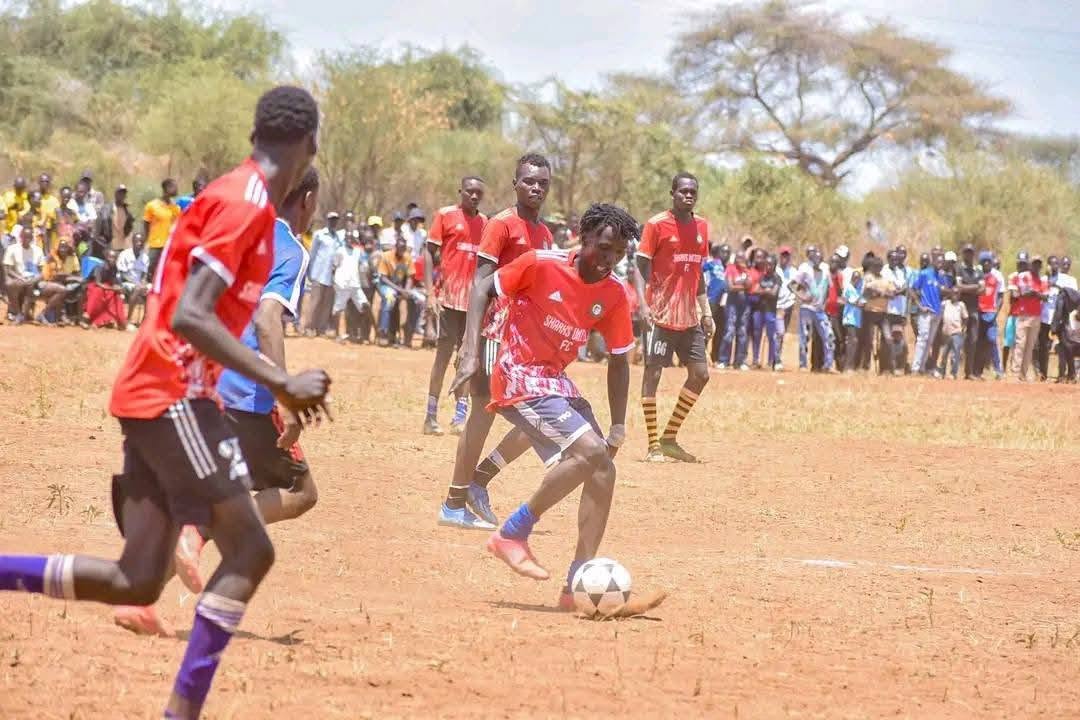
- Tot in the Kerio Valley has hosted a peace and sports extravaganza that has drawn more than 2,000 participants from nine counties.
- Organisers have used football, volleyball, traditional dancing and a marathon to build trust between communities affected by years of insecurity.
- The initiative has aimed to highlight how instability has disrupted schools, healthcare and livelihoods, framing lasting peace as the true measure of success.
More than 2,000 participants from nine counties have converged on Tot in the Kerio Valley for a major peace and sports extravaganza aimed at rebuilding trust in a region where years of insecurity have disrupted schools, healthcare, farming and daily life.
The event, which kicked off today and runs through Sunday, has drawn delegations from West Pokot, Turkana, Baringo, Laikipia, Marsabit, Isiolo, Samburu and Meru counties. West Pokot’s delegation is led by CEC Esther Chelimo and Chief Officer Lopale Siwa Ketch, with Director Jackson Alukusia also among those representing the county. Held under Operation Maliza Uhalifu (OMU), the extravaganza is organised by a committee led by Lieutenant Muthaura, with a Peace Team headed by CO Lawrence Mutwol and OMU Chairperson Job Mwetich.
Football takes centre stage in the sporting programme, with 40 teams participating, alongside volleyball, traditional dancing and a marathon. The initiative is built on the premise that enforcement alone cannot resolve the region’s insecurity, and that building trust between communities and giving young people constructive spaces can be just as important in creating conditions for lasting peace.
For years, turbulence and insecurity in parts of the Kerio Valley have exacted a painful price on communities, disrupting not only peace and security but also the foundations on which ordinary families build their lives. Schools have not been spared, healthcare has faced challenges, and businesses, farming, livestock keeping and movement have all been affected. For families in areas repeatedly exposed to insecurity, the consequences extend beyond the immediate incidents of violence, shaping where children learn, how communities access services, and whether households can pursue their livelihoods without fear.
ALSO READ:
Governor Arati launches Etaya Tournament to harness youth talents and promote unity
Education is often among the first sectors to feel the impact when insecurity becomes persistent. Children cannot learn effectively when they are afraid to travel to school, teachers cannot provide consistent instruction when insecurity makes movement or deployment difficult, and families displaced by conflict may struggle to keep their children enrolled. The result can be prolonged interruptions in learning, absenteeism and, in some cases, children dropping out altogether, deepening the gap between learners in insecure areas and those in more stable environments already facing disadvantages such as poverty and long distances to school.
Healthcare access depends just as heavily on security. Facilities may be built, but they cannot serve communities effectively if patients cannot reach them safely or healthcare workers cannot operate consistently. Insecurity can interrupt outreach programmes, emergency response and routine access to essential services, with pregnant women, children, elderly people and patients with chronic conditions particularly vulnerable when that access is disrupted.
Livelihoods suffer in similar ways. Farmers need access to their farms, pastoralists need to move livestock, traders need safe roads and functioning markets, and small businesses need customers who can move freely. Where insecurity persists, families may lose livestock and property, abandon productive activities, or spend scarce resources responding to emergencies instead of investing in education, healthcare and economic development.
It is against this backdrop that organisers see the Tot gathering as more than a sporting tournament. A football pitch can become a meeting ground, a volleyball court a place where strangers become teammates, traditional dancing a way to turn cultural diversity into celebration, and a marathon a symbol of a shared journey toward peace. The participation of nine counties is particularly significant, since insecurity does not respect county boundaries and neither should peacebuilding. Communities across the region share markets, roads, schools, cultural ties, grazing areas and family connections, meaning a security challenge in one area can quickly affect neighbouring communities, and any lasting solution requires cooperation across administrative boundaries.
ALSO READ: Teachers locked out as TSC PSSF online sensitisation portal reaches capacity
The real measure of the initiative, however, will come after the final whistle. Peace cannot be achieved through a single sports event; it requires sustained community dialogue, responsible leadership, early intervention, youth empowerment, effective security coordination and continued investment in the services that give communities a stake in stability. Schools must remain open, health facilities accessible, and roads able to support movement, while farmers, pastoralists and traders must be able to work without fear. Young people, who form a significant part of the region’s population, also need opportunities to channel their energy into productive activities rather than being drawn into cycles of conflict.
Organisers hope the extravaganza will shift the conversation in the Kerio Valley from what communities have lost to what they can build together. The ultimate victory, they say, will not be measured in goals scored, medals won, or teams crowned, but in children returning to classrooms without fear, teachers working confidently, patients reaching hospitals safely, farmers accessing their land, traders reopening their businesses and families rebuilding their lives. For a region that has endured years of turbulence, that would be the greatest trophy of all.
By Hillary Muhalya
Get more stories from our website: Education News
To write to us or offer feedback, you can reach us at: editor@educationnews.co.ke
You can also follow our social media pages on Twitter: Education News KE and Facebook: Education News Newspaper for timely updates.
>>> Click here to stay up-to-date with trending regional stories