- Government investment since 2022 has significantly expanded teaching personnel and learning infrastructure across public schools.
- More classrooms are easing infrastructure pressure as Kenya implements major changes under Competency-Based Education.
- The next test is whether increased staffing and infrastructure translate into better outcomes for every learner.
Kenya’s education sector has undergone a significant expansion since 2022, with the government reporting the recruitment of more than 100,000 teachers and the construction of over 23,000 classrooms across the country.
The investments represent an important attempt to confront two of the education system’s most persistent challenges: inadequate teaching personnel and insufficient learning spaces. For millions of learners, particularly those in overcrowded public schools, the changes could make a substantial difference.
Teachers remain the most important resource in any education system. Modern classrooms, digital devices and new infrastructure cannot, on their own, guarantee meaningful learning. A learner requires a qualified, motivated and adequately supported teacher capable of identifying individual learning needs and providing appropriate guidance.
Government figures indicate that the teacher-to-learner ratio has improved from approximately 1:45 in 2022 to about 1:29. This represents a considerable improvement and suggests that teacher recruitment has begun to ease pressure in many classrooms.
However, the journey is far from complete. The government has indicated its intention to continue recruiting teachers as it works towards a ratio of approximately 1:25. Achieving that target will be particularly important as Kenya continues to implement major reforms across basic education and accommodate growing learner populations.
Teacher numbers, however, tell only part of the story. Distribution is equally important. A national average can hide significant differences between schools and regions. Some institutions may have relatively adequate staffing while others continue to operate with serious shortages, forcing teachers to handle large classes and multiple responsibilities.
More classrooms, greater learning space
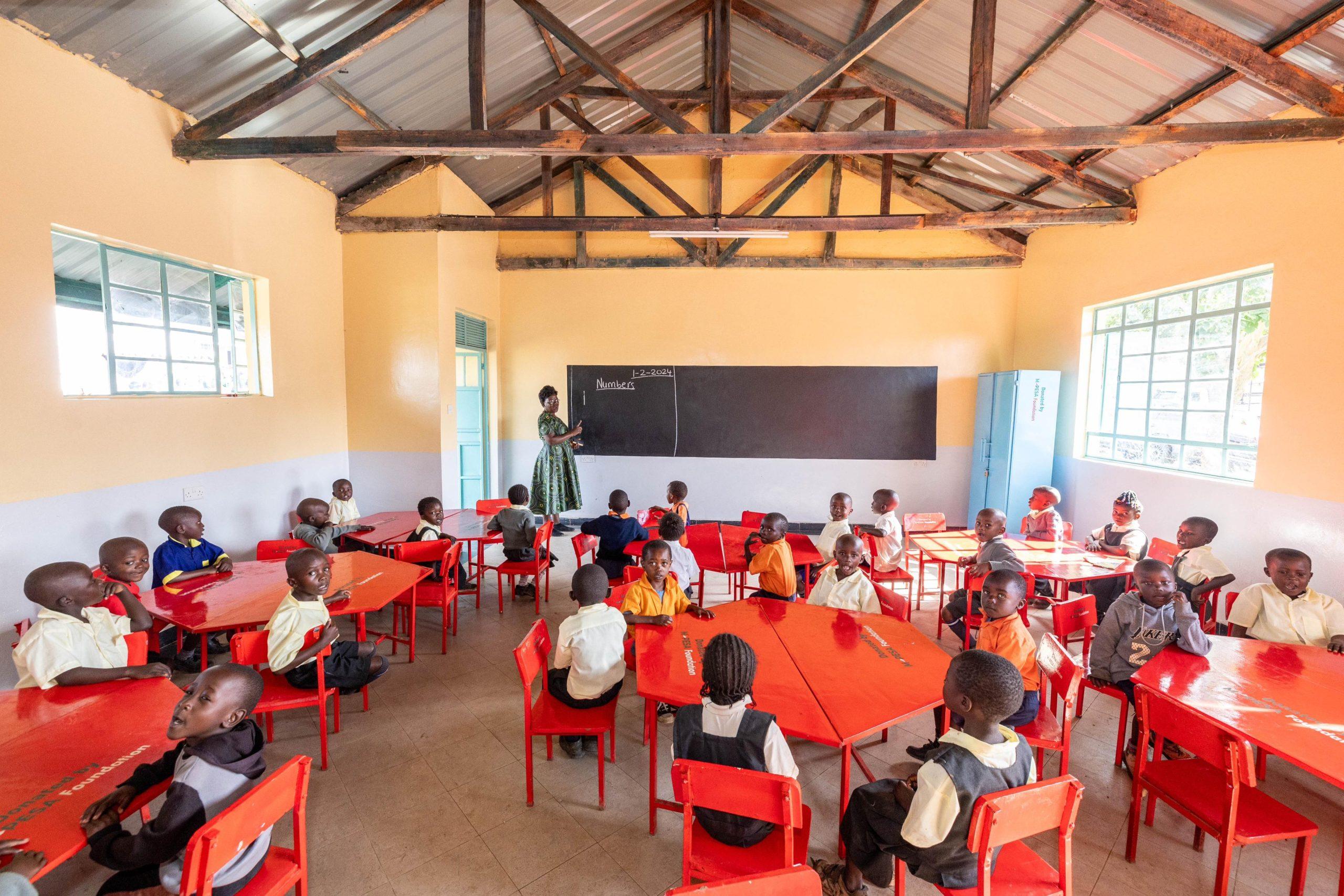
The government’s classroom construction programme is another major component of the expansion. More than 23,000 classrooms have reportedly been constructed, creating additional space for more than 900,000 learners.
The additional infrastructure comes at a critical moment. Kenya’s changing education structure has increased pressure on schools to provide adequate classrooms for learners progressing through different levels. In areas experiencing rapid population growth, new classrooms can help reduce congestion, improve the learning environment and make transitions between education levels more manageable.
But the construction of classrooms should not become an end in itself.
A classroom is only as effective as the learning environment it provides. Learners need safe buildings, adequate furniture, proper lighting and ventilation, clean water, sanitation facilities and appropriate learning materials. In the upper levels of basic education, laboratories, workshops, libraries and other specialised facilities are equally important.
Teacher numbers are only part of the equation
The quality of teaching must also remain at the centre of the education conversation.
Recruiting more teachers is a necessary first step, but teachers require continuous professional development, adequate instructional materials, reasonable workloads and supportive working environments. Their welfare directly influences morale, effectiveness and ultimately the quality of education delivered to learners.
Kenya must therefore move beyond celebrating the number of teachers recruited and classrooms constructed and begin measuring what these investments are producing inside classrooms.
Are learners reading better? Are numeracy skills improving? Are students acquiring practical competencies? Are transition rates improving? Are schools recording better completion rates? Are learners emerging from the education system with the knowledge, skills and competencies required for further education, employment and entrepreneurship?
These are the questions that should increasingly define Kenya’s education debate.
The country is also facing the challenge of ensuring that investments are equitably distributed. Communities in areas with persistent teacher shortages and inadequate infrastructure should not be left behind simply because national averages appear encouraging.
Transparency will therefore be critical. Kenyans deserve accessible information on where new classrooms have been constructed, how many teachers have been recruited and where staffing gaps continue to exist. Such information would enable citizens, education stakeholders and policymakers to identify areas requiring urgent intervention.
There is also a need for stronger coordination between infrastructure development and teacher deployment. Constructing classrooms without ensuring that they are adequately staffed risks creating buildings that cannot deliver their intended educational value. Similarly, recruiting teachers without providing sufficient classrooms, learning materials and other facilities can limit their effectiveness.
The next phase of Kenya’s education transformation must consequently be about quality, equity and accountability.
The expansion achieved since 2022 provides an important foundation. More teachers mean smaller classes and greater opportunities for individual attention. More classrooms mean reduced congestion and better learning spaces. But these gains will only become truly meaningful if they translate into improved learning outcomes.
Kenya should therefore treat teacher recruitment and classroom construction not as the destination, but as the foundation for a stronger education system.
The real measure of success will not ultimately be how many teachers have been employed or how many classrooms have been built. It will be whether a child in a public school — regardless of county, family background or economic circumstances — can enter a safe, properly equipped classroom, find a qualified and motivated teacher and receive an education that genuinely prepares them for the future.
READ ALSO: Universities Fund receives over 159,000 funding applications from first-year students
Kenya has made significant investments in expanding access. The next challenge is to ensure that every shilling invested produces better learning, stronger competencies and greater opportunities for every learner.
By Hillary Muhalya
You can also follow our social media pages on Twitter: Education News KE and Facebook: Education News Newspaper for timely updates.
>>> Click here to stay up-to-date with trending regional stories
>>> Click here to read more informed opinions on the country’s education landscape
>>> Click here to stay ahead with the latest national news.