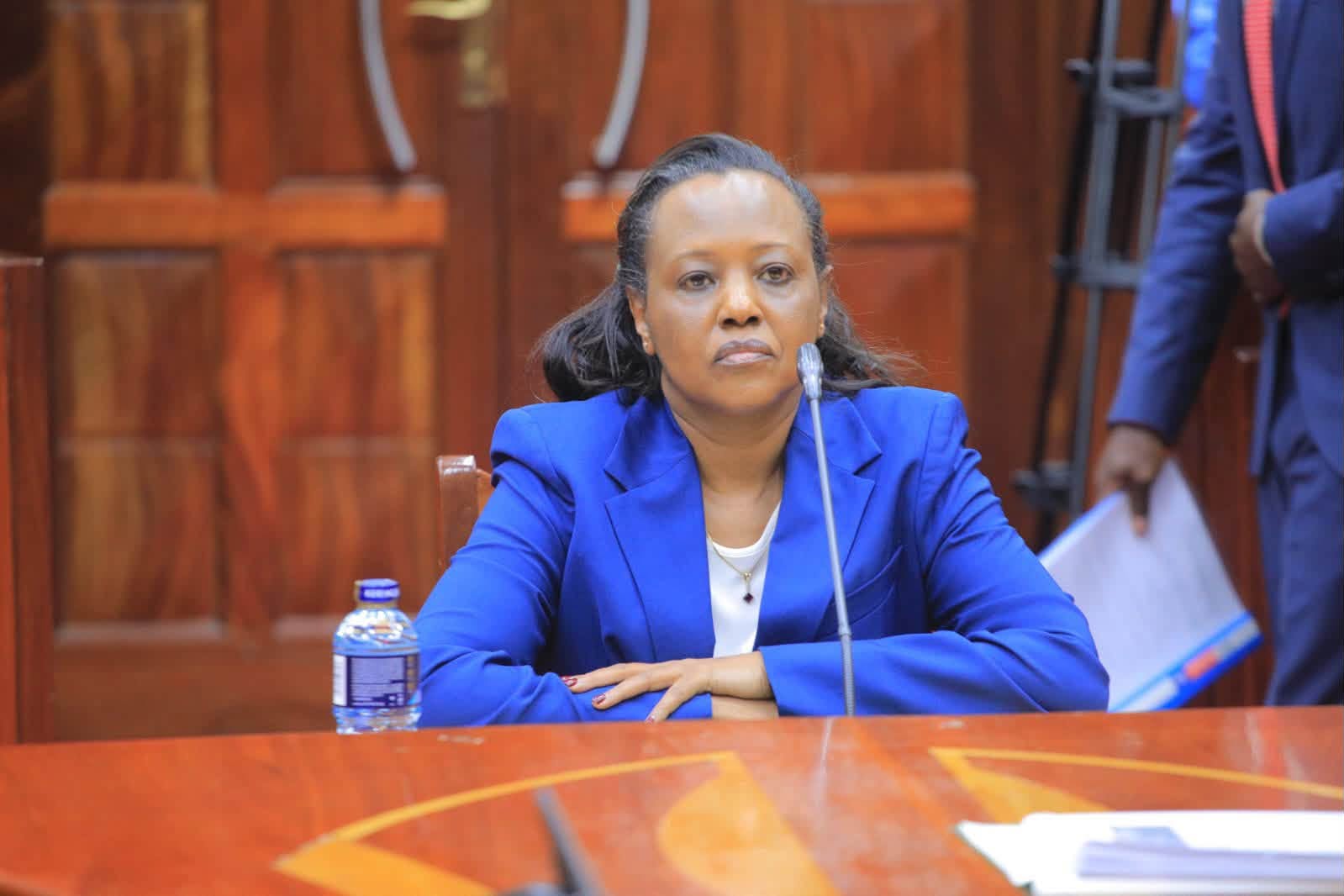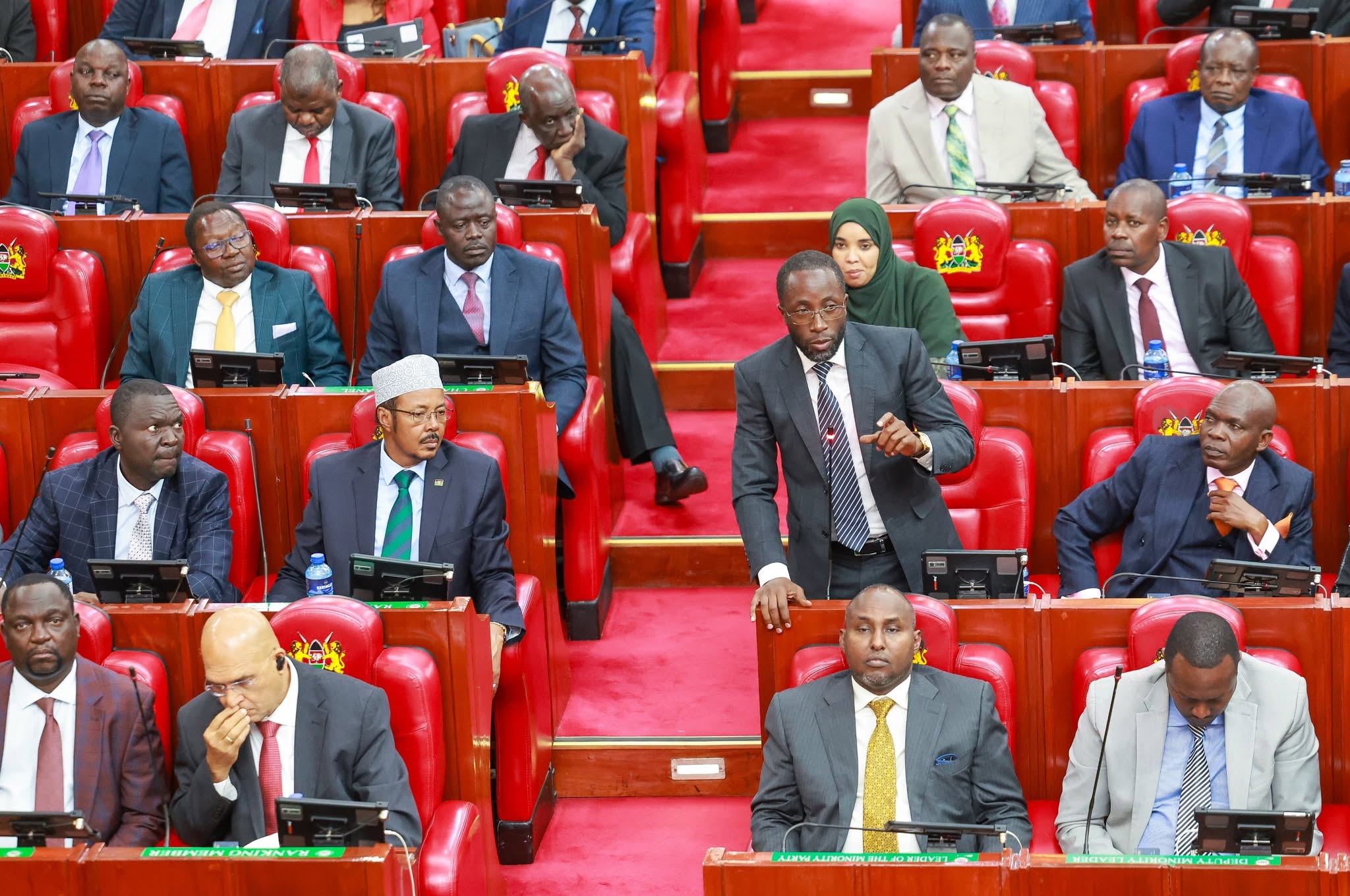
- MP Clive Gisairo has proposed limits on senior school streams, capping classes at 40 learners and restricting C1 schools to 10 streams.
- The 2026 Senior School Survey by Usawa Agenda has found C1 schools averaging 60 learners per stream in Form Two, against 43 in C4 schools.
- The survey has revealed that C1 school learners are more than eight times as likely to attain a KCSE grade of C+ and above compared with C4 school learners.
A proposal before Parliament could see the number of streams in senior schools reduced in an effort to tackle overcrowding and spread learners more evenly across institutions.
Kitutu Masaba MP Clive Gisairo wants the Ministry of Education to enforce limits on school streams from January next year, with each class restricted to a maximum of 40 learners.
Under the proposal, Cluster 1 (C1) schools would be allowed up to 10 streams, while Cluster 2 (C2) institutions would have a maximum of eight. Cluster 3 (C3) schools would be limited to five streams and Cluster 4 (C4) schools to three.
Gisairo’s motion is also seeking an infrastructure improvement programme for lower-category schools, particularly C3 and C4 institutions, to make them more attractive and reduce pressure on the few highly sought-after schools.
The MP argued that the current funding model, under which government money follows the learner, has contributed to the concentration of students in C1 schools.
ALSO READ:
Antonina Lentoijoni: The teacher-management expert at the centre of TSC’s next chapter
C1 schools are the former national schools, C2 comprises former extra-county institutions, C3 consists mainly of former county schools, while C4 largely covers community day schools. There are currently 204 public C1 schools, compared with 692 C2, 1,373 C3 and 7,234 C4 institutions, according to Ministry of Education data.
Gisairo said controlling enrolment would give teachers more opportunity to engage learners individually and provide guidance. Under his proposal, a C1 school would admit no more than 400 learners annually.
He also wants the capitation formula reviewed so that government funding takes into account the actual infrastructure capacity of each institution rather than being determined mainly by enrolment.
The proposal has attracted support from MPs who say the growing preference for top-category schools is placing pressure on teachers and facilities.
Gisairo warned that the competition for learners had also created incentives for some schools to increase enrolment beyond their capacity.
“Money follows the child; some schools have turned to exam cheating to attract more students and get more money,” he said.
He added that the increasing financial resources managed by some schools had created opportunities for abuse.
Suba South North MP Millie Odhiambo said the problem was particularly evident in C1 institutions, where large student populations were putting pressure on teachers.
ALSO READ: From Chimamanda’s Ghosts to Kenya’s Moi University pension crisis: When retirees become forgotten
“One of the schools in my constituency has seven students because everyone is running to C1 and C3 schools and then we are going to have a poor education system because teachers are exhausted, they are suffering burnout while other people are making money,” she said.
Ms Odhiambo questioned whether teachers could effectively provide individual attention and nurture values in institutions with very large enrolments.
“You can’t have schools like Alliance having more than their fair share simply because money must come with the number of students. It is not possible to inculcate values to over 500 students in a class; it’s like a political rally, yet it’s supposed to be a school,” she said.
Nominated MP Dorothy Kiara called for investment in C4 schools, arguing that improving facilities would help change parents’ preference for schools with established reputations.
“We all want to take our children to schools with a title. It’s us the elite who want our children to go to Lenana, Nairobi School and others. This puts pressure on principals of these institutions to take more than the capacity,” she said.
The parliamentary proposal comes against findings from the 2026 Senior School Survey by Usawa Agenda, which highlights significant differences between school categories.
The survey covered 1,344 senior schools and found that C1 institutions had an average of 60 learners per stream in Form Two, compared with 43 in C4 schools. The figures stood at 56 and 40 in Form Three, and 55 and 40 in Form Four.
C1 schools also averaged 8.1 streams per class, against 1.8 in C4 institutions.
Despite the congestion, learners in C1 schools were more than eight times as likely to attain a KCSE grade of C+ and above compared with those in C4 schools.
The disparity extends to learning facilities. Nearly 90 per cent of C1 schools had operational computer laboratories, compared with 18.6 per cent of C4 institutions.
Libraries were available in 79.3 per cent of C1 schools but only 29.1 per cent of C4 schools.
Proposed law seeks to bar public schools from administering admission tests
C1 institutions also had more teachers per examined subject and better health facilities. About 89.1 per cent had a sick bay, sanatorium or clinic, compared with only 4.6 per cent of C4 schools.
The survey further found that dropout rates were highest in C4 schools, at 3.4 per cent, compared with 0.5 per cent in C1 institutions.
Boarding schools also recorded stronger academic outcomes, with their learners more than two-and-a-half times as likely to attain C+ and above as those in day schools.
However, Usawa Agenda cautioned against attributing the differences entirely to school categories, noting that entry performance has a strong relationship with the type of school learners eventually attend.
Candidates who sat the 2024 KCSE had an average KCPE score of 362 in C1 schools, compared with 242 among those in C4 institutions.
The proposed stream limits therefore seek to address both overcrowding in popular schools and the uneven distribution of learners and resources as Kenya continues implementing competency-based education.
By Jonathan Mwinzi
Get more stories from our website: Education News
To write to us or offer feedback, you can reach us at: editor@educationnews.co.ke
You can also follow our social media pages on Twitter: Education News KE and Facebook: Education News Newspaper for timely updates.
>>> Click here to stay up-to-date with trending regional stories