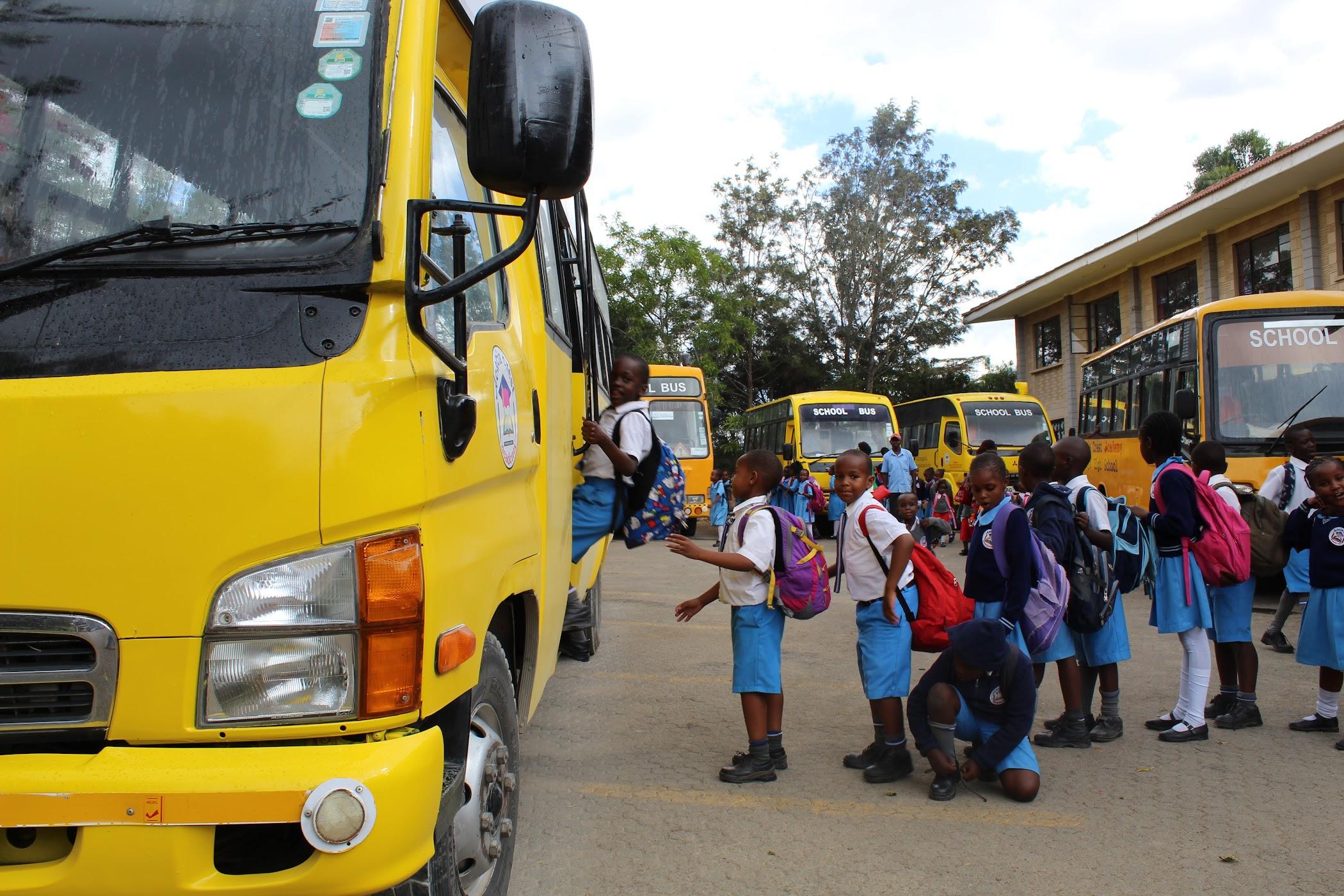
- Hillary Muhalya examines the safety requirements facing vehicles and drivers transporting learners as schools prepare to reopen.
- The checklist covers vehicle roadworthiness, licensing, speed limiters, seatbelts and the professional requirements of drivers and conductors.
- Parents and schools are also being challenged to treat safe learner transport as a core child-protection responsibility.
As thousands of Kenyan learners prepare to return to school, the Government has issued a renewed safety directive targeting vehicles used to transport children, placing schools, parents, drivers and transport operators on high alert ahead of the reopening period.
Through the National Transport and Safety Authority (NTSA), the Government has emphasised that every vehicle ferrying learners must meet strict road safety and compliance standards before being permitted to transport children.
The directive, issued on Wednesday, August 19, 2026, comes at a critical time when roads across the country are expected to experience increased traffic as parents and schools coordinate transport arrangements for learners returning to their respective institutions. The August 19 advisory and its school-reopening context have been independently reported.
At the centre of the directive is one overriding principle: the safety of a child must never be compromised for convenience, profit or speed.
The Government has directed that all vehicles transporting school-going children must possess a valid inspection certificate, road service licence and valid insurance cover.
These requirements are intended to ensure accountability among school transport operators and confirm that all vehicles carrying learners are legally authorised to operate on Kenyan roads.
Parents and school administrators have therefore been urged to verify the compliance status of vehicles before entrusting children to transport operators.
Speed limiters to be integrated with NTSA system
One of the most significant requirements relates to speed management.
Vehicles ferrying learners must be fitted with an operational speed limiter capable of transmitting data to the NTSA Intelligent Road Safety Management System (IRSMS). This requirement is consistent with the Government’s existing road-safety framework, under which functional speed limiters transmit speed data to the system.
This measure is designed to enhance monitoring of vehicles and discourage dangerous speeding, particularly on busy highways and during long-distance school journeys.
The technology also strengthens oversight of learner transport and enables authorities to identify and address risky driving behaviour more effectively.
Compliance extends beyond documentation.
The Government has emphasised that vehicles transporting learners must be properly serviced and maintained. Critical components, including brakes, tyres, lights and side mirrors, must be fully functional before any journey involving children.
This requirement is particularly important given that mechanical failure involving a school bus or van can have severe consequences when transporting large numbers of learners.
Regular maintenance should therefore be treated as a continuous obligation rather than a seasonal exercise tied only to school reopening periods.
Drivers must hold valid licences and PSV badges
Responsibility also extends to the individuals operating the vehicles.
Drivers transporting learners must possess a valid driving licence, and the required Public Service Vehicle (PSV) badges must also be current and valid.
These requirements are intended to ensure that only qualified and duly authorised personnel are entrusted with the responsibility of transporting children.
Schools and parents are therefore encouraged not only to inspect vehicles but also to confirm that drivers meet all professional and regulatory requirements.
Drivers and conductors have been instructed to ensure that learners remain properly secured throughout their journeys.
Seatbelts must be worn at all times, vehicles must not carry excess passengers, and no child should be allowed to hang from windows, doors or any other part of the vehicle.
The Government’s position is unequivocal: overcrowding cannot be justified as a means of maximising revenue per trip.
Every learner must be provided with a safe, designated seat within the vehicle. The requirement that schoolchildren have seats and use functional seatbelts is also contained in existing government road-safety directives.
Children prohibited from hanging outside moving vehicles
The Government has further cautioned against any practices that expose children to unnecessary risk.
No child or part of a child’s body should hang outside a moving vehicle. This includes sitting on doors, standing on vehicle steps or extending hands or heads through windows.
Such behaviour significantly increases the risk of serious injury or fatal accidents during otherwise routine school journeys.
Drivers and conductors are therefore required to maintain strict supervision throughout the journey and immediately prevent any conduct that compromises learner safety.
Another key component of the directive is the obligation placed on drivers and conductors to report cases where a child appears to be under the influence of drugs or alcohol.
While such incidents may be rare among school-going children, the requirement underscores the broader duty of care owed to learners and the responsibility of transport personnel to flag any situation that may endanger their safety.
It reinforces the principle that learner transport is not merely a logistical service, but part of a wider child protection framework.
Parents and schools urged to prioritise safety
The renewed focus on school transport safety is particularly significant as the back-to-school period typically results in increased road activity involving school buses, vans, matatus and privately hired vehicles.
For parents, the message is clear: the selection of a school transport provider should not be based solely on cost or convenience.
Parents are encouraged to demand proof that transport vehicles are compliant, well-maintained and operated by qualified personnel.
Schools, on their part, have a responsibility to ensure that all transport arrangements involving learners comply with the law and prioritise safety.
School administrators are urged to treat vehicle inspections and driver verification as core child protection responsibilities rather than routine administrative tasks.
The directive highlights the need to address a persistent challenge in which school transport is sometimes treated as an ordinary commercial service.
Transporting children is a specialised responsibility that demands the highest standards of care and accountability.
A school bus is effectively a mobile learning environment carrying vulnerable passengers whose safety depends on the decisions of drivers, conductors and transport operators.
The Government’s message is therefore clear: there must be no shortcuts when children’s lives are at stake.
Enforcement key as learners return
However, effective enforcement will be just as important as the regulations themselves.
Parents and the public will expect NTSA and other relevant authorities to ensure that these requirements are not only announced at the start of the school term but consistently enforced throughout the year.
A vehicle that is compliant at the beginning of the term but becomes unsafe later still poses a serious risk to learners.
Schools and transport operators are therefore encouraged to adopt continuous maintenance schedules, regular driver assessments and strict adherence to passenger safety protocols.
As learners return to classrooms, the national conversation must extend beyond academic readiness to include the safety of every journey to and from school.
READ ALSO: Egerton University Parents/Guardian Portal allows parents to monitor students’ academic and financial progress
Every learner deserves not only quality education, but also a safe journey to access it.
By Hillary Muhalya
Photo caption: Learners travel aboard a school bus during a past school reopening as NTSA intensifies focus on the safety and compliance of vehicles transporting children.