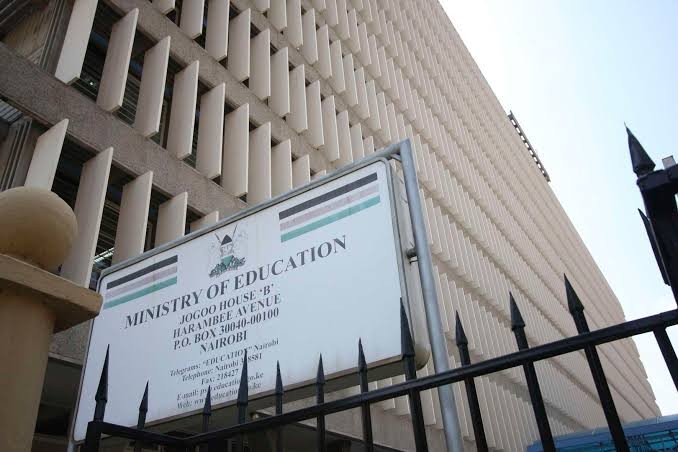
- The proposed Basic Education Bill has sought to require foreign-curriculum schools to obtain Cabinet Secretary approval before operating in Kenya.
- The Bill has addressed a regulatory gap, since the current Basic Education Act has not expressly covered international curricula such as IGCSE, British, American and German systems.
- The proposed framework has extended oversight to teaching standards, facilities, governance and child protection measures across all foreign-curriculum institutions.
Kenya is taking steps to bring schools offering foreign education systems under a more explicit and structured regulatory framework, in a development that could reshape how international-curriculum institutions operate in the country.
The proposed Basic Education Bill would require any person or institution seeking to offer a foreign system of education in Kenya to first obtain approval from the Cabinet Secretary for Education. The Cabinet Secretary would subsequently be required to establish regulations governing the registration, licensing, accreditation and quality assurance of foreign education systems.
The proposed framework comes against the backdrop of a growing international-school sector in Kenya, where institutions offer programmes associated with the British, American, German and French systems, as well as Cambridge International and the International Baccalaureate.
Education Ministry officials have previously noted that although such curricula are already being offered in Kenya, the existing Basic Education Act does not expressly provide a comprehensive legal framework for international curricula such as IGCSE, British, American and German systems. The proposed legislation therefore seeks to address what policymakers consider a regulatory gap.
Foreign-curriculum schools would not be assessed solely on the curriculum they deliver. They would operate within broader requirements applicable to basic education institutions, including standards relating to teachers, learning facilities, premises, infrastructure, equipment, occupational health and safety, governance and financial capacity.
Institutions seeking registration would also be required to provide detailed information on their management structures, promoters, teaching personnel and programmes of instruction. Registration would initially be provisional, before quality-assurance processes lead to full registration.
ALSO READ:
Moi Girls Kamusinga, Musingu book FEASSA handball semi-final slots in Morogoro
Why the Proposed Regulation Matters
The central issue is not whether Kenya should permit foreign curricula, but whether learners under those curricula should enjoy the same protection, accountability and quality assurances expected across the country’s education system. The answer should be an unequivocal yes.
International curricula can offer valuable alternatives for families, exposing learners to diverse pedagogical approaches, internationally recognised qualifications and pathways to universities abroad. Their presence can also foster competition and innovation within Kenya’s education sector. However, the reputation of a foreign curriculum should never be conflated with the quality of an individual school. A school may offer an internationally recognised programme while still requiring scrutiny of its teaching standards, safety of its premises, adequacy of facilities, governance structures and child protection measures.
This is why regulation is essential. Parents investing significantly in international education deserve assurance that the institutions educating their children are properly authorised and meet clearly defined standards, rather than having to rely solely on marketing claims, reputation or perceived international affiliation. The proposed framework could therefore provide parents with a stronger and more reliable basis for informed decision-making.
It is equally important from a child protection perspective. Schools are responsible not only for delivering academic instruction but also for safeguarding learners, and regulatory oversight helps ensure that institutions meet appropriate standards in health, safety, welfare, staffing and learning environments.
Balancing Regulation With Openness
The reforms could also promote greater consistency within Kenya’s education landscape. While public, private and international schools may follow different curricula, they operate within the same national context and serve children whose rights must be protected — differences in curriculum should not translate into differences in accountability standards.
However, the implementation of regulation must be carefully managed. The government should avoid creating a system in which approval becomes an unnecessary bureaucratic barrier to legitimate international education. The criteria should be transparent, predictable and professionally administered, so that schools clearly understand the requirements while parents can distinguish between compliant and non-compliant institutions. The reform should therefore prioritise quality assurance rather than excessive control.
High Court Orders Gatoto Comprehensive School handed back to private owners
Kenya can remain open to international education while ensuring that every institution educating children meets minimum national standards. Ultimately, the proposed law is about more than foreign curricula — it is about affirming a fundamental principle: educational choice must be accompanied by educational accountability.
International schools can continue to enrich Kenya’s education sector, but their operational freedom must be matched by a clear responsibility to protect learners, uphold quality and remain accountable to national education authorities.
If implemented effectively and fairly, the proposed framework could strengthen confidence in Kenya’s international-school sector while ensuring that no child falls outside the protection of national education standards.
By Hillary Muhalya
You can also follow our social media pages on Twitter: Education News KE and Facebook: Education News Newspaper for timely updates.
>>> Click here to stay up-to-date with trending regional stories
>>> Click here to read more informed opinions on the country’s education landscape
>> Click here to stay ahead with the latest national news.