- The Fresh Produce Consortium of Kenya has partnered with TVETA to bridge skills gaps and equip TVET graduates with practical and entrepreneurship skills.
- TVETA has shifted its curriculum from a knowledge-based model to a competence-based system emphasising practical training over theory.
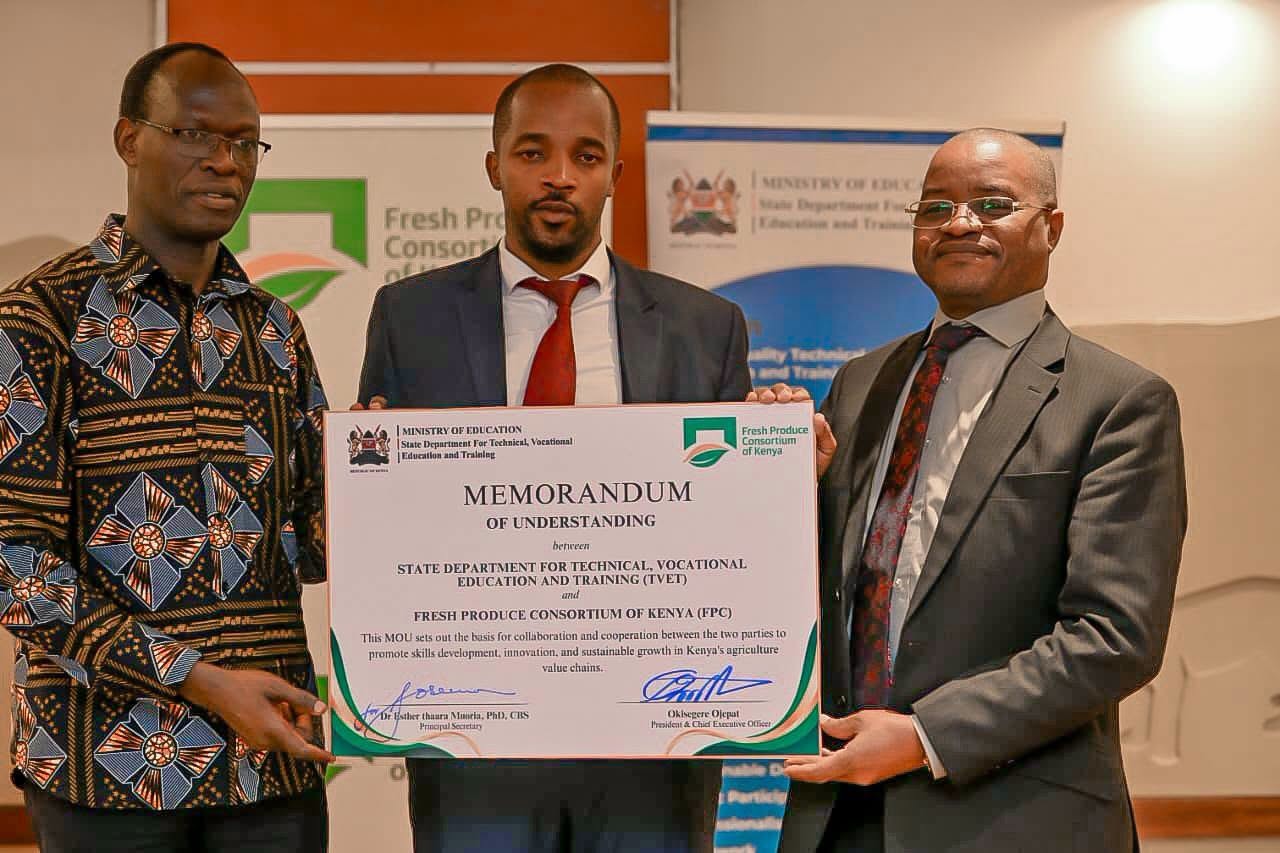
The Fresh Produce Consortium [FPC] of Kenya has partnered with the State Department for Technical and Vocational Training to bridge the skills gap, equipping learners with practical and entrepreneurship skills to increase productivity and strengthen the sector’s ability to compete in regional and international markets.
During the signing of a Memorandum of Understanding [MoU] between the Fresh Produce Consortium of Kenya and the Technical and Vocational Education and Training Authority [TVETA], the FPC of Kenya Chief Executive Officer, Okisegere Ojepat, said the initiative will strengthen the capacity of TVET graduates to meet evolving demands of the Fresh Produce sector.
Education stakeholders challenged to improve marketing strategy amid low TVET enrolment
He said the partnership will also seek to link graduates with employers while promoting entrepreneurship activities and value addition in agriculture.
“Agriculture remains the mainstay of this country, and that is where we get both raw materials and also fresh products that we export and raw materials for our value addition. The industry, from now going forward, will be going to different institutions, set demonstration plots and demonstration centres, and practical training centres. We also want to use these TVET institutions as centres of excellence, centres of innovation and centres of adoption of certain innovations,” Ojepat said.
Acting Secretary of the Technical and Vocational Education and Training Authority (TVETA), Joseph Njau, said Kenya is undergoing a major shift in its TVET system from certification-based training to a competence-driven model focused on productivity, innovation and employability.
“We have changed our curriculum from a knowledge-based curriculum to what we call the competence-based education and training curriculum. By modernisation, we mean we are at the lower level; we are training almost 100 per cent practicals and maybe about 10 per cent theory,” Njau said.
MoE reshuffles TVET principals as more changes loom
Nyandarua National Polytechnic Chief Principal Dr Jane Gitau backed the policies as she commended the tertiary institutions for producing hands-on graduates who are ready for employment with their strengthened skills.
“Most of the examinations now are practical-based. So that is what we are doing, and I can assure even the private sector that the kind of graduates we are producing now are more aligned,” Gitau said.
The partnership is expected to strengthen collaboration between TVET institutions and the fresh produce industry by providing practical training, promoting innovation and entrepreneurship, and creating employment opportunities. Stakeholders said the initiative will help develop a skilled workforce capable of driving productivity, value addition and competitiveness in Kenya’s agricultural sector.
By Bernard Magada
You can also follow our social media pages on Twitter: Education News KE and Facebook: Education News Newspaper for timely updates.
>>> Click here to stay up-to-date with trending regional stories
>>> Click here to read more informed opinions on the country’s education landscape