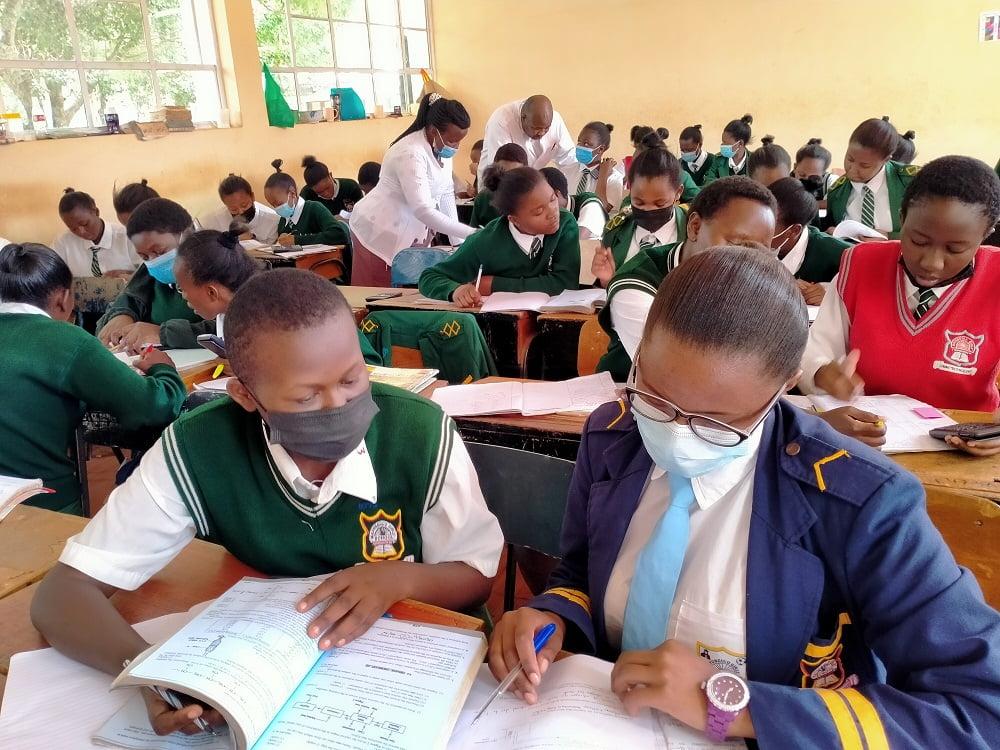
- Kenyan learners face mounting pressure as schools, teachers and parents pursue stronger examination results.
- Long revision hours, public comparisons and unrealistic expectations can turn academic motivation into damaging exhaustion.
- Schools can maintain high standards while protecting learners through balanced schedules, counselling and better study skills.
For years, academic success in Kenya has been reduced to numbers.
A high mark is celebrated. A low mark attracts questions. The top performer becomes a school hero, while the learner at the bottom can quietly become the subject of ridicule, comparison and disappointment.
But behind those marks is a generation of learners increasingly navigating a different challenge — the pressure to perform without necessarily being taught how to cope with the pressure itself.
From packed revision programmes and endless assignments to late-night preparation, parental expectations, public comparison and inadequate guidance, examination preparation can easily turn the school environment into a pressure cooker.
The problem is not that Kenyan learners are being asked to work hard. Hard work is an essential part of education.
The problem arises when academic discipline crosses the line into academic exhaustion.
The result can be a schooling culture where learners spend more time worrying about marks than understanding what they are actually learning.
In many schools, examination preparation is treated almost like a military operation.
Timetables are tightened. Revision sessions multiply. Assignments increase. Extra lessons are introduced. Evening preparation stretches late into the night.
The underlying assumption is simple: if some revision is good, more revision must be better.
But learning does not operate that way.
A tired learner may sit with a textbook for several hours without retaining much information. A student who is constantly moving from class to revision, revision to assignments and assignments to evening preparation may eventually experience mental fatigue rather than academic improvement.
The question schools should therefore be asking is not merely how many hours learners have studied.
It is how effectively they have learned.
When revision becomes a burden
Revision is necessary, particularly when learners are preparing for important assessments.
However, revision programmes must have limits.
Learners need breaks. They need sleep. They need physical activity. They need time to interact with others and simply decompress.
When every available hour is converted into academic time, schools risk producing learners who associate education with punishment.
A balanced programme can achieve more than an overloaded timetable.
The objective should be quality learning rather than a competition over who can keep learners busy for the longest period.
Few things can damage a learner’s confidence faster than public humiliation over academic performance.
There is a legitimate place for celebrating good performance and encouraging healthy competition. But announcing poor marks publicly, repeatedly comparing struggling learners with their high-performing colleagues or using academic failure to embarrass students can create a culture of fear.
A learner who consistently hears that he or she is “the weakest” may eventually stop trying.
Instead, examination results should become a starting point for intervention.
A teacher should help a learner understand where marks were lost, why mistakes occurred and what can be done differently.
A poor mark should be a diagnosis, not a sentence.
Schools should be building learners rather than branding them.
Parents can either reduce the pressure or magnify it
The examination burden does not end at the school gate.
It follows learners home.
Some parents measure success almost entirely through grades. The first question after an examination is not always, “How did you find the paper?” but rather, “How many marks did you get?”
When expectations become unrealistic, learners may begin to believe that disappointing their parents is worse than performing poorly.
Parents have an important role in encouraging academic excellence, but encouragement should not become intimidation.
Children need to know that a disappointing result does not make them failures.
Parents can demand improvement while still providing emotional safety.
Instead of concentrating exclusively on the final grade, families should ask learners what they found difficult, what support they need and what can be improved before the next assessment.
That approach turns the home into a support system rather than another examination room.
Learners need study skills, not just study orders
One of the biggest weaknesses in examination preparation is the assumption that learners automatically know how to revise.
A teacher may say, “Go and revise.”
But revise what?
How?
For how long?
Using which method?
How does a learner identify the topics they have not understood?
How should past papers be used?
How should difficult subjects be broken into manageable sections?
These are skills that require deliberate teaching.
Schools should make study skills part of the learning process. Learners need practical training in time management, note-making, revision techniques, examination strategies and identifying areas of weakness.
Telling a learner to study is not the same as teaching a learner how to study.
Sleep is part of academic preparation
There is another dangerous misconception that needs to be challenged: that sleeping is wasting valuable revision time.
Some learners stay awake late preparing for examinations and wake up early for another demanding school day.
But an exhausted learner does not necessarily become a better learner.
Rest is essential for concentration, memory and general functioning. A school timetable that systematically deprives learners of adequate sleep may ultimately undermine academic performance.
Schools should therefore look carefully at evening preparation programmes.
The question should not be, “How late can we keep them studying?”
It should be, “How can we help them learn effectively while remaining healthy and alert?”
Academic pressure can be difficult to recognise because not every struggling learner will openly ask for help.
Some become withdrawn.
Others lose concentration.
Some stop participating in class.
Others may become unusually irritable or fearful.
Yet counselling services in some schools remain underutilised or are approached only after a problem has become serious.
Schools need stronger systems through which learners can access trusted adults and professional support without feeling ashamed.
Counselling should not be viewed as a service reserved for learners who have already reached breaking point.
It should be part of normal school life.
A learner should be able to say, “I am overwhelmed,” without being labelled weak, lazy or undisciplined.
Teachers also need a break from the performance pressure
It is easy to blame teachers whenever learners complain about academic pressure.
But the reality is more complicated.
Teachers themselves operate under pressure to complete syllabuses, prepare learners for assessments, meet school expectations and demonstrate good academic results.
When institutions measure teachers primarily through examination outcomes, the pressure can travel downwards.
The teacher pressures the learner because the teacher is being pressured by the system.
Therefore, improving learner wellbeing also requires reviewing the environment in which teachers work.
Teachers need realistic schedules, adequate teaching resources and professional support to deliver quality learning without turning every classroom into an examination battlefield.
Kenya’s Competency-Based Education approach provides an opportunity to rethink this culture.
Education should not be about memorising information today and forgetting it after the examination tomorrow.
It should develop competencies, values, problem-solving abilities, creativity, communication and the confidence to apply knowledge.
That objective becomes difficult to achieve when schooling is dominated by fear of marks.
A learner who is afraid to make mistakes may avoid asking questions.
A learner who fears public embarrassment may remain silent when confused.
A learner who is constantly racing against an examination timetable may focus on memorisation instead of understanding.
Yet mistakes, questions, curiosity and experimentation are fundamental to meaningful learning.
Continuous assessment can help change the culture
One way of reducing the psychological weight attached to major examinations is to make assessment a more continuous part of learning.
Regular assessments allow teachers to identify gaps early.
They also give learners repeated opportunities to practise examination techniques and understand their weaknesses.
When every major examination is treated as a final judgment on a learner’s ability, anxiety naturally increases.
But when assessment becomes part of the learning journey, one poor result does not have to feel like the end of the road.
The message becomes:
You have not failed at learning. You have discovered what you need to improve.
That is a much healthier educational philosophy.
Some pressure can motivate learners.
Deadlines can encourage discipline. High expectations can inspire effort. Competition can sometimes push students to improve.
But pressure becomes destructive when learners begin to believe that their value depends entirely on academic performance.
There must therefore be a clear distinction between challenging learners and crushing them.
A demanding teacher can still be compassionate.
A disciplined school can still protect sleep.
A competitive institution can still respect struggling learners.
A parent can demand excellence without threatening a child’s sense of worth.
Academic standards do not have to be lowered to make education humane.
The real question is what happens after the examination
Kenya should broaden its definition of educational success.
A learner who scores highly but leaves school emotionally exhausted, afraid of failure and unable to cope with pressure represents only part of the success story.
The real achievement is to produce young people who can think, solve problems, communicate, work with others, recover from failure and continue learning long after leaving the examination room.
Marks matter.
But marks are not the whole learner.
The country should therefore begin treating learner wellbeing not as an optional addition to education but as part of academic success itself.
Schools must review revision schedules, protect adequate rest, strengthen counselling, improve study-skills guidance and eliminate humiliating approaches to academic performance.
Parents must also learn to encourage rather than intimidate.
Teachers need support to manage academic expectations without transferring unhealthy pressure to learners.
And learners themselves must be equipped with the skills to manage their time, understand their strengths and weaknesses and seek help when overwhelmed.
The ultimate goal of education should never be to produce learners who can survive an examination at any cost.
It should be to produce confident, capable and resilient young people who can use what they have learned to navigate life.
Kenya can demand excellence without creating exhaustion.
It can celebrate high achievement without humiliating those who struggle.
It can prepare learners for examinations without making examinations the centre of their existence.
READ ALSO: Lityei Village Celebrates as Local student secures admission to Kibabii University
The challenge now is to move from an education culture that asks, “How many marks did you get?” to one that also asks, “How are you doing, what have you learned, and how can we help you become better?”
By Hillary Muhalya
You can also follow our social media pages on Twitter: Education News KE and Facebook: Education News Newspaper for timely updates.
>>> Click here to stay up-to-date with trending regional stories
>>> Click here to read more informed opinions on the country’s education landscape