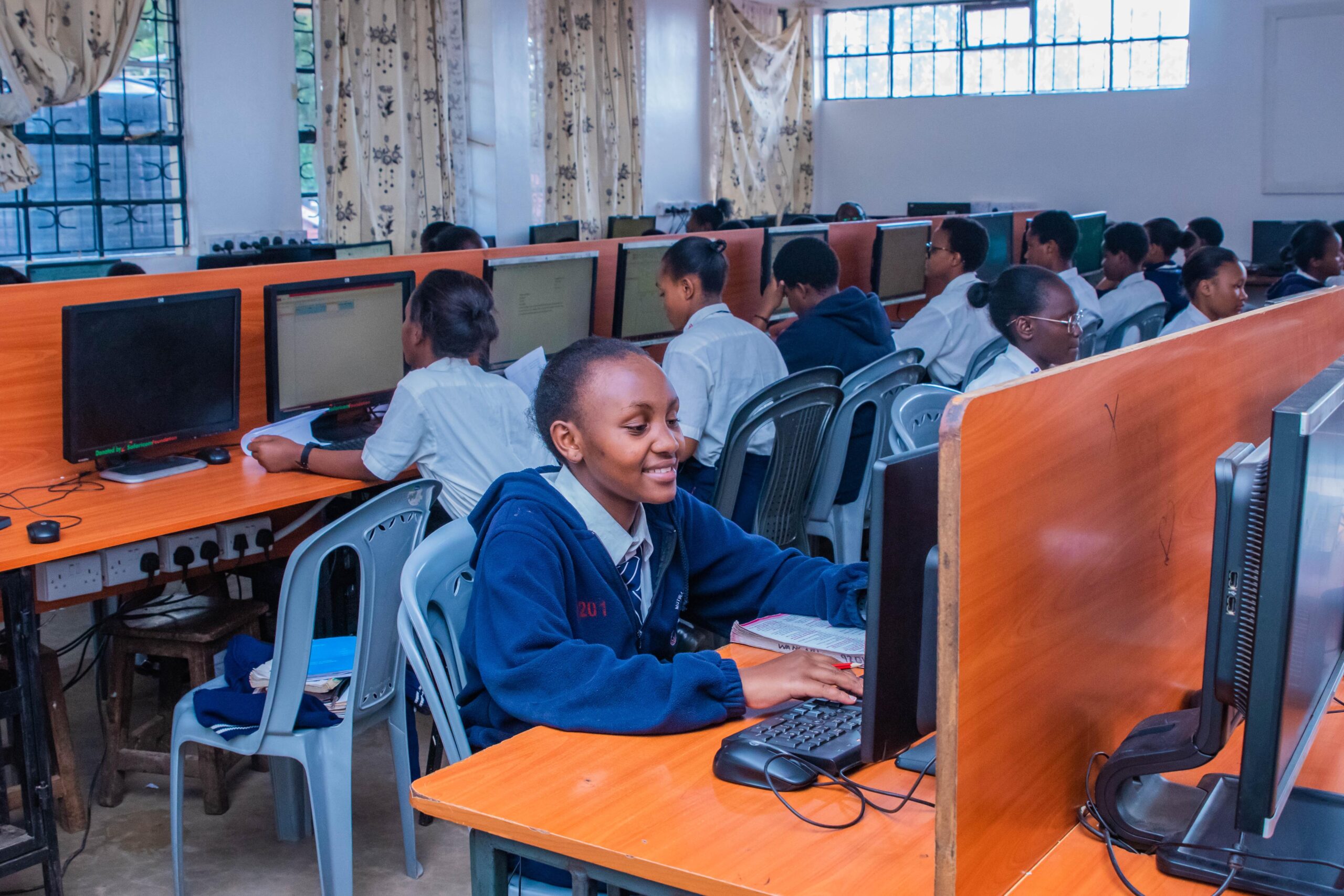
- Greater access to smartphones, computers and the internet could expose learners in C1, C2 and C3 schools to greater misuse of artificial intelligence.
- Ashford Kimani argues that AI can undermine independent thinking when learners use technology to complete schoolwork without meaningful effort.
- He calls on teachers and parents to promote AI literacy, digital discipline and assignments that test genuine understanding.
Artificial intelligence is rapidly changing education. From generating essays and answering comprehension questions to solving mathematical problems and preparing research assignments, AI tools have become increasingly accessible to learners. While these technologies can support learning when used responsibly, they also present a serious challenge to the integrity of schoolwork. Ironically, the schools that may suffer most from AI-aided schoolwork could be those serving relatively wealthier families.
In Kenya’s school categorisation system, C1, C2 and C3 schools generally attract learners from families with greater economic means than many C4 schools. This economic advantage often translates into greater access to smartphones, computers, internet connectivity and digital platforms. The very resources that can enhance learning can also make it easier for learners to outsource their academic work to artificial intelligence.
A learner with a smartphone, reliable internet connection and access to AI applications can complete an assignment within minutes. A composition can be generated, an unfamiliar concept explained, questions answered and even a research project structured with minimal personal effort. The danger is not the technology itself. The danger is the substitution of thinking with technology.
This creates an interesting paradox. Wealth, which is normally considered an advantage in education, can sometimes become a disadvantage when it gives children unrestricted access to technologies they are not yet mature enough to use responsibly.
Many parents in relatively affluent households can afford smartphones for their children. Some children also have personal tablets, laptops and unrestricted internet access. In contrast, many learners in economically disadvantaged households may share a phone with their parents or siblings, have limited access to data bundles or have no smartphone at all. Their inability to access AI tools may unintentionally force them to complete their schoolwork manually.
This does not mean that poverty is an advantage or that C4 learners are automatically better students. Far from it. Limited access to technology creates numerous educational disadvantages. However, when the specific issue is AI-generated schoolwork, limited digital access can sometimes provide an unexpected protective barrier.
When AI does the schoolwork
A teacher may give an assignment believing that learners will spend an evening reading, researching, thinking, drafting and revising. Instead, a learner may simply photograph the question, upload it to an AI application and submit the generated response. The exercise is completed, but learning may not have occurred.
This is particularly dangerous because schoolwork is not merely about producing answers. Assignments are designed to develop thinking, creativity, communication, research skills, problem-solving ability and independent learning. When AI does all these things on behalf of the learner, the learner may receive marks without developing the competencies those marks are supposed to represent.
The problem becomes even more serious when parents unknowingly facilitate it. A parent may purchase an expensive smartphone for a child, provide unlimited internet access and celebrate the child’s apparently impressive homework. The parent may not realise that the child’s sudden transformation from struggling learner to eloquent essay writer has less to do with academic improvement and more to do with artificial intelligence.
This is where wealth can inadvertently spoil children.
Children who receive everything instantly may develop a reduced tolerance for intellectual struggle. Yet struggle is an essential component of learning. A learner who wrestles with a difficult Mathematics problem, searches for the meaning of an unfamiliar word or spends an hour organising ideas for an essay is developing mental stamina. If every difficult task is handed over to AI, that intellectual muscle may never develop.
Schools must rethink homework
Schools therefore need to rethink homework in the age of artificial intelligence. Simply banning smartphones may not solve the problem. AI will continue to evolve and learners will eventually encounter it outside school. The real objective should be to teach responsible and productive use.
Teachers can design assignments that require personal reflection, classroom evidence, local experiences, oral presentations, handwritten drafts and follow-up questioning. If a learner submits an impressive essay, the teacher should be able to ask the learner to explain its arguments, vocabulary and evidence. Authentic understanding is much harder to fake.
Schools should also teach AI literacy. Learners need to understand that AI can make mistakes, fabricate information and produce convincing but inaccurate answers. More importantly, they need to understand the difference between using AI as a learning assistant and using it as a substitute for learning.
Parents have an equally important responsibility. Buying a smartphone for a child is not the same as preparing that child to use technology responsibly. Digital access should come with digital discipline. Parents should know what their children are doing online, establish reasonable boundaries and encourage them to complete schoolwork independently before consulting technological tools.
The discipline to think
Ultimately, the challenge of AI is not confined to C1, C2, C3 or C4 schools. Every school will eventually have to confront it. But differences in household wealth may determine how quickly and extensively learners gain access to AI tools.
The uncomfortable lesson is that an educational advantage can sometimes become a vulnerability. Wealth can provide books, computers, smartphones, internet connectivity and countless opportunities. But without discipline, supervision and values, the same resources can make it easier for children to avoid the very struggles that make them educated.
The goal of education is therefore not simply to produce learners who can obtain answers. It is to produce people who can think.
READ ALSO: TSC falls short on disability inclusion as only 1.7 percent of teachers have disabilities
In the age of artificial intelligence, perhaps the most valuable educational resource a parent can give a child is not the most expensive smartphone or the fastest internet connection. It is the discipline to think before asking a machine to think for them.
By Ashford Kimani
Ashford is a teacher of English and Literature and writes on education and social affairs.
You can also follow our social media pages on Twitter: Education News KE and Facebook: Education News Newspaper for timely updates.
>>> Click here to stay up-to-date with trending regional stories
>>> Click here to read more informed opinions on the country’s education landscape