- Residents are opposing plans to develop eight acres reportedly reserved for a public school in Runda.
- The dispute has raised questions over land designation, planning approvals and protection of public education assets.
- Hillary Muhalya argues that school land must be protected today to meet the needs of future generations.
A battle over an eight-acre parcel of land in the leafy Runda neighbourhood of Nairobi has opened a much bigger national question: What happens when land reserved for a public school suddenly becomes attractive for private development?
The answer could determine more than the fate of one parcel.
It could expose how vulnerable Kenya’s public education infrastructure is when the value of urban land rises and competing interests begin circling property originally intended to serve generations of learners.
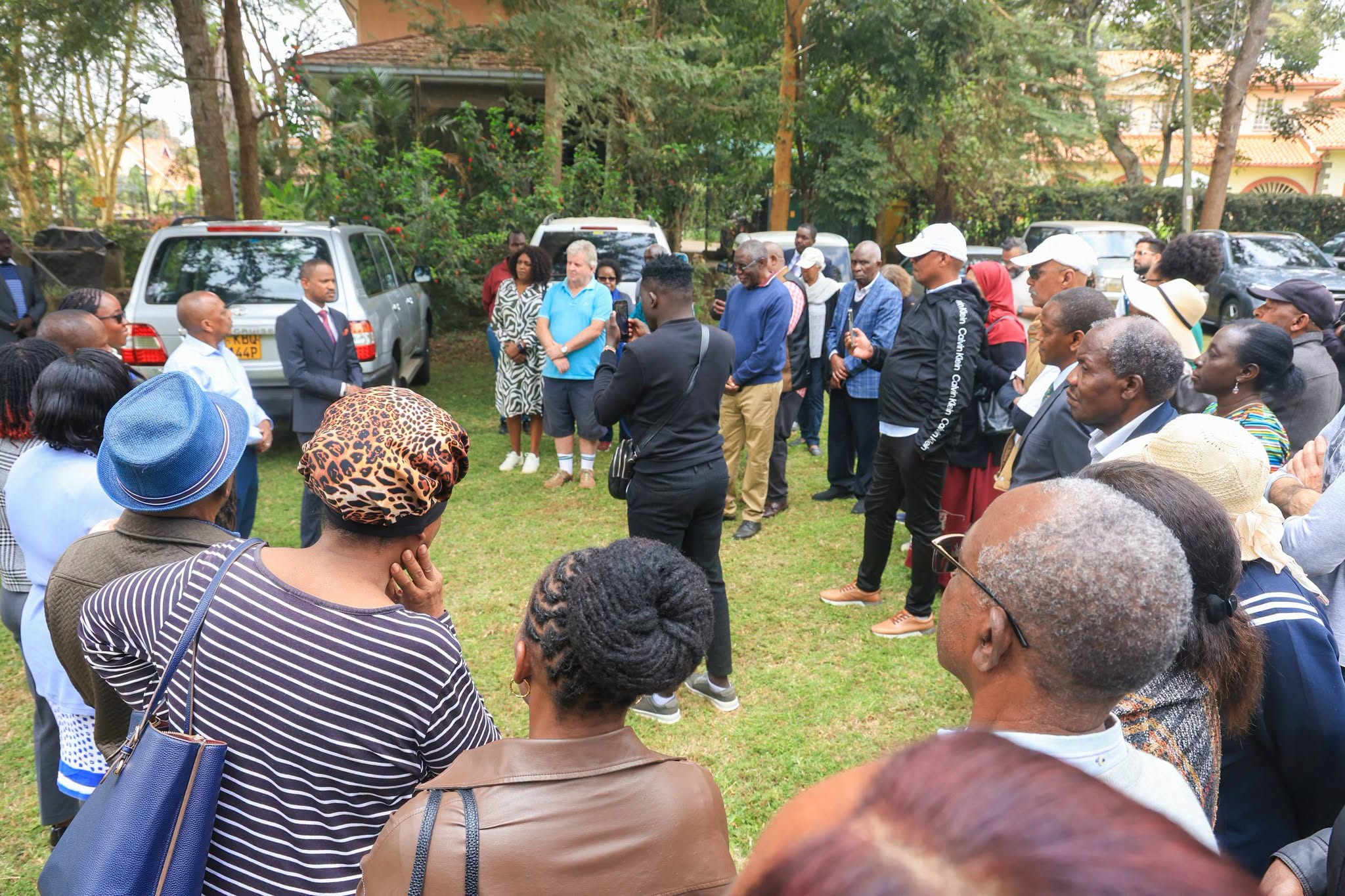
Residents of Runda are protesting what they describe as an attempt to convert eight acres reserved for a public school into a private development.
They have been joined by Embakasi East Member of Parliament Babu Owino, who has opposed the proposed development and insisted that land intended for a public utility should remain available for that purpose.
The controversy reportedly centres on plans for a multi-storey development comprising 16 units.
Residents have questioned the legality, density and suitability of the proposed project, arguing that it could conflict with existing planning requirements and place additional pressure on infrastructure in the neighbourhood.
But beneath the arguments over apartments, zoning and drainage lies a more profound issue.
A school needs land before it needs classrooms.
Without land, there can be no future school.
Without sufficient school land, governments may eventually be forced to purchase expensive private property to accommodate growing populations.
And when land originally reserved for education is converted to another use, the cost is ultimately borne by the public.
The real value of an acre
An acre of land in an expanding urban neighbourhood can have enormous commercial value.
But its public value can be even greater.
A school site can accommodate classrooms, laboratories, libraries, administration facilities, sanitation infrastructure, playgrounds and future expansion.
It can serve thousands of children over several decades.
Its value therefore cannot be measured simply by the price a developer is willing to pay for it.
This is why public school land must be treated as a strategic national asset.
Kenya’s population continues to grow, urban settlements continue to expand and educational needs continue to change. Areas that appear adequately served today may face serious shortages of schools tomorrow.
The land required to respond to that future demand must be protected today.
That is the bigger lesson emerging from Runda.
Residents demand answers
Residents say they have been attempting to reclaim the disputed parcel after plans emerged for development on the site.
They have raised concerns about drainage and the ability of existing infrastructure to accommodate additional development.
They have also questioned the proposed density, with resident Agatha Kagia citing zoning requirements relating to residential development in the area.
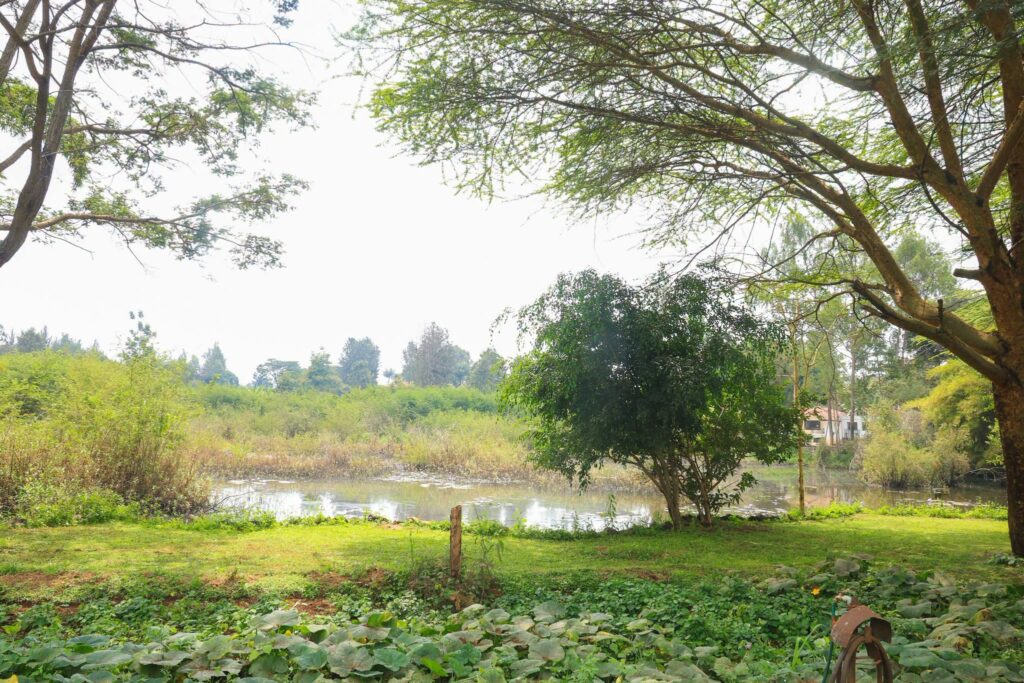
Another issue involves the site’s environmental characteristics.
Residents say part of the property contains a water feature supporting birds and fish.
If properly established through the relevant environmental assessments, that concern could significantly affect the suitability of intensive construction on the property.
The residents have additionally alleged that several government agencies may have been involved in approving aspects of the proposed development.
Those claims remain allegations and should be subjected to proper investigation and verification by the relevant authorities.
Yet the fact that residents feel compelled to raise such questions demonstrates why transparency in public land administration is essential.
Where did the school go?
Perhaps the most important question is also the simplest:
If the land was reserved for a public school, why is private development being contemplated on it?
That question deserves an official, documented answer.
Residents should not have to depend on rumours, political statements or protests to understand the status of public land.
The relevant authorities should be able to clearly establish who owns the land, what its original designation was, whether it was formally reserved for a public school and whether that designation has ever been lawfully changed.
They should also establish who approved the proposed development, whether public participation was undertaken, whether planning requirements were satisfied, whether environmental considerations were properly assessed and, most importantly, whether the community still requires the land for a public school.
These are not minor administrative questions.
They go directly to public accountability.
Education land is not vacant land
One of the greatest misconceptions surrounding public land is that an undeveloped parcel is somehow unused land.
That is not necessarily true.
A vacant school site may be waiting for funding.
A playground may be waiting for development.
A school expansion parcel may be waiting for population growth.
A public utility site may be reserved for a future need.
The absence of a building does not automatically mean the absence of public purpose.
This distinction is particularly important under Kenya’s evolving education system.
As the country expands Competency-Based Education and develops more comprehensive school infrastructure, schools need adequate space not only for classrooms but also for laboratories, libraries, sanitation facilities, sports and other learning facilities.
The demand for educational land is therefore unlikely to disappear.
It is likely to increase.
The risk of urban education bottlenecks
Kenya could eventually face a peculiar contradiction.
Cities will become more densely populated while the land available for public schools becomes increasingly scarce.
Developers will continue seeking strategic parcels.
Families will continue moving into new residential areas.
Children will continue requiring schools.
Yet public authorities could discover that the land needed to construct those schools has already been converted into other uses.
That is how an education crisis can begin long before a school shortage becomes visible.
By the time classrooms become desperately necessary, the land may already be gone.
Runda therefore offers a warning that should extend far beyond Nairobi.
Every county should know exactly where its public school land is located, what it is designated for and whether those parcels remain protected.
Public education planning cannot be separated from land-use planning.
Government must draw a clear line
The Runda controversy provides an opportunity for government agencies to demonstrate that public land administration is transparent and accountable.
If the property is legitimately reserved for a public school, authorities should protect that designation and explain how the site will be preserved for education.
If its designation has lawfully changed, the public deserves to know when, how and under what authority that change occurred.
If development approvals were issued, the relevant agencies should be prepared to explain the basis upon which those approvals were granted.
And if irregularities are discovered, corrective action should follow.
This should not be about political personalities.
It should not be about developers versus residents.
It should be about the law, public interest and the future of Nairobi’s children.
The warning from Runda
Runda residents have already demonstrated that communities are increasingly unwilling to remain silent when they believe public resources are threatened.
Runda Estate Residents Association chairman Chris Gitonga says the proposed project has been placed on hold, although the land has yet to be returned to its intended public use.
Karura MCA Kamau Thuo has warned that residents may find themselves returning to the same battlefield in future if government agencies fail to provide a permanent solution.
That warning should not be dismissed.
A temporary suspension is not the same as a permanent resolution.
If the fundamental question concerning the property’s designation remains unanswered, the controversy can simply return under a different developer, a different project or a different set of approvals.
The country needs finality.
It needs records.
It needs accountability.
And above all, it needs protection of public assets.
The children who are not yet here
Perhaps the strongest argument for protecting school land is that the beneficiaries cannot speak for themselves.
The children who may eventually attend a school on that eight-acre parcel are not part of today’s protests.
Some have not yet been born.
Others may currently be living in completely different neighbourhoods.
But as Nairobi expands, they will need classrooms.
They will need laboratories.
They will need playgrounds.
They will need safe and accessible schools.
The land being contested today could become part of the educational infrastructure required by tomorrow’s generation.
That is why Kenya must stop viewing public school land merely as real estate.
It is educational infrastructure in waiting.
The Runda dispute should therefore trigger a national audit of land reserved for public education, particularly in rapidly developing urban and peri-urban areas.
The country should know what it owns, where it is, what it was reserved for and whether those reservations remain intact.
Because once public school land disappears, recovering it may be far more expensive than protecting it was in the first place.
Runda’s eight-acre dispute is therefore bigger than Runda.
READ ALSO: Proposed reforms put principals, headteachers on notice over management of school funds
It is a test of whether Kenya will protect the spaces reserved for its children’s future — or allow today’s appetite for development to consume tomorrow’s classrooms.
The land may look empty today. But if it was reserved for a school, it is already carrying a future.
By Hillary Muhalya
You can also follow our social media pages on Twitter: Education News KE and Facebook: Education News Newspaper for timely updates.
>>> Click here to stay up-to-date with trending regional stories
>>> Click here to read more informed opinions on the country’s education landscape