- Kenya Kwanza has recorded significant gains in TVET, school infrastructure, curriculum transition and teacher management.
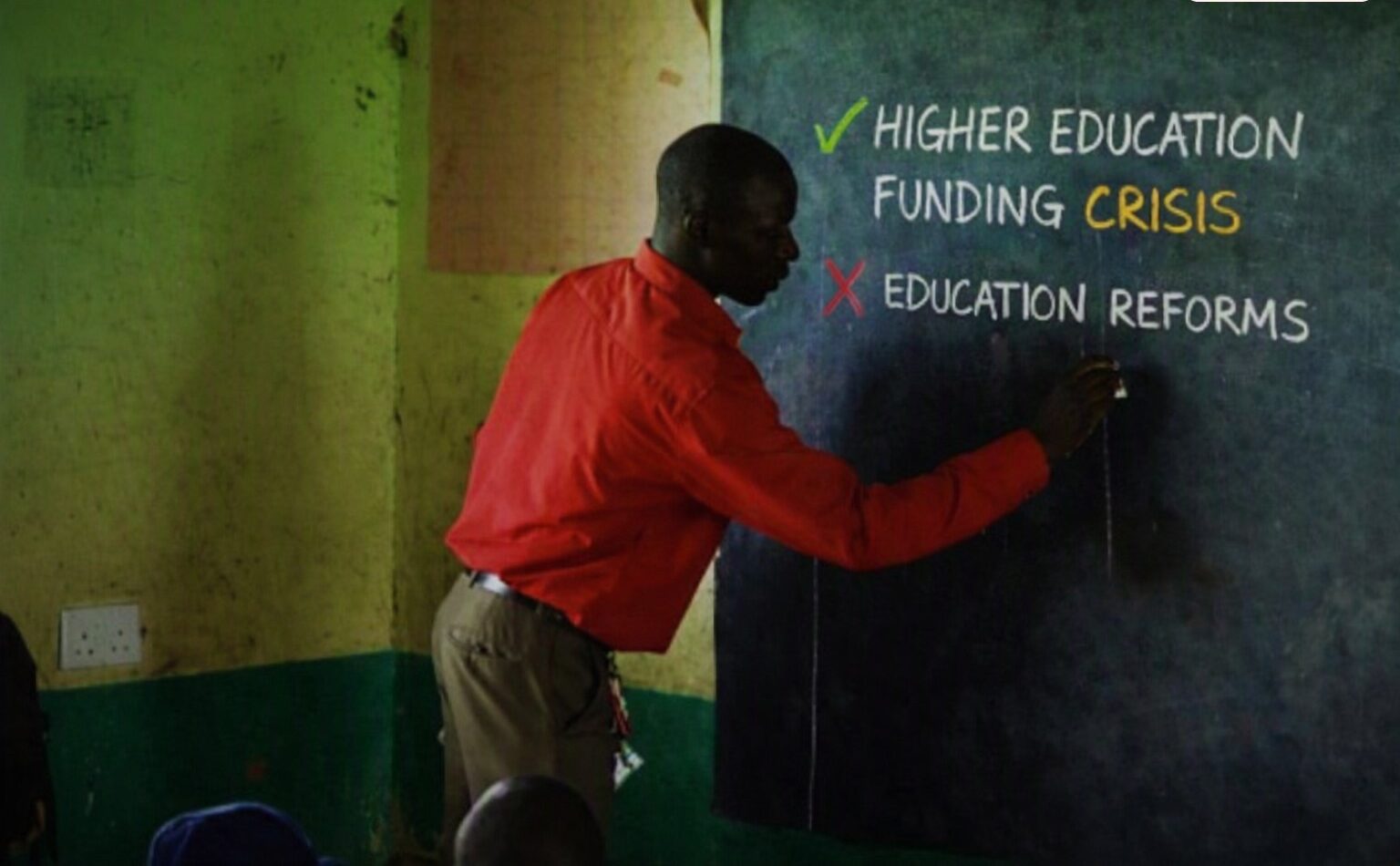
- However, university financing, JSS leadership, ECDE and education inequality remain among the administration’s weakest areas.
- Hillary Muhalya gives the government’s education performance an overall score of 69 per cent, equivalent to Grade B-.
Kenya’s education sector has been one of the biggest testing grounds for the Kenya Kwanza administration since it assumed office. From the continued transition to Competency-Based Education to the expansion of Junior Secondary School, teacher recruitment and promotion, infrastructure development, digital learning, Technical and Vocational Education and Training and the controversial transformation of university financing, the administration has inherited an education system undergoing profound structural change.
Its education record, therefore, cannot fairly be judged by isolated achievements or failures.
The appropriate question is whether Kenya Kwanza has moved the country’s education system closer to being accessible, equitable, adequately funded, professionally managed, technologically relevant and capable of producing learners equipped for the demands of the modern economy.
On that broader examination, the verdict is mixed.
There have been important gains. There have also been significant shortcomings.
After weighing the major components of the education system, the administration scores an average of 68.6 per cent, rounded to 69 per cent — Grade B-.
It is a respectable performance, but it falls short of distinction.
Curriculum transition: 72% — Grade B
The continued transition from the old 8-4-4 system to Competency-Based Education is one of the administration’s most visible education assignments.
Kenya Kwanza has kept the transition moving through Junior Secondary School and towards Senior School despite the enormous logistical demands involved.
The transformation has required additional classrooms, laboratories, learning materials, teacher deployment, new assessment approaches and significant adjustments by schools, teachers, learners and parents.
Keeping the transition on course is an achievement in itself.
However, implementation has exposed serious pressure points. Teachers have faced new responsibilities and workloads, schools have experienced shortages of facilities and learning resources, while parents have continued to question the complexity and cost of the new system.
The lesson is clear: a curriculum document cannot transform education on its own.
Curriculum reform must be accompanied by teachers, infrastructure, learning materials, assessment systems and adequate financing.
The administration therefore earns credit for maintaining the transition but loses marks for the continuing implementation gaps.
Junior Secondary School: 68% — Grade C+
Junior Secondary School has become the centrepiece of Kenya’s education transition and one of the most difficult tests of the new system.
The government has kept JSS operational, expanded infrastructure and continued teacher deployment and recruitment to respond to the needs of the rapidly expanding level.
But JSS remains unfinished business.
The critical issue is no longer merely whether JSS exists.
The deeper question is what JSS should become within Kenya’s emerging comprehensive-school structure.
And, perhaps more importantly: Who should lead it?
JSS autonomy and administrative leadership: 60% — Grade C-
This is one of the clearest gaps in the education reform journey.
JSS learners occupy a distinct stage of adolescence, with educational, disciplinary, social and career-guidance needs that differ significantly from those of younger primary-school learners.
Yet the administrative identity of JSS remains complicated in institutions where primary and junior secondary levels operate under a shared structure.
The question of JSS administration should therefore not be reduced to the creation of another title.
It is fundamentally about authority, accountability, professional recognition and effective management.
Kenya needs a clear framework for selecting JSS administrators based on professional qualifications, teaching experience, leadership competence, understanding of competency-based learning and demonstrated ability to manage adolescent learners.
JSS administrators should have clearly defined responsibilities covering teachers, learners, academic programmes, assessment, discipline, resources and the transition to Senior School.
This does not necessarily require every JSS to become a completely independent institution.
Rather, the comprehensive-school model should provide JSS with sufficient administrative identity and operational authority to respond effectively to its unique needs.
The country has moved learners into JSS.
The next step is to give JSS the leadership architecture it deserves.
Teacher recruitment, promotion and welfare: 72% — Grade B
No education reform can succeed without teachers.
The administration has therefore been right to place teacher recruitment, deployment and promotion at the centre of education planning.
The continuing expansion of JSS and Senior School has increased demand for teachers, while promotion opportunities have provided career progression for serving educators.
These developments deserve recognition.
But Kenya’s teacher challenge is much bigger than recruitment.
The country continues to confront shortages in some schools and subjects while simultaneously having a large pool of trained but unemployed teachers.
That contradiction requires a long-term solution.
Teacher planning should become predictable rather than crisis-driven.
Kenya needs a multi-year teacher employment strategy that takes account of enrolment projections, curriculum requirements, retirements, regional disparities, subject shortages and emerging education pathways.
Teacher welfare must also remain central.
A teacher who is professionally motivated, fairly promoted, adequately trained and properly supported is more likely to deliver quality learning.
Education financing: 70% — Grade B-
The administration deserves credit for maintaining education as one of the largest areas of public expenditure.
But education financing cannot be judged merely by the size of the national allocation.
The real question is whether the money reaches schools, colleges and universities in sufficient quantities and at the right time.
Schools require predictable capitation.
Learners require learning materials.
JSS and Senior School require laboratories and specialised facilities.
ECDE requires stronger support.
Universities require sustainable institutional financing.
The challenge is therefore to move from budgetary announcements to reliable financing at classroom level.
More money in the national education budget is meaningful only when it translates into better learning conditions.
University education: 58% — Grade C
University education remains one of the weakest components of the report card.
The student-centred university financing model was intended to make support more targeted and responsive to students’ financial circumstances.
But the health of the university system cannot be measured only by whether students receive funding.
Universities themselves need sustainable financing to pay staff, maintain laboratories, support research, purchase learning materials, operate libraries and maintain infrastructure.
A university system in which students are supported while institutions struggle with financial distress remains fundamentally unstable.
Kenya must therefore address university financing as a complete ecosystem.
The country needs a model that protects students, universities, academic staff, research and national development priorities simultaneously.
Until that happens, university education remains a significant weakness.
TVET: 78% — Grade B+
Technical and Vocational Education and Training is among the stronger components of the administration’s education agenda.
For decades, technical education was sometimes regarded as an alternative for learners who did not make it to university.
That mentality is changing.
Kenya needs technicians, artisans, technologists and practical innovators if it is to industrialise, expand manufacturing, improve infrastructure and compete in the digital economy.
The promotion of TVET as a serious career pathway is therefore welcome.
But enrolment should not be the only measure of success.
The real test is whether graduates acquire skills that translate into employment, entrepreneurship and productivity.
TVET institutions must therefore maintain strong relationships with industry so that training responds to actual labour-market needs.
Digital education: 72% — Grade B
The administration’s push towards digital learning, ICT infrastructure, smart classrooms and technology-supported education is timely.
Kenya’s learners must be prepared for an economy increasingly shaped by artificial intelligence, digital services, automation and technological innovation.
But digital transformation requires more than devices.
Schools need electricity, internet connectivity, appropriate digital content, teacher training, maintenance systems and technical support.
A computer sitting unused in a classroom is not digital transformation.
The next phase must therefore focus on sustainability and meaningful classroom integration.
ECDE: 65% — Grade C+
Early Childhood Development Education is the foundation upon which the entire education system rests.
Yet ECDE remains one of the areas requiring stronger coordination and investment.
Because counties carry substantial responsibility for ECDE, disparities in teacher welfare, infrastructure, learning materials and standards can emerge from one county to another.
Kenya needs a stronger national-county framework guaranteeing minimum standards for ECDE.
The country cannot demand excellent outcomes from learners at later stages while underinvesting in the formative years.
The most successful education system should begin its investment before a child enters primary school.
Equity and inclusion: 62% — Grade C
Education inequality remains one of Kenya’s most persistent challenges.
The quality of education available to a child can still depend heavily on geography, household income, infrastructure and the resources available in a particular school.
Learners in marginalised, arid and semi-arid areas require deliberate investment rather than uniform policies that assume all schools start from the same position.
Equity does not mean giving every school exactly the same resources.
It means giving every learner a realistic opportunity to succeed.
A child in a remote rural school should not be condemned to an inferior education because of geography.
This remains a major area in which the administration must do more.
School infrastructure: 78% — Grade B+
Infrastructure is one of the more visible areas of progress.
The transition to JSS and Senior School has created an enormous demand for additional classrooms and specialised facilities.
Investment in physical infrastructure is necessary, but the next phase must go beyond counting classrooms.
A modern school requires classrooms, laboratories, libraries, sanitation, clean water, electricity, ICT facilities, sports infrastructure and facilities for learners with special needs.
The goal should therefore be complete learning environments rather than isolated construction projects.
Taken together, these scores reveal an education system in transition.
Kenya Kwanza has not failed to act.
Far from it.
It has maintained major curriculum reforms, supported JSS expansion, recruited and promoted teachers, invested in infrastructure, promoted TVET, pursued digital education and attempted to reform university financing.
But the administration’s challenge is that these reforms are interconnected.
A new curriculum without enough teachers creates pressure.
Teachers without adequate classrooms face difficult working conditions.
Classrooms without laboratories limit practical learning.
Digital devices without connectivity produce little transformation.
University student financing without institutional stability leaves the higher education system vulnerable.
And education expansion without equity can widen rather than close the gap between privileged and disadvantaged learners.
The ultimate challenge is therefore coherence.
Kenya needs an education system in which ECDE, primary education, JSS, Senior School, TVET and university education are not treated as isolated programmes but as interconnected stages of one national learning journey.
The final scorecard
| Area | Score | Grade |
|---|---|---|
| Curriculum transition | 72% | B |
| JSS implementation | 68% | C+ |
| JSS autonomy & administration | 60% | C- |
| Teacher recruitment, promotion & welfare | 72% | B |
| Education financing | 70% | B- |
| University education | 58% | C |
| TVET | 78% | B+ |
| Digital education | 72% | B |
| ECDE | 65% | C+ |
| Equity & inclusion | 62% | C |
| School infrastructure | 78% | B+ |
| Final average | 68.6% ≈ 69% | B- |
The Kenya Kwanza administration’s education record is best described as meaningful progress without complete transformation.
It has earned credit for keeping Kenya’s education reforms moving through one of the country’s most difficult transitions.
But a Grade B- also sends a clear message: the system still has significant unfinished work.
The immediate priorities should be unmistakable.
Kenya must adequately finance education from ECDE to university and beyond.
It must address teacher shortages while creating a more predictable employment and promotion framework.
It must resolve the administrative identity and leadership structure of JSS.
It must strengthen ECDE.
It must stabilise university financing.
It must close regional and socioeconomic inequalities.
And it must ensure that digital and infrastructure investments translate into actual improvements in learning.
The country does not need endless cycles of new education reforms.
It needs to finish, finance and strengthen the reforms already underway.
Ultimately, the true report card will not be written in government offices.
It will be written in the classroom.
It will be reflected in whether the teacher has the tools to teach, whether the learner has the opportunity to learn, whether the parent can afford education without unbearable pressure, whether the school has adequate facilities and whether a child from the most marginalised part of Kenya has the same hope of success as a child from a well-resourced urban school.
READ ALSO: Maseno School ends decades-long wait to clinch national music title
That is the standard against which Kenya’s education transformation should ultimately be judged.
69 per cent. Grade B-.
Good progress. Important gains. Serious gaps. And much more work to do.
By Hillary Muhalya
You can also follow our social media pages on Twitter: Education News KE and Facebook: Education News Newspaper for timely updates.
>>> Click here to stay up-to-date with trending regional stories
>>> Click here to read more informed opinions on the country’s education landscape