- Moi University has averted a Sh1 billion debt crisis after settling a three-decade legal dispute with Vishva Builders Limited.
- The institution has faced frozen bank accounts, declining student enrolment, and mounting liabilities but has launched reforms to stabilise operations.
- The University Council has implemented recovery measures and has expressed optimism that the settlement has marked a turning point in restoring financial health and public confidence.
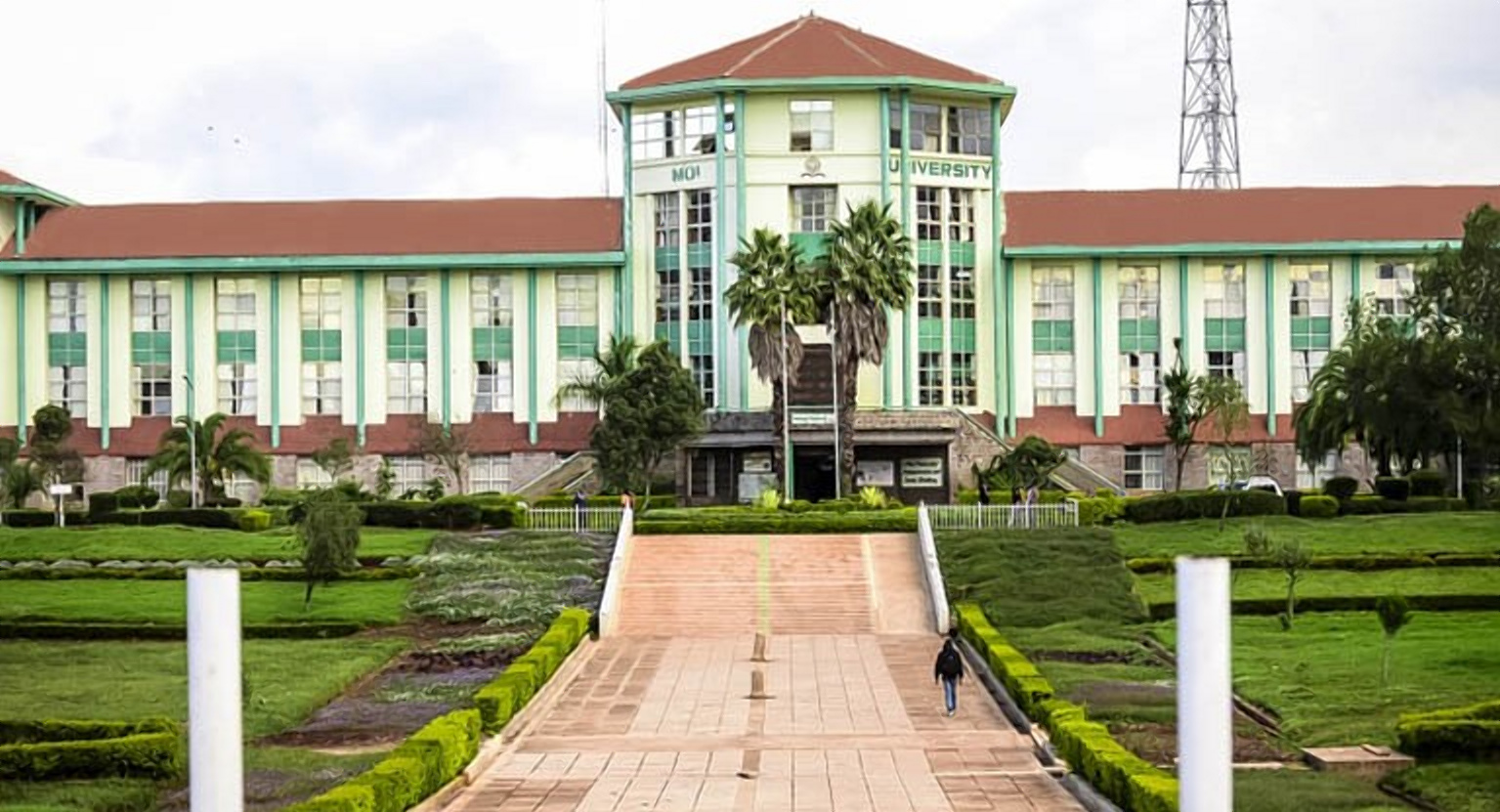
Moi University has averted one of the gravest financial crises in its history after settling a decades-old legal dispute that had exposed the institution to a debt of more than KSh1 billion. The resolution of the case, which dates back to the early 1990s, marks a turning point in the university’s struggle to restore financial stability and rebuild confidence among stakeholders.
The dispute involved Vishva Builders Limited, a contractor engaged to construct the Faculty of Science Complex at the Eldoret main campus. The project, initially valued at KSh547.7 million before being renegotiated to KSh476.3 million, stalled in 1991 after the university failed to sustain funding. By then, only nine per cent of the work had been completed. The contract was formally terminated in 1999, with Moi University pledging to settle verified claims once government funding became available.
Court records show that the university paid KSh57.2 million and a retention fee of KSh6.3 million, but disagreements over the balance led Vishva Builders to sue. In subsequent rulings, the High Court awarded the contractor KSh185.3 million. Years of non-payment saw the figure balloon to over Sh1 billion due to accumulated interest at commercial bank rates. By February 2025, the decree stood at Sh1.08 billion, making it one of the largest financial claims ever pursued against a public university in Kenya.
The matter was finally withdrawn on June 25, 2026, when Vishva Builders informed the High Court in Eldoret that the dispute had been fully settled. Justice John Chigiti adopted the withdrawal as an order of the court on June 30, directing each party to bear its own costs and dismissing objections raised by third parties. The ruling effectively closed a commercial dispute that had remained unresolved for nearly three decades.
Before the settlement, Moi University had suffered a major setback when Justice Wananda Anuro ordered the attachment of several bank accounts after management failed to present a credible repayment plan. Although accounts holding research grants and scholarships were spared, the order threatened to paralyse operations. Justice Anuro criticised the prolonged litigation, noting that it was unacceptable for a dispute of such magnitude to remain unresolved for almost 25 years.
ALSO READ:
All university students to get HELB loans under new funding model, says PS Inyangala
The resolution of the Sh1 billion case offers relief but does not erase the university’s wider financial troubles. Moi University continues to grapple with unresolved obligations, including a disputed Sh25 million tender for a university gate and investigations into the diversion of Sh7.7 million in student fees into a private account. The institution is also servicing a Sh3 billion loan borrowed to modernise New Rivatex, having earlier spent Sh600 million to acquire the textile firm.
Declining student enrolment has compounded the crisis. Numbers fell from nearly 50,000 in 2015 to about 27,000 by 2021, slashing internally generated revenue. Government capitation has failed to keep pace with rising operational costs and staff expenditure driven by unfunded collective bargaining agreements. Several satellite campuses have since been shut down as part of cost-cutting measures.
Despite these challenges, the newly constituted University Council says a recovery plan is gathering momentum. Reforms include staff rationalisation, restructuring of operations, diversification of income sources, closure of non-performing campuses, infrastructure reorganisation and tighter expenditure controls. Renovation of student hostels is underway, and management reports that salary delays have largely been addressed.
ALSO READ: Moi University workers reject court-awarded compensation, head to appeal over redundancy dispute
Auditor-General Nancy Gathungu has ordered a forensic audit into the university’s financial affairs after liabilities were estimated at Sh8 billion. Council member Dr Edwin Sambili expressed optimism, saying reforms are beginning to bear fruit. He cited timely payment of staff salaries, rehabilitation of facilities and improved financial management as early indicators of progress.
The settlement of the Vishva Builders case is therefore seen not only as the conclusion of a costly legal battle but also as a pivotal step in Moi University’s broader journey toward recovery. If the current reforms are sustained, leaders believe the institution can gradually reclaim its position as one of Kenya’s premier centres of higher learning after years of financial uncertainty and operational strain.
By Hillary Muhalya
You can also follow our social media pages on Twitter: Education News KE and Facebook: Education News Newspaper for timely updates.
>>> Click here to stay up-to-date with trending regional stories
>>> Click here to read more informed opinions on the country’s education landscape