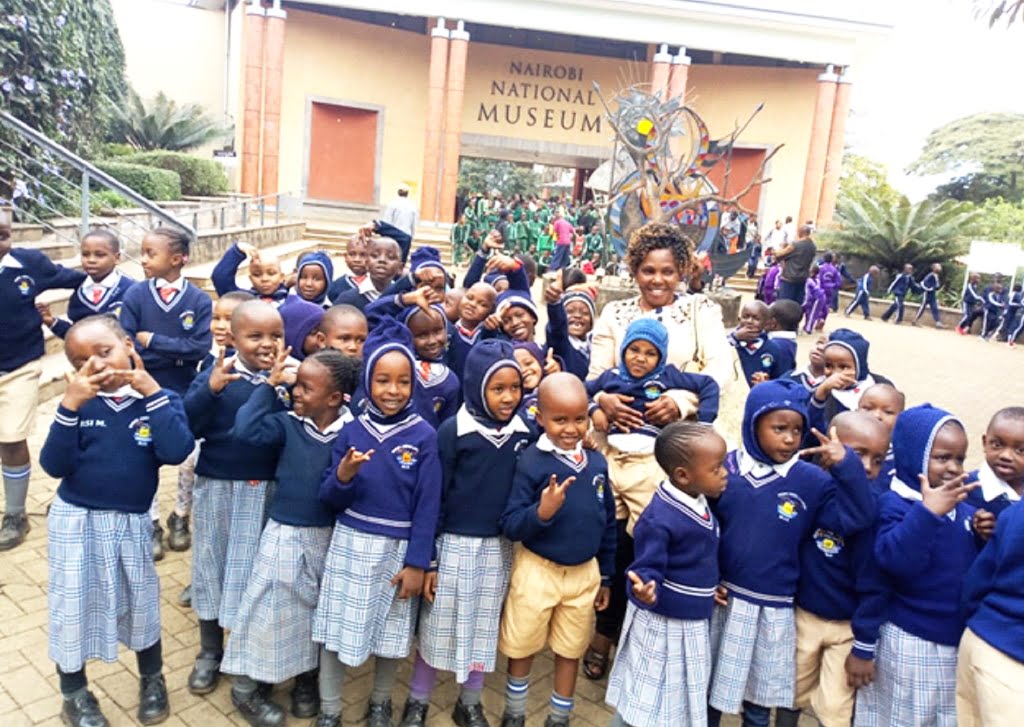
- Hillary Muhalya argues that educational field trips transform classroom knowledge into practical experience, making learning more meaningful under the Competency-Based Education (CBE) curriculum.
- He says experiential learning nurtures critical thinking, creativity, career awareness and lifelong skills that textbooks alone cannot provide.
Imagine asking a learner to describe the majesty of a lion after reading about it in a textbook, then asking another who has watched the animal roam freely across the savannah. Ask one student to explain how justice works after memorising notes in class, then compare that with another who has sat quietly inside a courtroom watching judges, lawyers and witnesses bring the law to life. The difference is immediate. One learner remembers information, while the other understands it.
This is the transformative power of field trips—an approach to learning that is increasingly proving indispensable in modern education. Across the world, schools are recognising that some of the most valuable lessons cannot be confined within four classroom walls. They must be experienced, explored and lived.
As education systems evolve to prepare learners for an unpredictable and fast-changing world, practical learning has become just as important as academic excellence. Kenya’s Competency-Based Education (CBE) embodies this philosophy by shifting attention from memorising facts to developing practical competencies, creativity, critical thinking, collaboration and problem-solving. Within this framework, field trips are no longer viewed as recreational outings but as essential learning experiences that transform knowledge into real-world understanding.
Every child is naturally curious. Long before they learn to read, they learn by observing, touching, asking questions and experimenting. Unfortunately, traditional classroom settings sometimes suppress this curiosity by placing greater emphasis on examinations than exploration. Educational excursions reignite that natural desire to discover. They turn learning into an adventure where every observation becomes a lesson and every question opens the door to deeper understanding.
Experiential learning brings the curriculum to life
A visit to a museum can make centuries of history feel alive. Standing before ancient artefacts allows learners to connect emotionally with events they previously encountered only in books. Walking through historical sites enables them to appreciate the sacrifices, cultures and achievements that shaped societies. Such experiences create lasting memories because learners associate knowledge with real places, people and emotions rather than isolated facts.
The same principle applies across every subject. Science becomes more exciting inside laboratories, botanical gardens, wildlife parks and research institutions where theories are demonstrated through practical experiments and natural phenomena. Geography becomes meaningful when learners observe rivers, mountains, forests and urban developments firsthand instead of merely identifying them on printed maps. Agriculture gains greater relevance when students visit farms to witness irrigation systems, crop production, livestock management and modern farming technologies in action.
Business studies acquire new meaning when learners tour manufacturing industries and discover how raw materials are transformed into finished products through innovation and technology. Mathematics suddenly becomes practical when learners observe how measurements, budgeting, engineering and architecture influence everyday life. Even literature comes alive when students visit cultural centres, theatres and heritage institutions that celebrate storytelling and artistic expression.
Such experiences illustrate one fundamental truth: learning becomes unforgettable when learners actively participate in it. Educational psychologists have long argued that people retain more information through experience than through passive listening. When learners see, hear, discuss and interact with their environment, multiple senses work together to strengthen memory and comprehension. Instead of memorising concepts for examinations, they begin to understand how knowledge functions in everyday life.
This experiential approach lies at the heart of CBE. The curriculum seeks to produce learners who can innovate, communicate effectively, solve problems and adapt confidently to changing environments. These competencies cannot be fully developed through textbooks alone. They require exposure to authentic situations that challenge learners to think independently and apply classroom knowledge in meaningful contexts.
Field trips build skills beyond the classroom
Field trips also nurture critical thinking by encouraging inquiry. Learners are naturally prompted to ask why things happen the way they do, how systems operate and what improvements could be made. Such questioning cultivates analytical minds capable of identifying problems and proposing practical solutions—qualities increasingly demanded in higher education and the modern workplace.
Beyond academic achievement, educational excursions contribute immensely to personal growth. Travelling together teaches learners responsibility, punctuality and discipline. They must manage time, follow safety instructions, cooperate with teachers and respect public spaces. These seemingly simple experiences cultivate habits that shape responsible citizenship.
Interaction with classmates outside the classroom also strengthens teamwork and interpersonal relationships. Learners collaborate while completing assignments, discussing observations and solving challenges encountered during educational visits. They develop communication, empathy and leadership skills while learning to appreciate different personalities and perspectives.
One of the most profound benefits of field trips is cultural exposure. Visiting communities, museums, historical landmarks and cultural festivals enables learners to appreciate diversity while developing respect for traditions and values different from their own. In increasingly interconnected societies, such cultural competence has become an essential life skill.
Nature-based excursions offer equally significant advantages. Spending time in forests, national parks, wetlands and conservation areas helps learners understand biodiversity, environmental conservation and climate change far better than classroom lectures alone. Witnessing ecosystems firsthand nurtures environmental responsibility and encourages young people to become active custodians of natural resources.
Physical activity during educational visits also supports mental and emotional well-being. Time spent outdoors reduces stress, stimulates curiosity and renews enthusiasm for learning. Learners return to school refreshed, motivated and eager to connect classroom lessons with their newly acquired experiences.
Career exposure represents another powerful outcome of educational trips. Many young people struggle to choose careers simply because they have never interacted with professionals working in different fields. Visiting hospitals, universities, courts, media houses, engineering firms, technology hubs, research institutions, financial organisations and agricultural centres provides learners with firsthand insights into various professions.
Meeting doctors, journalists, engineers, lawyers, scientists, entrepreneurs, pilots, architects and innovators helps students appreciate the realities of different occupations. These interactions inspire ambition while enabling learners to make informed educational and career choices aligned with their talents, passions and abilities.
Field trips equally strengthen organisational and leadership abilities. Learners prepare itineraries, conduct research before departure, record observations, ask meaningful questions and present reports after returning to school. These activities cultivate planning, accountability, communication and presentation skills that remain valuable throughout life.
Teachers also benefit significantly from experiential learning. Educational visits create opportunities to observe learners demonstrating competencies in authentic settings rather than relying exclusively on written assessments. Teachers gain deeper insights into learners’ creativity, confidence, collaboration, leadership and problem-solving abilities, enabling more holistic evaluation consistent with the principles of Competency-Based Education.
Parents equally have an important role in supporting educational excursions. Rather than viewing field trips as unnecessary expenses or leisure activities, they should recognise them as investments in their children’s holistic development. The lessons acquired through direct experience often shape attitudes, aspirations and career ambitions long after school years have ended.
Preparing learners for the future through real-world experiences
However, the success of educational trips depends on careful planning. Schools must ensure that visits are curriculum-based, inclusive, safe and accessible to all learners regardless of their backgrounds. Every excursion should have clearly defined learning objectives, adequate supervision and opportunities for reflection after returning to school. It is during these reflections that learners connect experience with academic concepts, reinforcing understanding and deepening learning outcomes.
Around the world, education is steadily moving away from passive instruction towards active participation. Employers increasingly seek graduates who can think critically, communicate effectively, innovate and solve complex challenges rather than simply recall information. This reality makes experiential learning not merely desirable but indispensable.
Kenya’s continued implementation of Competency-Based Education presents an ideal opportunity to institutionalise educational field trips as an integral component of learning. Schools that embrace experiential education are likely to produce learners who are not only academically competent but also socially responsible, emotionally intelligent and professionally prepared.
The future belongs to individuals who can transform knowledge into action. Such individuals are developed not only through examinations but through experiences that stretch their imagination, sharpen their judgment and broaden their worldview.
The most memorable classroom may never have walls. It could be a courtroom where justice unfolds before curious eyes, a wildlife reserve where nature teaches lessons no textbook can capture, a science laboratory where discovery replaces theory, or a manufacturing plant where innovation becomes visible. These are the classrooms where confidence grows, curiosity flourishes and dreams are born.
Education is ultimately not about how much information learners can store, but about how effectively they can use that knowledge to improve their lives and society. Field trips achieve exactly that. They transform learning from something learners simply study into something they experience, understand and carry with them for the rest of their lives.
READ ALSO: What next for the TSC CEO race after Sossion, Lentoijoni nominations as commissioners?
As schools prepare young people for a future defined by innovation, adaptability and lifelong learning, one lesson is becoming increasingly clear: sometimes the most powerful education begins the moment learners step outside the classroom door.
By Hillary Muhalya
You can also follow our social media pages on Twitter: Education News KE and Facebook: Education News Newspaper for timely updates.
>>> Click here to stay up-to-date with trending regional stories
>>> Click here to read more informed opinions on the country’s education landscape