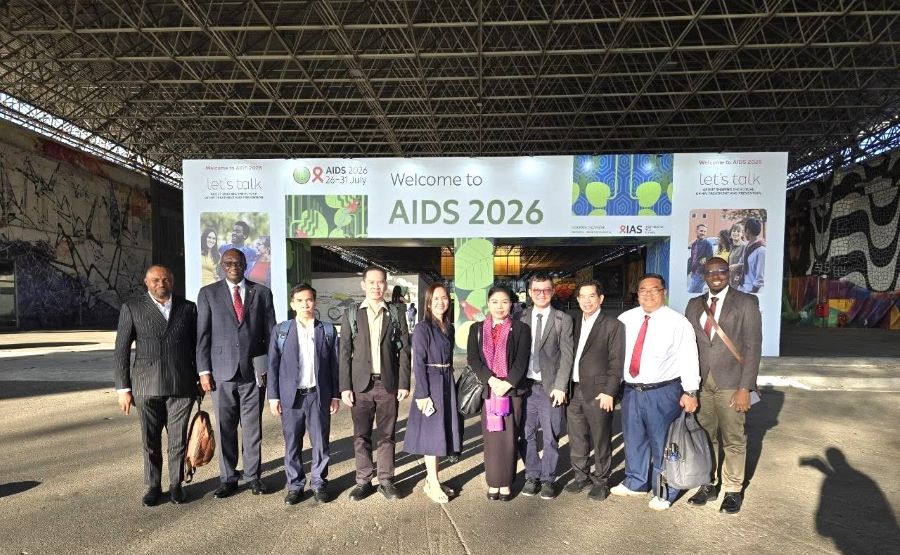
- AIDS 2026 brings the global HIV community together in Rio de Janeiro through July 31.
- Delegates are confronting funding cuts while examining new prevention, treatment and research breakthroughs.
- Kenya enters the discussions with 1.48 million people estimated to be living with HIV.
The world’s attention has shifted to Rio de Janeiro, Brazil, where the International AIDS Conference 2026 is taking place from July 26 to 31 at the renowned Riocentro Convention & Event Center. Widely regarded as the world’s largest and most influential gathering on HIV and AIDS, the conference has brought together scientists, clinicians, policymakers, advocates, development partners, community leaders and people living with HIV. Thousands more are participating virtually, making it one of the most significant global public health events of the year.
Held under the theme “Rethink. Rebuild. Rise.”, the conference comes at a defining moment in the global response to HIV. It is far more than a scientific meeting—it is a platform for assessing progress, confronting emerging threats, embracing innovation and renewing the world’s commitment to ending AIDS as a public health threat by 2030.
The urgency of the conference becomes clear when viewed against the latest global statistics. Today, an estimated 40.9 million people are living with HIV worldwide. Although modern medicine has transformed HIV from a fatal disease into a manageable chronic condition for millions, the epidemic continues to claim lives and challenge health systems. In 2025, approximately 1.2 million people acquired HIV, while an estimated 570,000 people died from AIDS-related illnesses. These figures demonstrate that despite decades of progress, the fight against HIV is far from over.
Africa remains heavily affected
Nowhere is this challenge more evident than in sub-Saharan Africa, which remains the epicentre of the epidemic. Women and girls continue to bear a disproportionate burden of new infections, particularly in eastern and southern Africa, where gender inequality, poverty, limited healthcare access and gender-based violence continue to fuel transmission.
For Kenya, the conference carries particular significance. The country has made remarkable progress in expanding HIV testing, treatment and prevention programmes, becoming one of Africa’s success stories in the HIV response. Yet the challenge remains substantial. Kenya is home to an estimated 1.48 million people living with HIV, with an adult HIV prevalence of approximately 3.22 percent. The country records nearly 14,000 new HIV infections annually, while close to 19,500 people continue to die each year from AIDS-related illnesses. Encouragingly, Kenya has achieved more than 91 percent coverage in preventing mother-to-child transmission, demonstrating the impact of sustained investment and coordinated public health interventions.
These statistics explain why the International AIDS Conference could not have come at a more critical time.
After years of remarkable achievements, the global HIV response is facing fresh challenges. International funding for HIV programmes has come under increasing pressure, raising concerns about the sustainability of prevention campaigns, treatment services, laboratory systems and community-based programmes that millions of people depend upon every day.
Against this backdrop, delegates in Rio are exploring sustainable financing models capable of protecting decades of progress while ensuring that lifesaving medicines remain available to all who need them.
Science opens new frontiers
At the same time, science is opening exciting new frontiers. Researchers are presenting advances in long-acting injectable medicines, improved diagnostics, digital health technologies, vaccine development and cure research. These innovations hold enormous promise, but experts emphasize that their benefits must reach every country, not only those with the greatest resources.
The conference is also confronting one of the greatest contradictions in global healthcare. While many wealthy nations have achieved widespread access to HIV testing and treatment, millions of people in lower-income countries continue to face shortages of medicines, weak health systems, inadequate laboratory services and limited numbers of trained healthcare workers.
Delegates have repeatedly stressed that stigma and discrimination remain among the greatest barriers to ending AIDS. Fear of rejection continues to discourage many people from getting tested, disclosing their HIV status or remaining on treatment. Ending the epidemic therefore requires not only scientific innovation but also the protection of human rights, social inclusion and equal access to healthcare.
Mental health has become another central theme. Many people living with HIV continue to experience anxiety, depression, loneliness and social isolation. Experts are advocating integrated healthcare models that combine HIV treatment with mental health support, sexual and reproductive healthcare, tuberculosis services and primary healthcare to improve patients’ overall well-being.
Young people are equally at the heart of the discussions. Adolescents and young adults continue to account for a significant share of new infections in many countries. Participants are calling for comprehensive sexuality education, youth-friendly health services, digital awareness campaigns and stronger investments in prevention programmes that empower young people to make informed decisions.
Despite these challenges, the conference celebrates remarkable achievements made over the last four decades. Modern antiretroviral therapy enables people living with HIV to live long, healthy and productive lives. Scientific evidence has also confirmed that people whose viral load is successfully suppressed to undetectable levels cannot sexually transmit HIV, reinforcing the global Undetectable = Untransmittable (U=U) campaign.
The conference is also recognizing the extraordinary contribution of community-led organizations, healthcare workers, researchers and governments whose partnerships have dramatically expanded access to HIV testing, treatment and prevention services across the world.
Race towards 2030
Digital transformation is emerging as another powerful force in the HIV response. Artificial intelligence, telemedicine, electronic medical records and mobile health applications are helping healthcare providers improve patient monitoring, strengthen disease surveillance, increase treatment adherence and deliver more efficient services.
Looking ahead, delegates believe the greatest opportunities lie in expanding access to long-acting HIV medicines, strengthening domestic financing, investing in locally led research, integrating HIV services into broader healthcare systems and protecting the rights and dignity of people living with HIV.
With only a few years remaining before the global target of ending AIDS as a public health threat by 2030, leaders meeting in Rio acknowledge that the coming years will determine whether the world fulfils one of its greatest public health ambitions. The conference is therefore not simply another international meeting—it is a decisive moment for governments, scientists, healthcare providers, donors and communities to recommit themselves to a future free from AIDS.
READ ALSO: KNEC opens additional KJSEA examiner training slots as teachers rush to apply
The message emerging from Rio de Janeiro is both urgent and hopeful: science has provided unprecedented tools, communities have demonstrated extraordinary resilience and partnerships have saved millions of lives. The task that remains is to ensure that every person, regardless of where they live, has equal access to prevention, treatment, care and the opportunity to live a healthy, dignified life.
By Hillary Muhalya
You can also follow our social media pages on Twitter: Education News KE and Facebook: Education News Newspaper for timely updates.
>>> Click here to stay up-to-date with trending regional stories
>>> Click here to read more informed opinions on the country’s education landscape