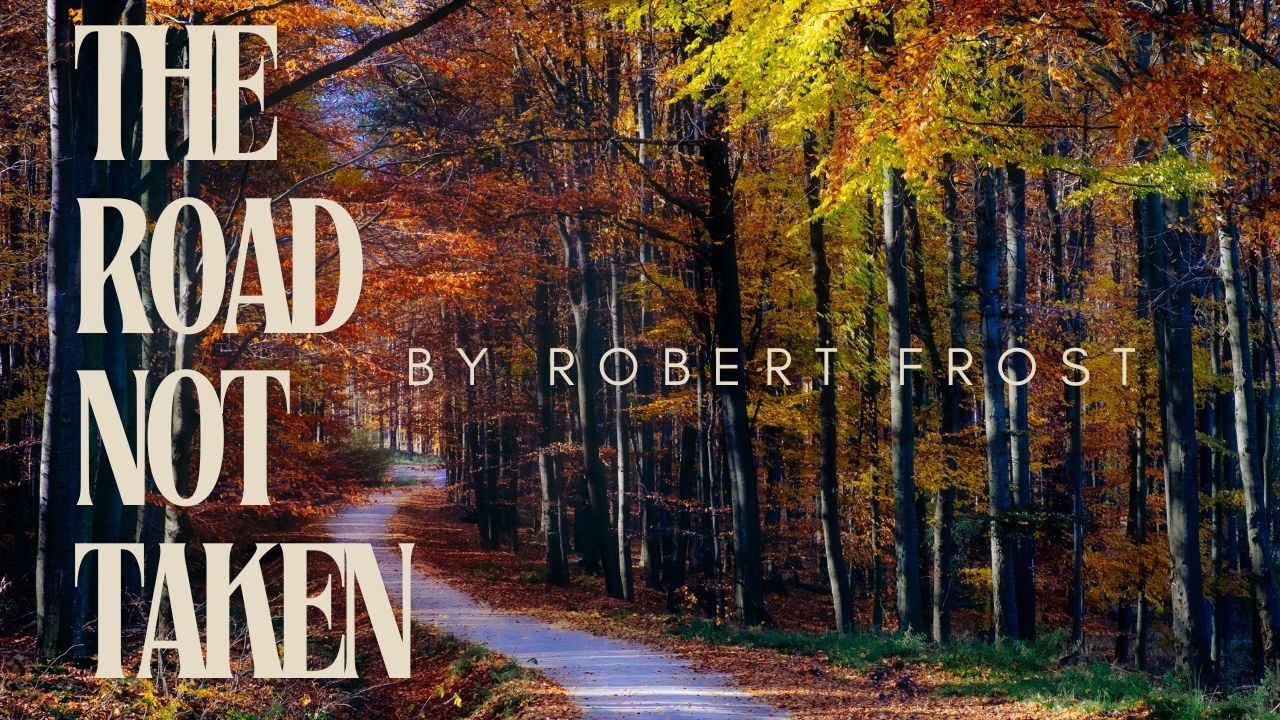
- Robert Frost’s The Road Not Taken was inspired by his friend Edward Thomas’s indecision during countryside walks in England; the poem was intended partly as satire but became widely misinterpreted as a meditation on bold choices.
- While popularly read as endorsing independence, the poem actually notes both roads were “really about the same,” highlighting humanity’s tendency to reshape memories and invent significance after the fact; critics see it as a study in ambiguity.
- The poem helped establish Frost’s reputation; its cultural reach endures, appearing in speeches, books, and advertisements, often simplified into motivational slogans.
Few poems in the English language have achieved the cultural influence of Robert Frost’s The Road Not Taken. Published in the August 1915 edition of The Atlantic Monthly, the poem has become one of the most quoted, memorised, and misunderstood works in literary history.
More than a century after its first appearance, it continues to inspire graduation speeches, political addresses, motivational books, and personal reflections about life’s choices. Yet the poem’s true story is far more fascinating than the popular interpretation suggests.
Robert Frost was already emerging as one of America’s leading poets when The Road Not Taken appeared in print. Although remembered today as an iconic American writer, Frost’s literary breakthrough actually came during his stay in England between 1912 and 1915. There he developed friendships with several distinguished writers, including the English poet Edward Thomas. Their relationship would profoundly influence one of literature’s most celebrated poems.
Frost and Thomas frequently spent long hours walking through the English countryside. During these excursions, Thomas had a habit of second-guessing whichever route they chose. After selecting one path, he would often wonder aloud whether another would have been more scenic or rewarding.
Frost found his friend’s perpetual indecision both amusing and revealing. Rather than celebrating adventurous choices, Thomas constantly regretted the paths he had not taken. This tendency inspired Frost to compose a playful poem teasing his friend’s inability to be satisfied with life’s decisions.
In early 1915, Frost mailed Thomas a draft of the poem, originally titled Two Roads. Frost expected his friend to recognise the gentle satire. Instead, Thomas interpreted the poem literally and admired it as a profound meditation on life’s decisive moments. Frost tried repeatedly through letters to explain that the poem contained a “mock sigh” and was intended partly as a humorous commentary on Thomas’s personality.
ALSO READ:
Prof John Okumu confirmed as Kenyatta University Vice Chancellor after PSC-led recruitment
Thomas, however, remained unconvinced, believing the poem expressed genuine philosophical reflection. Their exchange marked the beginning of a misunderstanding that has continued for more than a century.
When The Road Not Taken appeared in The Atlantic Monthly in August 1915, it was published alongside two other Frost classics, Birches and The Sound of Trees. Readers immediately admired its conversational language and vivid imagery. Unlike much Victorian poetry, Frost wrote in an accessible style that resembled everyday speech while concealing remarkable philosophical complexity beneath its simple surface.
Interpreting Frost’s Imagery and Popular Misreadings
The poem’s opening lines introduce a traveller standing before two diverging roads in a yellow wood. Unable to travel both, the speaker carefully examines each path before making a choice. Most readers remember the poem’s closing declaration that the speaker took “the one less travelled by,” interpreting it as an endorsement of independence and nonconformity. This reading has become so widespread that the poem is frequently cited as encouragement to reject the crowd and follow one’s unique path.
Yet a closer reading reveals something quite different. Earlier in the poem, Frost explicitly states that the two roads had been worn “really about the same” and that both lay in leaves “no step had trodden black.” In other words, neither road was meaningfully less travelled than the other. The speaker later imagines telling the story “with a sigh,” suggesting that people often reshape memories to create meaningful narratives about choices that were, at the time, largely arbitrary. Literary critics increasingly regard the poem not as a celebration of bold decision-making but as an exploration of humanity’s tendency to invent significance after the fact.
This subtle irony partly explains why the poem has generated endless debate. Frost delighted in ambiguity and resisted simple interpretations. His poetry often appeared straightforward while inviting multiple layers of meaning. As he once observed, he enjoyed setting verbal “traps” that encouraged readers to think beyond the obvious. The Road Not Taken exemplifies this technique perfectly, rewarding repeated readings with fresh insights.
The poem also occupies an important place in Frost’s literary development. In 1916, it became the opening poem in his collection Mountain Interval, helping establish his reputation upon returning to the United States. Over subsequent decades, Frost would win four Pulitzer Prizes and become one of America’s most celebrated poets. His ability to transform ordinary rural experiences into universal reflections on human existence remains unmatched in American literature.
The personal story behind the poem carries a bittersweet dimension. Edward Thomas eventually enlisted to fight in the First World War and was killed at the Battle of Arras in 1917. Some scholars have wondered whether Frost’s playful poem unintentionally influenced Thomas’s thinking about decisive action, although such claims remain speculative. What is certain is that Frost deeply mourned the loss of his close friend, and the poem has since acquired emotional associations that extend beyond its original humorous intent.
ALSO READ:
Cultural Legacy and Enduring Influence
Today, The Road Not Taken remains firmly embedded in global culture. Its closing lines appear in commencement speeches, business seminars, political rhetoric, advertisements, and self-help literature. Ironically, many of these uses simplify the poem into a motivational slogan, overlooking the ambiguity that makes it such a rich literary achievement. This gap between popular understanding and scholarly interpretation has become part of the poem’s enduring legacy.
More than 110 years after its publication in The Atlantic Monthly, Robert Frost’s masterpiece continues to invite readers to reflect on the nature of choice, memory, and storytelling. Rather than offering easy answers about success or individuality, the poem reminds us that human beings continually reinterpret their past decisions to create coherent narratives about their lives. That complexity explains why The Road Not Taken has survived not merely as a famous poem but as an enduring work of literary art whose meaning evolves with every generation of readers.
by Ashford Kimani
Ashford is a teacher of English and Literature who writes on education and social affairs.
You can also follow our social media pages on Twitter: Education News KE and Facebook: Education News Newspaper for timely updates.
>>> Click here to stay up-to-date with trending regional stories
>>> Click here to read more informed opinions on the country’s education landscape
>>> Click here to stay ahead with the latest national news.