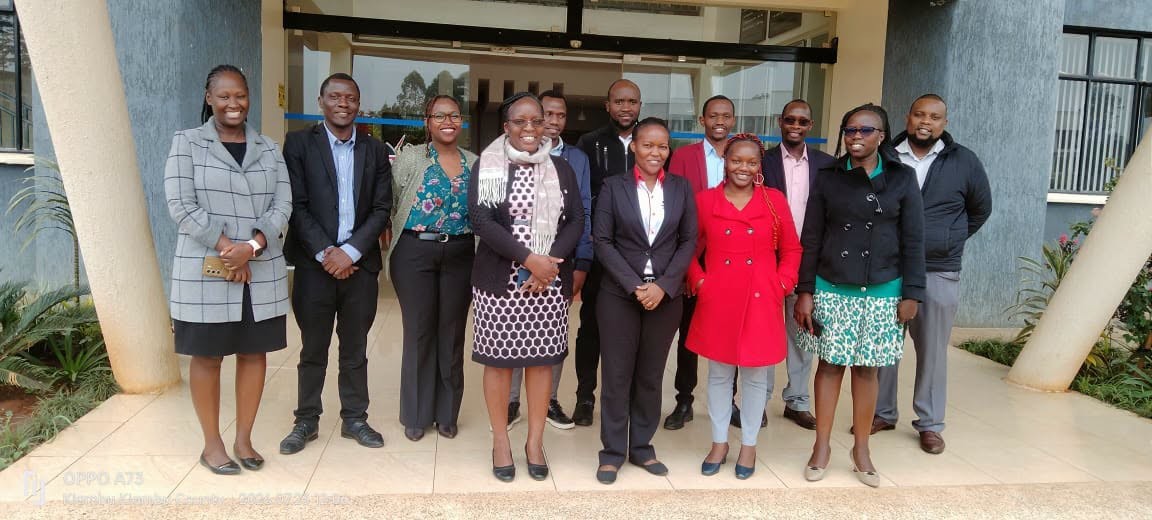
- Huduma Kenya and Kiambu National Polytechnic advanced discussions on a Dual Training Programme to strengthen ICT and software development training under the CBET framework.
- The initiative blends classroom instruction with workplace experience, ensuring graduates leave with both academic qualifications and practical skills demanded by employers
- The collaboration aligns with Kenya’s digital transformation agenda, aiming to produce job‑ready graduates who can drive innovation, entrepreneurship, and public service efficiency.
Kenya’s push to equip young people with market‑ready skills has gained momentum after Huduma Kenya Secretariat officials held a technical meeting with the management of Kiambu National Polytechnic (KINAP) to deepen collaboration on a strategic Dual Training Programme.
The meeting, hosted at Kiambu National Polytechnic, focused on strengthening delivery of Information and Communication Technology (ICT) and software development courses under the Competency‑Based Education and Training (CBET) framework. The initiative reflects government efforts to bridge the gap between classroom learning and workplace demands in a rapidly evolving digital economy.
Huduma Kenya said discussions centred on developing a dual training model that blends theoretical instruction with extensive workplace experience. The approach is expected to ensure graduates leave with both academic qualifications and practical competencies increasingly sought by employers.
Officials emphasised that the partnership aims to produce graduates who are not only knowledgeable but also job‑ready. By integrating classroom instruction with real‑world industry exposure, the programme seeks to nurture professionals capable of thriving in Kenya’s digital transformation agenda.
Dual Training Model to Bridge Classroom and Workplace Skills
Unlike traditional models where students spend most of their time in classrooms before seeking employment, the dual training system exposes learners to continuous workplace experience during their studies. This enables them to gain hands‑on skills, build confidence, and understand professional expectations before graduation.
For ICT and software development students, the approach is particularly critical. The technology sector is evolving at unprecedented speed, requiring graduates to demonstrate technical expertise, problem‑solving ability, teamwork, and adaptability. Direct exposure to industry environments allows learners to sharpen these attributes while engaging with modern digital systems.
Kenya has increasingly embraced competency‑based training as part of reforms aimed at transforming Technical and Vocational Education and Training (TVET) into a driver of economic growth. The CBET model prioritises demonstrable skills over examinations, encouraging institutions to partner with government agencies and private sector players to create meaningful workplace learning opportunities.
The Huduma Kenya–Kiambu Polytechnic discussions therefore align with the national agenda of building a digitally skilled workforce to support innovation, entrepreneurship, and public service transformation. As government services become increasingly digitised, demand is rising for professionals in software engineering, systems development, cybersecurity, networking, and digital service delivery.
Huduma Kenya has emerged as a leading public service platform, consolidating multiple government services under one roof while leveraging technology to improve efficiency. Partnering with ICT‑focused institutions offers an opportunity to nurture talent that can contribute to future digital transformation initiatives across government.
For students, the collaboration promises practical learning experiences, mentorship, industrial attachments, and stronger employment linkages. Employers also stand to benefit by shaping graduates whose skills closely match workplace requirements.
ALSO READ:
The meeting underscored the growing recognition that tackling youth unemployment requires stronger collaboration between education institutions, government agencies, and industry. Equipping learners with practical experience before graduation enhances employability and reduces the mismatch between academic qualifications and labour market expectations.
Beyond technical expertise, dual training programmes also cultivate soft skills such as communication, teamwork, critical thinking, and professionalism—qualities increasingly valued across all sectors.
As Kenya accelerates its digital transformation, investments in ICT and software development training are expected to play a pivotal role in preparing the next generation of innovators and technology professionals. If successfully implemented, the Huduma Kenya–Kiambu Polytechnic partnership could serve as a model for future collaborations between government and TVET institutions, ensuring graduates leave with both certificates and the practical competencies needed to succeed in a technology‑driven economy.
By Hillary Muhalya
You can also follow our social media pages on Twitter: Education News KE and Facebook: Education News Newspaper for timely updates.
>>> Click here to stay up-to-date with trending regional stories
>>> Click here to read more informed opinions on the country’s education landscape