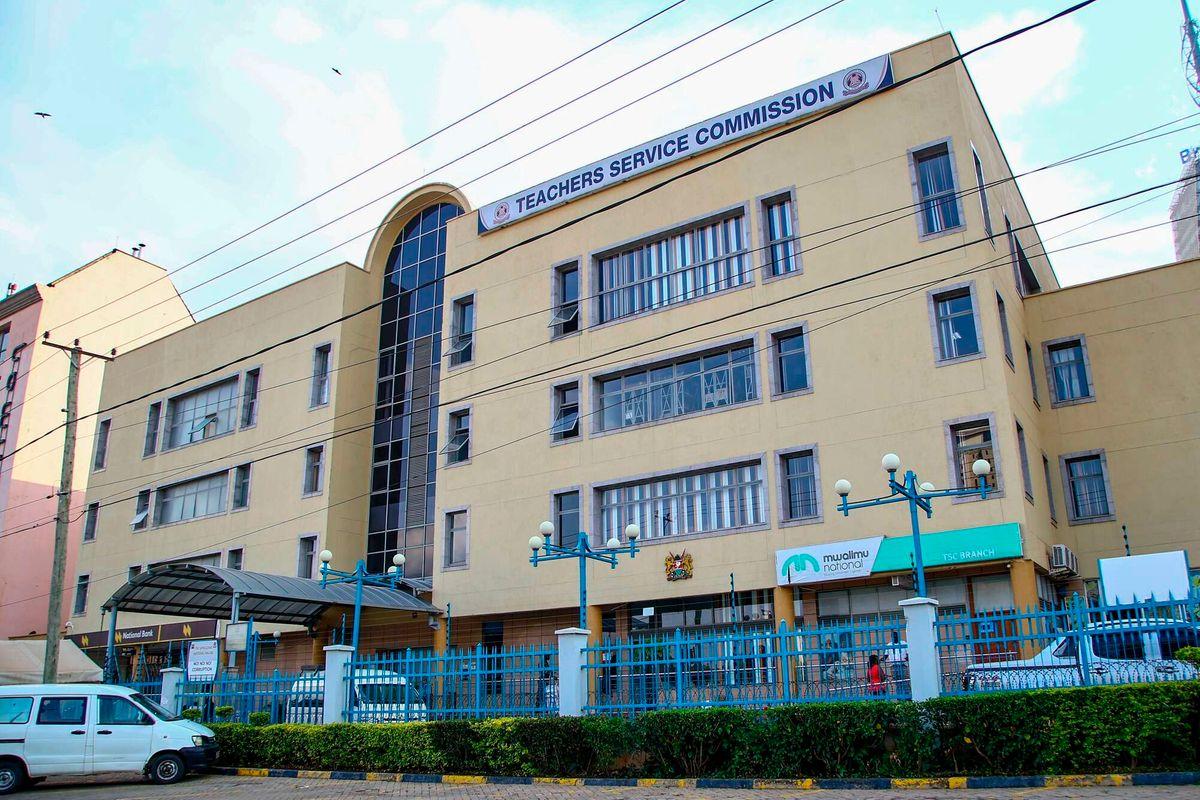
- TSC surprised many by promptly executing the 2025–2029 CBA salary adjustments, breaking the long‑standing tradition of delays in Kenya’s public service.
- The timely rollout coincided with the tenure of Acting CEO Evaleen Mitei, reinforcing perceptions of a more responsive Commission. While leadership played a role, the achievement also reflected the collective effort
- The move demonstrated that public institutions can deliver on commitments without bureaucratic delays. It set a benchmark for other government agencies.
For many years, salary reviews in Kenya’s public service have followed a familiar and frustrating pattern. Negotiations are concluded, agreements are signed, celebrations follow, and then comes the long wait. Employees often spend months, and in some instances years, wondering when the promises made at the negotiating table will finally appear in their payslips. The delays have become so common that many public servants have learned to lower their expectations, viewing salary agreements as commitments whose implementation is uncertain rather than guaranteed.
It is against this backdrop that the Teachers Service Commission (TSC) has distinguished itself by moving with remarkable speed to implement teachers’ adjusted salaries under the 2025–2029 Collective Bargaining Agreement (CBA). The Commission’s efficiency has surprised many within the education sector and has sparked a broader conversation about what is possible when leadership, planning, and institutional commitment come together. At a time when public institutions are frequently criticized for slow execution, TSC has demonstrated that government agencies can honour their obligations without subjecting employees to prolonged uncertainty.
The importance of this achievement extends far beyond the salary increment itself. Every negotiated pay rise represents more than additional income; it is a fulfilment of a promise and a reflection of the employer’s respect for its workforce. When agreements are implemented promptly, employees gain confidence that negotiations are meaningful and that dialogue produces tangible results. Conversely, when implementation is delayed, trust is eroded, morale declines, and industrial relations become increasingly strained.
Teachers understand this reality better than most. They dedicate their lives to educating Kenya’s children, shaping future professionals and laying the foundation for national development. Yet they have, over the years, experienced numerous delays in the implementation of policies affecting their welfare. It is therefore understandable that many approached the latest salary review with cautious optimism. Few expected the revised salaries to be processed and reflected as quickly as they were.
ALSO READ:
MoE flags ‘widespread errors’ in Junior School onboarding, orders heads to personally verify data
Teachers Gain Confidence Through Timely Relief
The prompt implementation has not only brought financial relief to hundreds of thousands of teachers but has also restored confidence in the Commission’s administrative capacity. Teachers can now plan their finances with greater certainty, meet household obligations, service loans, educate their own children, and manage daily expenses without the anxiety that often accompanies delayed implementation of negotiated benefits. In today’s economic climate, where the cost of living continues to put pressure on household budgets, timely salary adjustments are not simply convenient—they are essential.
Interestingly, this renewed efficiency has coincided with the period following the appointment of Acting TSC Chief Executive Officer and Secretary, Evaleen Mitei. While it would be inaccurate to attribute the work of an entire constitutional commission to one individual alone, leadership often influences institutional culture and the pace at which decisions are executed. Since Mitei assumed office, there has been a growing perception among stakeholders that the Commission has become more responsive and more focused on delivering results within reasonable timelines. The speedy implementation of adjusted salaries has reinforced that perception and generated optimism that a new chapter of administrative efficiency may be taking shape within the Commission.
This observation should not be viewed as diminishing the contribution of the many directors, managers, payroll officers, ICT specialists, finance teams, and other professionals whose collective effort made the exercise possible. Processing revised salaries for hundreds of thousands of teachers is one of the most complex payroll operations undertaken by any public institution in Kenya. It requires accurate employee records, flawless coordination between multiple departments, integration of revised salary structures into digital payroll systems, and close collaboration with the National Treasury. Completing such an exercise successfully within a short period is evidence of an institution functioning with discipline, competence, and purpose.
There is another important lesson that emerges from TSC’s experience. Public institutions often face criticism whenever service delivery falls short of expectations, and rightly so. Accountability is essential in a democratic society.
However, accountability should also include acknowledging institutions that perform well. Recognising efficiency is not an act of public relations; it is an incentive for excellence. When good performance goes unnoticed while failures dominate public discourse, institutions receive little motivation to maintain high standards.
The Commission’s timely implementation of salary adjustments therefore deserves recognition because it demonstrates that effective public administration is achievable. It challenges the long-held assumption that bureaucratic delays are an unavoidable feature of government operations. Instead, it proves that with proper planning, committed leadership, robust digital systems, and institutional coordination, even large and complex administrative exercises can be completed efficiently.
The benefits of this approach extend beyond teachers themselves. Motivated educators are more likely to devote their energy to teaching rather than worrying about delayed remuneration. Financial stability allows teachers to focus on curriculum delivery, learner mentorship, examination preparation, and innovation in the classroom. Ultimately, learners become the greatest beneficiaries when teachers feel respected and supported by their employer.
This is not to suggest that every issue affecting the teaching profession has been resolved. Teachers continue to raise legitimate concerns regarding career progression, promotions, recruitment to bridge staffing shortages, equitable deployment, housing, and other welfare matters. These challenges require sustained attention and should remain high on the Commission’s reform agenda. Nevertheless, acknowledging the successful implementation of adjusted salaries does not weaken calls for further reforms. On the contrary, it demonstrates that when the Commission prioritises an issue, meaningful progress is possible.
Perhaps the greatest significance of this achievement lies in the example it sets for the wider public service. Ministries, departments, state corporations, and constitutional commissions across Kenya frequently negotiate agreements with their employees. Too often, implementation becomes the weakest link. TSC has shown that negotiated commitments need not remain on paper for months before being honoured. That example deserves to be emulated across government.
ALSO READ:
KNUT mounts fresh push for teachers’ welfare as union holds talks with new Education PS
A Benchmark for Public Service Reform
As Kenya continues pursuing public sector reforms centred on efficiency, accountability, and service delivery, the Teachers Service Commission has provided a practical demonstration of what responsive governance looks like. The swift implementation of teachers’ adjusted salaries has strengthened confidence among educators, improved industrial relations, and enhanced the Commission’s reputation as an institution capable of translating commitments into action.
If this momentum is sustained, and if the same urgency is applied to resolving other long-standing issues affecting teachers, the Commission will not only improve the welfare of educators but also cement its place as one of Kenya’s most responsive public institutions. For now, however, one conclusion is difficult to dispute: the prompt implementation of adjusted salaries marks an important administrative milestone. It reflects an institution that appears increasingly focused on execution rather than excuses, delivery rather than delay, and service rather than bureaucracy. In a public sector where timely implementation is too often the exception, the Teachers Service Commission has shown that it can become the rule.
By Hillary Muhalya
You can also follow our social media pages on Twitter: Education News KE and Facebook: Education News Newspaper for timely updates.
>>> Click here to stay up-to-date with trending regional stories
>>> Click here to read more informed opinions on the country’s education landscape
>>> Click here to stay ahead with the latest national news.