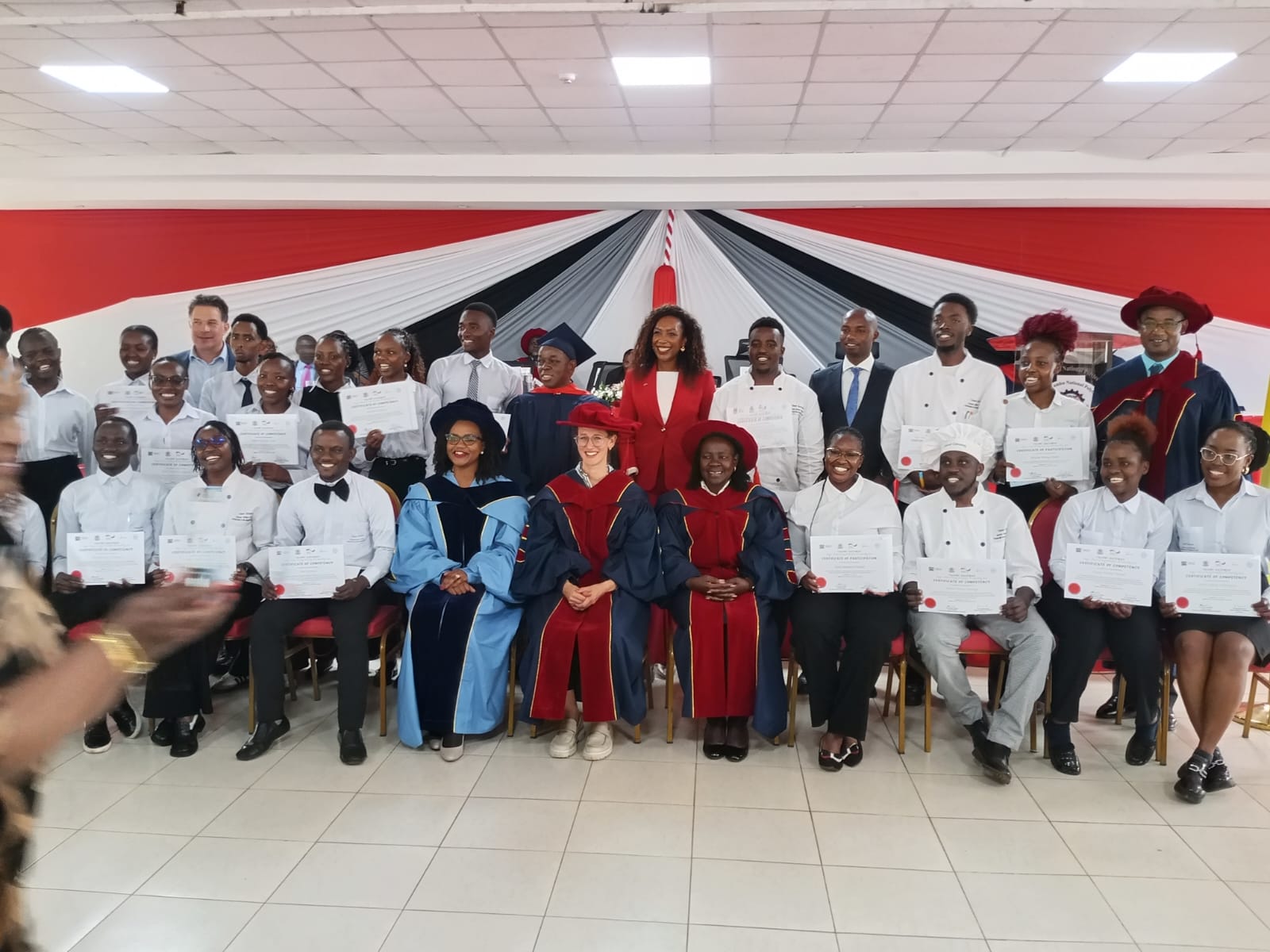
- Thirty one Kiambu National Polytechnic graduates in hospitality and landscaping are headed to Bavaria, Germany, for vocational training and employment under the Kenya‑Germany Labour Mobility Programme.
- TVET PS Dr Esther Muoria and Diaspora Affairs PS Roseline Njogu hailed the programme as a product of Kenya‑Germany agreements, aligning TVET reforms with global labour market demand.
- Officials dismissed brain drain fears, framing overseas work as “brain gain” and “brain circulation,” where Kenyans acquire skills, networks, and resources abroad to reinvest back home.
Thirty one graduates from Kiambu National Polytechnic (KINAP) are headed to Germany for vocational training and employment after completing specialised preparation under the Kenya Germany Labour Mobility Programme, a government-backed initiative connecting skilled Kenyan youth with job opportunities in Europe.
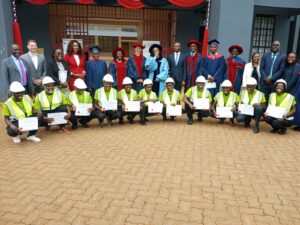
The graduates, comprising 20 trainees in Hospitality and 11 in Landscaping, completed intensive technical, language and cultural training before their planned departure for Bavaria, Germany. They were honoured at a graduation ceremony held on 17th July ,2026 at the polytechnic, attended by senior officials from the State Departments for Technical and Vocational Education and Training (TVET) and Diaspora Affairs, representatives of the German Government, GIZ, DEHOGA Bayern, industry partners and the institution’s management.
Principal Secretary for TVET Dr Esther Muoria described the graduation as the culmination of years of planning between the Kenyan and German governments to create structured pathways for Kenyan youth into international employment, saying the programme reflects the success of Kenya’s TVET reforms in aligning training with actual labour market demand.
“Today we celebrate 31 young professionals who represent the promise of our TVET reforms, where training is linked to industry and connects Kenyan talent to both local and global opportunities,” she said.
ALSO READ:
Muoria said her ministry is exploring ways to make such programmes more accessible, revealing that discussions are already underway with financial institutions, including Consolidated Bank, on affordable financing options for trainees who qualify but lack the resources needed for travel and preparation.
She dismissed concerns that labour mobility fuels brain drain, describing it instead as “brain gain,” and urged the graduates to gain international experience and financial resources abroad before eventually returning to invest in Kenya.
Principal Secretary for Diaspora Affairs Roseline Njogu said the programme traces back to the Kenya Germany Comprehensive Migration and Mobility Partnership Agreement, which she helped negotiate and which was signed in September 2024 following discussions with German and Austrian diplomats over labour shortages in Europe. She described the ceremony as one of the most fulfilling moments of her public service career, noting that policy discussions from that period were now translating into real opportunities for young Kenyans.
Njogu said Kenya was not concerned about losing skilled workers abroad, describing the phenomenon instead as “brain circulation,” through which Kenyans working overseas gain skills, technology, professional networks and financial resources that ultimately benefit the country.
She urged the graduates to learn about German and Bavarian culture and workplace expectations before travelling, to integrate into German society while retaining their Kenyan identity, and to represent the country with pride. She also advised them to register with the Kenyan Embassy in Berlin and familiarise themselves with support services offered by the State Department for Diaspora Affairs, describing the embassy as their first point of government support while abroad.
“Kenyans are hardworking, resilient, respectful and they get the job done. Maintain that reputation wherever you go,” she told the graduates, adding that their professionalism and discipline would shape opportunities for future Kenyan workers abroad.
The Labour Mobility Programme is supported by the Government of Germany through GIZ, DEHOGA Bayern and other development partners, and forms part of Kenya’s broader push to position technical and vocational training as a gateway to global employment for its youth.
By Felix Wanderi
You can also follow our social media pages on Twitter: Education News KE and Facebook: Education News Newspaper for timely updates.
>>> Click here to stay up-to-date with trending regional stories
>>> Click here to read more informed opinions on the country’s education landscape