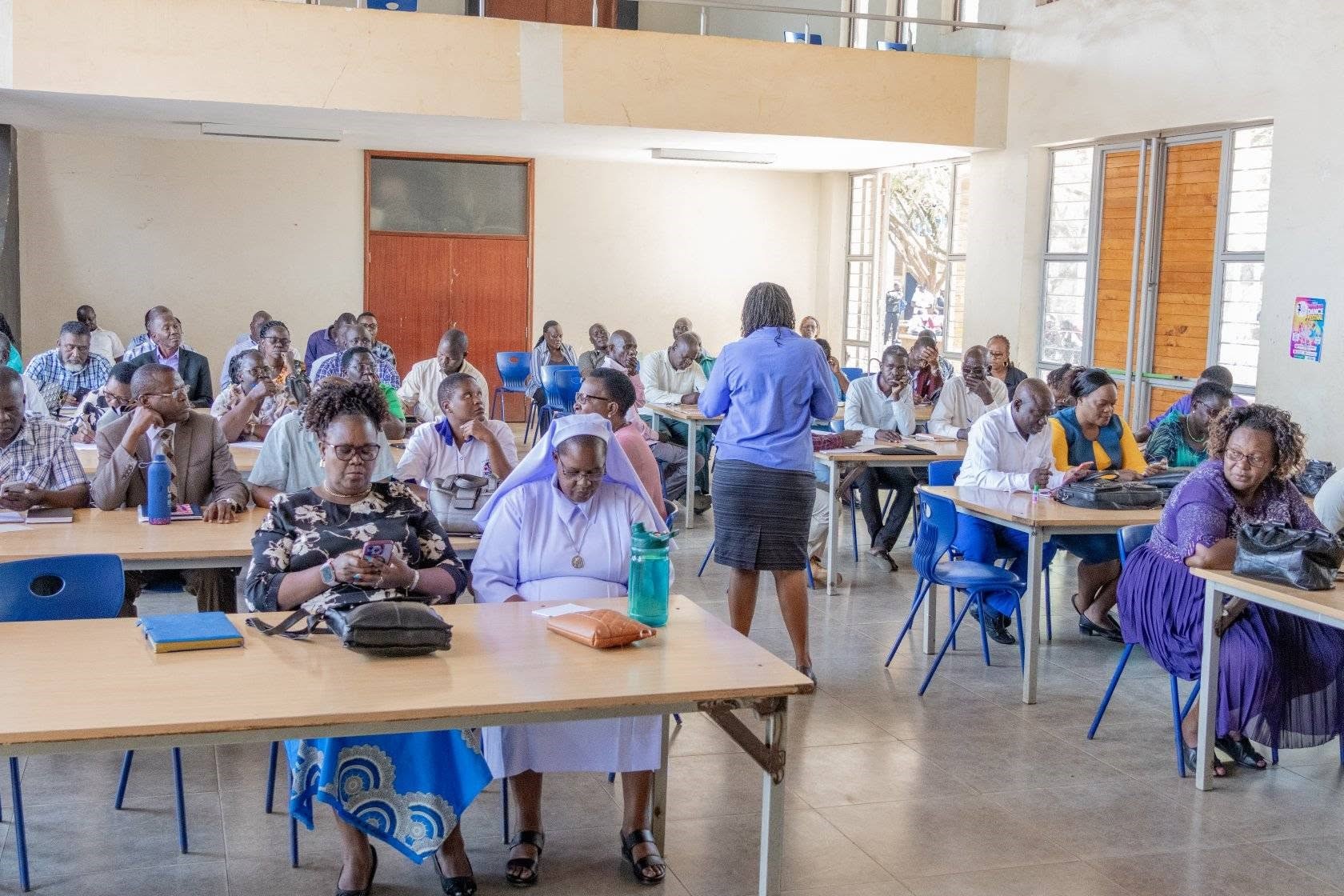
More than half of trainers in Technical and Vocational Education and Training (TVET) institutions had not applied for mandatory licenses as of April 2026, the Ministry of Education has disclosed.
Education Cabinet Secretary Julius Ogamba revealed the figures while appearing before the Parliamentary Public Investments Committee on Governance and Education on Wednesday.
According to the CS, only 4,965 trainers held valid licenses, while 4,633 trainers had not applied for registration and licensing as required by law.
Members of the National Assembly had raised concerns over widespread non-compliance with trainer licensing requirements in TVET institutions following examination of audit reports for the 2021/2022 to 2024/2025 financial years.
The State Department for TVET had launched a nationwide crackdown on unregistered and unlicensed trainers working in vocational training institutions.
In a circular dated April 1, 2026, Education Principal Secretary Esther Muoria expressed concern over the growing number of trainers operating without proper registration and licensing across TVET colleges.
ALSO READ:
KUCCPS opens 30-day window for students to apply for inter-institutional transfers
Muoria noted that the failure to register contravenes Sections 17 and 23 of the TVET Act, 2015, which require all TVET trainers to be registered and licensed by the Technical and Vocational Education and Training Authority (TVETA).
“All trainers without valid registration and licensing are deemed to violate the TVET Act of 2015 and the Trainer Qualifications Framework Standard,” the PS stated in the circular.
She directed human resource directors in all vocational training institutions to initiate legal action against unregistered trainers by June 30, 2026.
The PS also instructed principals of all TVET institutions to compile and submit comprehensive details of unregistered trainers by April 30, 2026, using a prescribed Excel template attached to the circular.
Institutional heads were further directed to communicate the contents of the circular to all staff and ensure full compliance with the registration and licensing requirements.
“The institution heads are directed to ensure full compliance with these directives and to oversee the implementation of lawful consequences for all cases of non-compliance,” Muoria emphasized.
The licensing enforcement forms part of the government’s broader efforts to strengthen quality assurance and improve standards in vocational education and training across the country.
The Ministry noted that registration and licensing applications are processed online through the TVET Management Information System (TVET MIS) portal at mis.tveta.go.ke.
Applicants must submit documentary evidence showing they hold at least a Craft Certificate awarded by an approved qualification-awarding institution such as KNEC, KICD, CDACC, National Polytechnics, KASNEB, NITA or an accredited local or foreign university.
ALSO READ:
They are also required to provide proof of pedagogical training, which may include a Bachelor of Education, Bachelor of Technology Education, Bachelor of Science in Nursing, Bachelor of Science in Agricultural Education and Extension, a Postgraduate Diploma in Education from a recognised university, or a Diploma in Technical Education or Final Level Instructor Training from the Kenya School of TVET, formerly the Kenya Technical Trainers College.
Applicants must also submit a valid Certificate of Good Conduct issued by the Directorate of Criminal Investigations (DCI). Trainers renewing their licenses after the expiry of the three-year validity period are additionally required to provide evidence of Continuous Professional Development (CPD).
The ministry says the licensing exercise is aimed at ensuring that all trainers meet the professional standards required to deliver quality technical and vocational education in Kenya.
By Obegi Malack
You can also follow our social media pages on Twitter: Education News KE and Facebook: Education News Newspaper for timely updates.
>>> Click here to stay up-to-date with trending regional stories
>>> Click here to read more informed opinions on the country’s education landscape