
- Kenya has launched a nationwide digital learning programme targeting more than 10,000 Junior Secondary Schools.
- The initiative introduces smart boards, teacher laptops and Artificial Intelligence-driven learning to support Competency-Based Education.
- Education experts say the reforms will prepare learners for the digital economy and the Fourth Industrial Revolution.
The future of education is no longer a distant dream. Kenya is witnessing a historic shift from traditional classrooms to technology-powered learning spaces where Artificial Intelligence (AI), digital skills and innovation are becoming central pillars of education.
The transformation gained momentum when Deputy President Kithure Kindiki launched the National Integration of ICT Learning in Junior Schools initiative at Kaptarkok Junior Secondary School, marking the beginning of a nationwide programme targeting 10,382 public Junior Secondary Schools.
The initiative will see more than 20,700 digital learning devices, including interactive smart boards and teacher laptops, distributed to schools to strengthen technology-enabled learning.
The ambitious programme marks a significant milestone in Kenya’s efforts to build an education system that responds to the demands of the Fourth Industrial Revolution.
It seeks to integrate digital technologies and Artificial Intelligence into teaching and learning while expanding access to quality education.
At the heart of the initiative is a new understanding of education.
Modern learners require more than memorised knowledge. They must develop creativity, critical thinking, problem-solving skills and digital competence to thrive in an increasingly technology-driven world.
The programme aligns with the Competency-Based Education (CBE) curriculum, which emphasises practical skills, innovation and the application of knowledge to real-life situations.
Breaking classroom barriers
For decades, classrooms relied largely on textbooks and teachers as the primary source of knowledge.
Digital technology is now transforming that model.
Smart learning platforms enable learners in remote areas to access educational resources that were previously limited to well-resourced schools.
The recent synchronised digital lesson linking learners from Nyandarua, Elgeyo Marakwet, Nairobi, Kakamega and Mombasa demonstrated how technology can connect classrooms across the country and reduce geographical inequalities.
Despite rapid technological advancement, teachers remain the foundation of successful digital transformation.
The Government has already trained more than 62,000 teachers on integrating technology into classroom instruction.
Education experts note that digital devices complement rather than replace teachers.
Instead, they strengthen teachers’ ability to deliver engaging lessons, personalise learning and expose learners to broader sources of knowledge.
The teacher of the future will increasingly serve as a facilitator, mentor and guide, helping learners analyse information, use technology responsibly and develop solutions to real-world challenges.
Preparing for the AI economy
Artificial Intelligence is reshaping sectors ranging from healthcare and agriculture to engineering, finance and manufacturing.
Introducing digital learning at the Junior Secondary level therefore represents an investment in Kenya’s future competitiveness.
Today’s learners are expected to enter careers requiring advanced digital skills, adaptability and innovation.
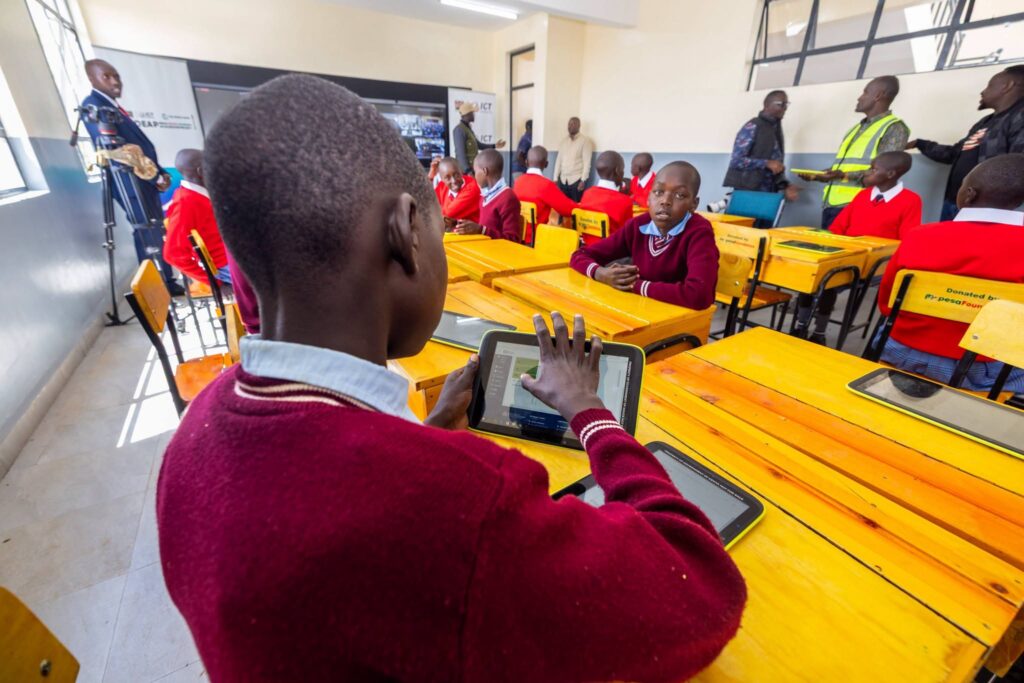
Schools participating in the programme are expected to nurture future scientists, software developers, entrepreneurs and technology innovators.
The success of the programme will depend on reliable digital infrastructure.
The Government continues expanding fibre-optic connectivity to establish a national digital backbone capable of connecting schools and other public institutions.
Reliable internet connectivity, electricity, equipment maintenance and continuous teacher support will remain essential for successful implementation.
Looking ahead
Kenya’s AI education initiative represents far more than the introduction of digital devices into classrooms.
It signals a fundamental shift in how the country prepares its young people for the future.
Its long-term success, however, will depend on ensuring that technology remains accessible, sustainable and effectively integrated into everyday teaching and learning.
READ ALSO: Itigo Girls rugby team receives heroes’ welcome after historic Rift Valley title win
The journey towards Kenya’s digital classroom has begun. The challenge now is to ensure that every learner, every teacher and every school becomes part of this transformation.
By Hillary Muhalya
You can also follow our social media pages on Twitter: Education News KE and Facebook: Education News Newspaper for timely updates.
>>> Click here to stay up-to-date with trending regional stories
>>> Click here to read more informed opinions on the country’s education landscape