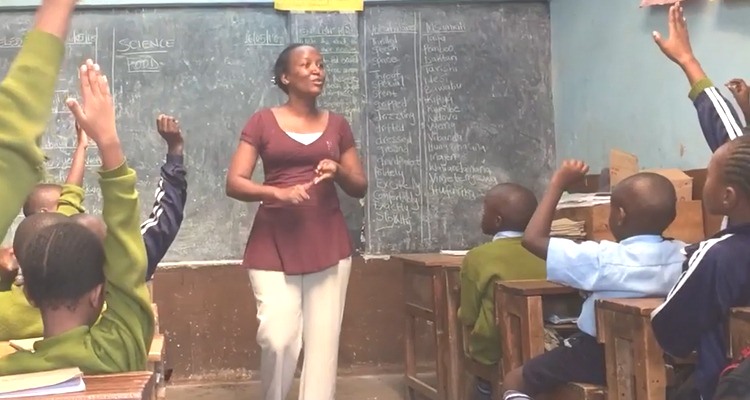
- Hillary Muhalya argues that parents should stop dragging teachers into domestic disputes, saying schools must remain centres of learning, not family battlefields.
- Domestic disputes are increasingly spilling into schools, forcing teachers to mediate conflicts that belong outside the classroom.
- The article argues that parents must resolve family disagreements without involving teachers or disrupting learners’ education.
- It calls for stronger school policies, parental responsibility and child-centred approaches to protect learners and educators alike.
It was just after the morning assembly at a public secondary school. A Form Two class teacher was arranging lesson notes when raised voices outside the staffroom interrupted the start of the school day. Two estranged parents had arrived almost simultaneously, each demanding to speak to the teacher about their daughter. One insisted that the learner should not be released to the other parent after classes, while the other argued that they had every legal and parental right to pick up the child.
Within minutes, the disagreement escalated into a heated confrontation that drew the attention of students, teachers, and support staff. Instead of teaching the first lesson, the class teacher, together with the deputy principal, spent nearly an hour trying to calm the situation and protect the learner from further emotional distress. The visibly shaken student remained withdrawn throughout the day, struggling to concentrate in class while classmates whispered about what they had witnessed.
Unfortunately, this is not an isolated occurrence. Across many secondary schools, teachers are increasingly finding themselves trapped in domestic disputes that have nothing to do with education. Schools, which should be centres of learning, discipline, and personal growth, are slowly becoming extensions of family conflicts. The result is unnecessary pressure on teachers, emotional trauma for learners, and disruption of the learning environment.
In another secondary school, a deputy principal began receiving repeated phone calls from separated parents regarding their daughter’s education. One parent instructed the school not to release the learner during mid-term break without prior approval, while the other demanded unrestricted access and expected teachers to relay personal messages to the former spouse. Both parents wanted the school to validate their position and expected teachers to take sides. The administration politely declined, advised them to seek legal guidance where necessary, and reaffirmed that the school’s responsibility was the learner’s education—not resolving family disagreements.
Teachers Are Not Mediators
Teachers are employed to educate, mentor, assess, guide, and protect learners. Their professional responsibility is to create an environment where every child can learn without fear or distraction. They are not marriage counsellors, family mediators, legal advisers, investigators, or referees in domestic conflicts. Yet many educators find themselves performing these roles simply because parents have failed to separate personal disagreements from their children’s education.
One of the most common ways teachers are dragged into domestic disputes is through conflicting instructions from separated or divorced parents. One parent may instruct the school never to allow the other parent to communicate with the learner, while the other parent insists on unrestricted access to school activities. Without a valid court order or official legal directive, teachers are left in an impossible position, trying to balance the child’s safety, parental rights, and school policies.
Some parents also use teachers as messengers, asking them to pass letters, relay verbal messages, deliver financial demands, or communicate information that should be handled directly between the parents themselves. Such requests blur professional boundaries and expose teachers to unnecessary conflict.
Even more troubling is when parents attempt to recruit teachers as witnesses during custody disputes. Some ask teachers to write statements supporting one parent’s claims or to testify about family matters that occurred outside the school environment. This compromises the neutrality that every educator must maintain and risks damaging trust between schools and families.
Domestic disagreements consume valuable instructional time. Instead of preparing lessons, marking assignments, mentoring learners, or planning academic activities, teachers often spend hours responding to emotionally charged phone calls, organising meetings, documenting incidents, or calming confrontations between parents. Every minute spent managing family conflict is a minute taken away from teaching and learning.
The Toll on Learners
The emotional impact on learners is equally significant. Children caught between conflicting parents often experience anxiety, fear, embarrassment, anger, and confusion. They may become withdrawn in class, lose motivation, exhibit behavioural challenges, or perform poorly in examinations. Teachers frequently become the first adults to notice these changes, yet they are expected to address problems whose roots lie far beyond the classroom.
When parents argue openly at school, they unintentionally send a message that education is secondary to personal conflict. Learners who witness such confrontations may lose their sense of security, while classmates become distracted by the unfolding drama. Schools should be places where children feel protected, respected, and emotionally safe—not environments where they fear being embarrassed by adult disagreements.
Parents must remember that regardless of the differences between them, they share one lifelong responsibility: ensuring the well-being of their child. That responsibility includes protecting the learner from unnecessary emotional distress and allowing schools to function without interference from domestic disputes.
Parents should therefore make every effort to resolve their disagreements away from the school environment. Issues relating to child custody, visitation schedules, maintenance, school fees, transport arrangements, or communication should be handled through respectful dialogue, professional mediation, religious leaders, family counsellors, or the courts where necessary. Schools should only become involved when a learner’s education, safety, or welfare is directly affected and where the law requires their intervention.
Equally important, parents should appreciate the delicate position teachers occupy. A teacher’s relationship with a learner is founded on trust, fairness, and impartiality. Once parents begin demanding loyalty from teachers or accusing them of favouring one side, that trust is threatened. No educator should be forced to choose between two parents or become a participant in disagreements that began long before they entered the picture.
Financial Disputes and School Burdens
Financial disputes are another area where schools frequently become unintended victims. It is common for separated parents to argue over who should pay school fees, purchase uniforms, buy textbooks, or cater for transport costs. Unfortunately, teachers and school administrators are often left pursuing payments or explaining outstanding balances to frustrated parents. While schools require fees to operate, they should never become collection centres for unresolved family disputes.
Another worrying trend is the use of learners as messengers between parents. Some children are instructed to carry hostile messages from one parent to another through teachers or school administrators. Others are questioned repeatedly about who visited them at school, who attended academic clinics, or which parent spoke to their teachers. Such behaviour places an enormous emotional burden on children who are already struggling to cope with changes at home.
Reputational Risks for Educators
Teachers also face reputational risks. A routine academic decision—such as calling one parent because their contact appears first in school records—can easily be misinterpreted as favouritism. Some educators have found themselves subjected to verbal abuse, threats, or false accusations simply because they acted in what they believed to be the best interests of the learner. Such incidents lower staff morale and create unnecessary anxiety within schools.
To protect both learners and teachers, schools should develop clear communication policies. Parents should ensure that schools have accurate emergency contacts and provide any relevant court orders affecting custody or access to learners. This enables school administrators to make informed decisions while remaining compliant with the law and school regulations.
Teachers, on their part, must continue upholding the highest standards of professionalism. They should remain neutral, document all significant interactions involving family disputes, avoid expressing personal opinions on domestic matters, and refer sensitive issues to the headteacher or principal whenever necessary. Maintaining detailed records protects both the school and the educator should disagreements later escalate into legal proceedings.
The Role of School Leaders
School leaders also have an important responsibility. They should establish procedures for handling domestic conflict, train staff on child protection and legal obligations, and ensure that confrontations between parents are addressed promptly and discreetly. Above all, the welfare of the learner should remain the guiding principle in every decision.
The wider community also has a role to play. Religious institutions, community elders, family counsellors, and child welfare agencies should encourage parents to resolve conflicts amicably and shield children from the emotional consequences of adult disagreements. Society must recognise that when schools are drawn into domestic conflicts, the ripple effects extend beyond the family, affecting classrooms, teachers, and the quality of education itself.
Ultimately, every parent wants their child to succeed. Academic excellence, emotional stability, and personal development flourish when children learn in environments free from conflict and fear. Parents may disagree on many issues, but they should never allow those disagreements to rob their children of the peace and stability they deserve at school.
Teachers have one primary mission: to educate, inspire, and prepare young people for the future. Every hour spent mediating family disagreements is an hour taken away from lesson preparation, learner assessment, mentoring, and classroom instruction. Every confrontation at the school gate chips away at the calm, respectful atmosphere that schools work so hard to build.
The message is simple but urgent: schools are centres of learning, not courtrooms; teachers are educators, not family arbitrators. Parents should spare teachers the burden of domestic conflicts and instead work together—despite their differences—to protect the one person who matters most: the child.
When families keep their disagreements away from schools, everyone benefits. Learners feel safe and supported, teachers remain focused on delivering quality education, parents maintain constructive relationships with schools, and communities raise children in environments where education can truly thrive.
READ ALSO: Indiscipline, moral decay fuel unrest in schools, says Nyakeore principal
In the end, the strongest lesson parents can teach their children is not found in words but in actions. Choosing respect over conflict, cooperation over confrontation, and dialogue over hostility demonstrates a commitment to the child’s future. By keeping teachers out of family wars, parents preserve the dignity of the teaching profession and safeguard the emotional well-being and educational success of the next generation.
By Hillary Muhalya
You can also follow our social media pages on Twitter: Education News KE and Facebook: Education News Newspaper for timely updates.
>>> Click here to stay up-to-date with trending regional stories
>>> Click here to read more informed opinions on the country’s education landscape