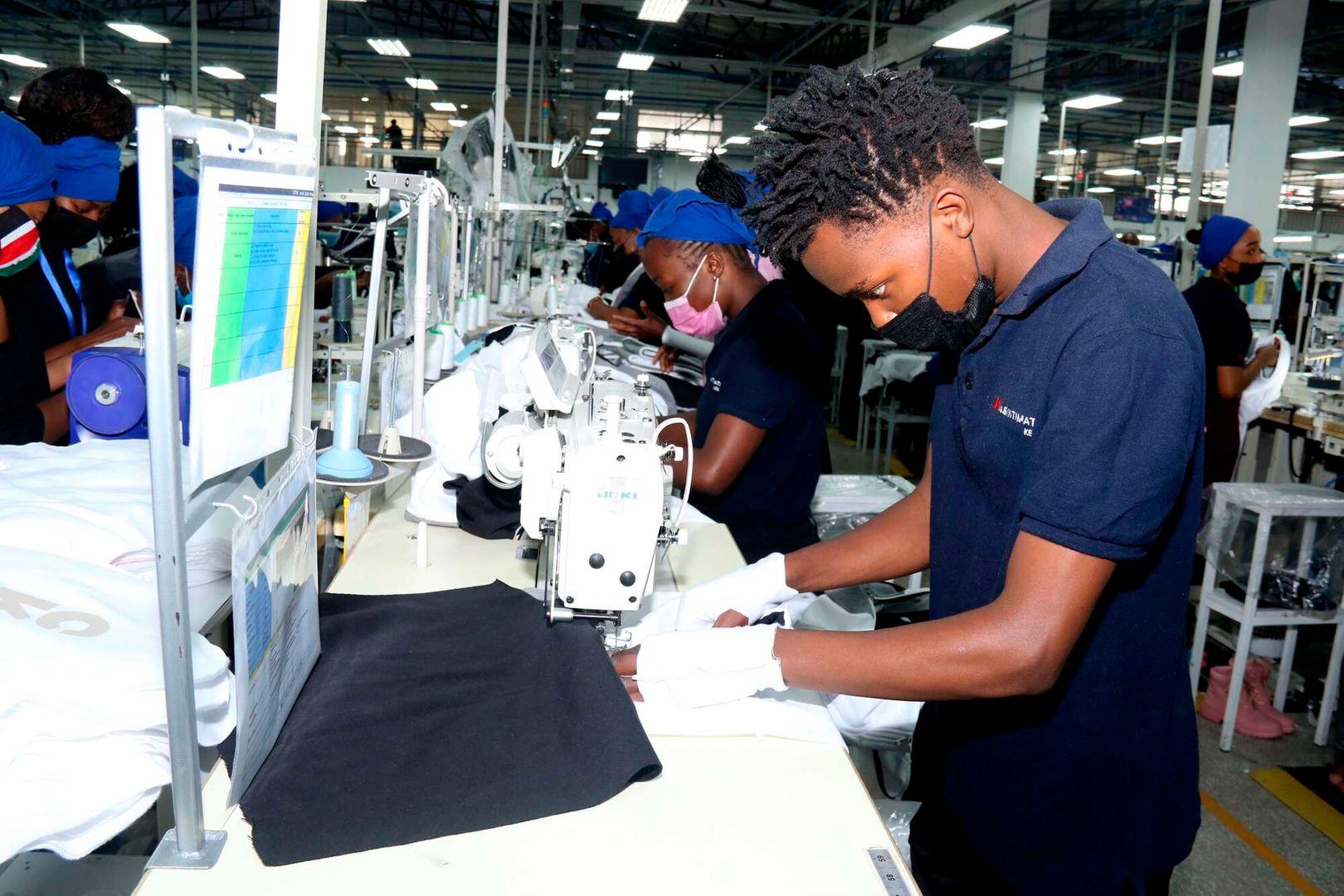
- The World Bank says Kenya created 54,500 new private-sector formal jobs in 2025, led by manufacturing.
- Financial services, insurance and energy also recorded strong employment growth as the economy recovered.
- The report says informal employment still accounts for 83.8 per cent of Kenya’s workforce despite improving wages.
For thousands of unemployed graduates and job seekers across Kenya, the latest World Bank assessment offers a rare dose of optimism. After years of economic uncertainty, the country’s formal labour market is showing signs of recovery, with 54,500 new private-sector formal jobs created in 2025 and manufacturing emerging as Kenya’s leading creator of formal employment.
The findings, contained in the latest World Bank Kenya Economic Update, reveal a changing employment landscape in which manufacturing, financial services, insurance and energy are becoming the country’s fastest-growing sources of stable, better-paying jobs.
The report comes at a time when Kenya continues to grapple with youth unemployment, rising living costs and an expanding informal economy. Yet beneath those challenges lies an industrial recovery that could reshape the labour market if sustained.
According to the World Bank, Kenya’s private sector added about 54,500 formal wage jobs during 2025, marking one of the strongest performances in recent years.
Manufacturing led the recovery, recording 5.9 per cent growth in formal employment, supported by increased industrial production, improving business confidence and a gradual recovery in factory activity.
The financial and insurance sector followed with 4.4 per cent employment growth, while the electricity and energy sector recorded 3.8 per cent, reflecting continued investment in power infrastructure and energy projects.
Economy gathers momentum
The employment gains mirror Kenya’s wider economic recovery.
The World Bank reports that the industrial sector expanded by 4.7 per cent in 2025, compared with 1.1 per cent in 2024, with manufacturing, construction and mining driving the rebound.
The report also indicates that workers are beginning to recover from the effects of inflation.
Real average wages increased by 2 per cent in 2025, while employees in the formal private sector recorded a stronger 3.9 per cent increase in earnings.
Although household incomes are improving, many families continue to face pressure from food prices, transport costs and other essential expenses.
Despite the positive gains, the World Bank notes that Kenya’s biggest labour market challenge remains the dominance of informal employment.
An estimated 83.8 per cent of workers remain in the informal sector, which expanded by 4.1 per cent during the year.
The institution says millions of Kenyans continue relying on small businesses, casual labour and self-employment, which often provide lower incomes, limited job security and minimal social protection.
Opportunities for graduates
For university graduates, diploma holders, technical professionals and skilled workers, the report identifies manufacturing, financial services, insurance and energy as the sectors offering the strongest prospects for long-term employment.
The World Bank says sustaining this momentum will require increased industrial investment, improved infrastructure, business-friendly policies and continued support for private enterprise.
Expanding manufacturing capacity, encouraging innovation and attracting local and foreign investment will be essential if Kenya is to generate sufficient formal employment for its growing youth population.
The World Bank projects Kenya’s economy will grow by 4.3 per cent in 2026, supported by manufacturing, tourism, financial services, trade and the wider services sector.
However, it cautions that rising public debt, fiscal pressures, global economic uncertainty, fuel prices and food inflation could slow investment and job creation.
READ ALSO: Kiambu’s ECDE revolution: KSh400 million transforms 500 centres attracting 52,000 learners to public schools
Even so, the latest assessment points to a strengthening formal labour market, with manufacturing reclaiming its position as Kenya’s leading source of formal employment and offering renewed hope to thousands of young job seekers.
By Hillary Muhalya
You can also follow our social media pages on Twitter: Education News KE and Facebook: Education News Newspaper for timely updates.
>>> Click here to stay up-to-date with trending regional stories
>>> Click here to read more informed opinions on the country’s education landscape
>>> Click here to stay ahead with the latest national news.