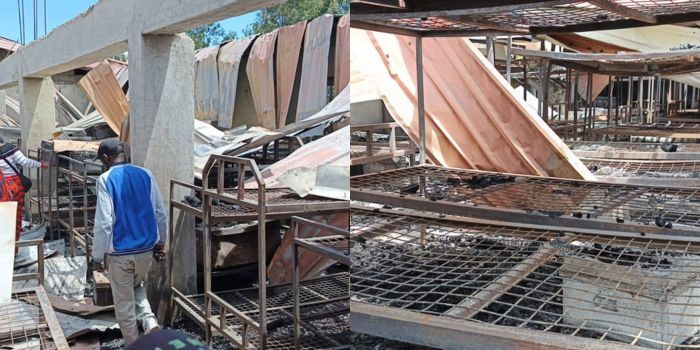
- Education experts explain how unresolved grievances, poor communication, learner wellbeing and institutional weaknesses often contribute to school unrest in Kenya.
- While insider involvement is possible in some cases, investigators caution that conclusions must always be guided by evidence rather than speculation.
- Strong leadership, learner wellbeing, counselling and early intervention remain the most effective tools for preventing school violence.
School unrest rarely erupts without warning. Before classrooms are abandoned, dormitories vandalised or school property goes up in flames, there is often a gradual chain of events involving unresolved grievances, poor communication, emotional distress and institutional weaknesses.
While public attention naturally focuses on the dramatic scenes of destruction, education experts argue that the real causes often lie beneath the surface.
One of the most persistent questions following major school unrest is whether the violence was purely spontaneous or whether individuals from within the institution deliberately organised or facilitated it.
Although such suspicions frequently arise, investigators caution that allegations alone should never be treated as established facts.
Every claim requires careful investigation supported by credible evidence.
Premature conclusions risk unfairly implicating innocent individuals while obscuring the true causes of the unrest.
Education experts define insiders as individuals with authorised access to schools and detailed knowledge of daily operations.
These may include students, teachers, non-teaching staff, security personnel or others familiar with school routines and infrastructure.
Where investigations establish insider involvement, it often occurs through subtle actions such as coordinating activities through private conversations or digital platforms, spreading misinformation, exploiting existing grievances or facilitating unauthorised access to school premises.
Looking beyond conspiracies
Experts warn that focusing exclusively on possible insider involvement may divert attention from deeper institutional problems.
Across many schools, unresolved grievances remain among the strongest predictors of unrest.
Students may become frustrated by academic pressure, examination anxiety, disciplinary concerns, poor communication, inadequate living conditions, food quality or limited opportunities to express concerns through recognised channels.
When such frustrations accumulate without meaningful intervention, relatively minor incidents can quickly escalate into widespread disorder.
Mental health and social pressures
Adolescence is characterised by emotional development, social pressure and identity formation.
Without adequate guidance and counselling, emotional distress can evolve into collective frustration.
Peer influence often intensifies these dynamics as learners make decisions within groups rather than as individuals.
The rapid spread of information through mobile phones, encrypted messaging platforms and social media has further complicated school crisis management.
Unverified messages, rumours and misinformation can spread rapidly, escalating tensions before administrators have an opportunity to clarify facts.
Education specialists therefore identify effective communication as one of the most important tools in preventing unnecessary escalation.
Historical investigations demonstrate that no single explanation accounts for every episode of school unrest.
Some incidents have involved deliberate planning by small groups of students.
Others have emerged primarily from unresolved institutional challenges.
Still others have reflected a combination of both.
These varied experiences reinforce the importance of evidence-based investigations rather than speculation.
Education experts recommend a comprehensive prevention strategy that includes transparent leadership, effective communication, strong guidance and counselling programmes, empowered student leadership and responsive school management.
Schools are also encouraged to strengthen access control, emergency preparedness, surveillance where appropriate and confidential reporting mechanisms capable of identifying emerging risks before they develop into crises.
Shared responsibility
Parents, communities, Boards of Management and education authorities all have important roles to play.
Parents should maintain open communication with their children.
Teachers should remain alert to behavioural changes.
School leaders should prioritise student welfare alongside academic performance.
Education authorities should continue investing in counselling services, school safety and learner support programmes.
Ultimately, experts argue that school unrest should be understood not merely as a security challenge but as an indicator of institutional health.
READ ALSO: Diaspora PS Njogu signs Germany jobs deal, urges Kenyans to learn German
The most sustainable solutions will emerge through transparency, accountability, early intervention and a collective commitment to addressing the underlying causes that place schools at risk.
By Hillary Muhalya
You can also follow our social media pages on Twitter: Education News KE and Facebook: Education News Newspaper for timely updates.
>>> Click here to stay up-to-date with trending regional stories
>>> Click here to read more informed opinions on the country’s education landscape