- African football has reached a historic milestone with an unprecedented nine teams advancing to the World Cup knockout stage.
- The achievement reflects years of investment in player development, coaching, governance and football infrastructure.
- Africa’s success offers valuable lessons in preparation, resilience, leadership and long-term planning.
The 2026 FIFA World Cup has become a defining chapter in the history of African football. For decades, African nations battled stereotypes, structural disadvantages and fierce competition at the world’s biggest sporting event. This year, however, the continent has rewritten the script. Nine of the ten African teams that qualified for the expanded 48-team tournament advanced to the knockout stage, marking the greatest collective achievement by African football at a FIFA World Cup.
This remarkable feat is more than a statistical milestone. It reflects years of investment in player development, improved coaching, stronger domestic leagues, better football administration in several countries and the growing influence of African players competing in Europe’s top leagues. It also signals that African football is no longer content with merely participating at the World Cup—it now expects to compete for the game’s biggest prizes.
A new chapter for African football
Historically, Africa has produced memorable World Cup moments. Cameroon reached the quarter-finals in 1990, Senegal repeated the feat in 2002, Ghana came within a penalty kick of the semi-finals in 2010, while Morocco made history in 2022 by becoming the first African nation to reach the semi-finals.
Each achievement was celebrated as an isolated success. The 2026 tournament, however, tells a different story. Instead of one nation carrying the continent’s hopes, several teams have simultaneously demonstrated their ability to compete with football’s traditional powerhouses.
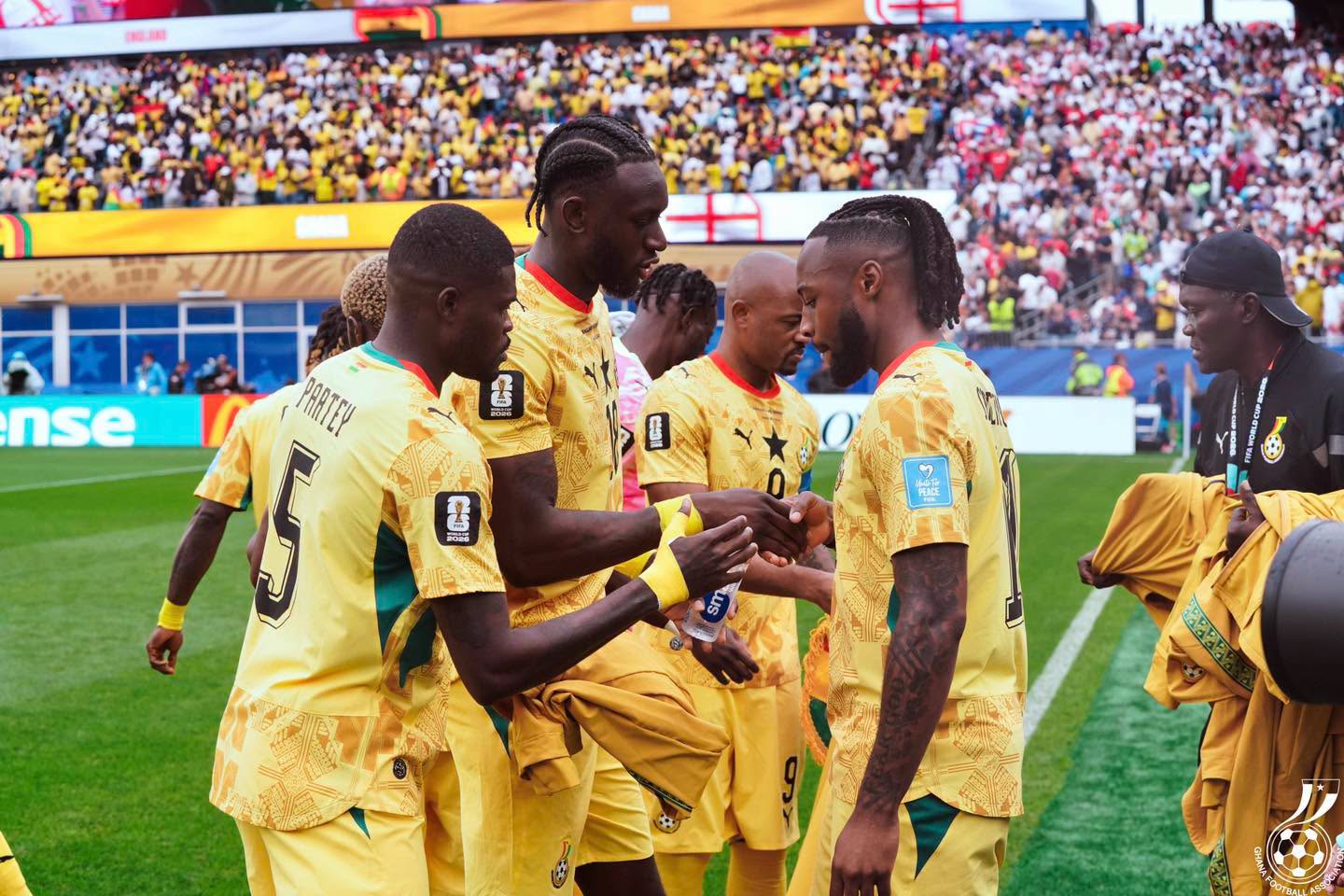
Morocco, Senegal, Egypt, Ghana, Algeria, Ivory Coast, South Africa, Cape Verde and the Democratic Republic of the Congo all progressed beyond the group stage. Their qualification was built on tactical discipline, technical quality, physical resilience and mental strength. These teams earned their places through consistent performances against strong opposition from Europe, Asia, North America and South America.
One of the most encouraging aspects of Africa’s success is the diversity of the qualifying teams. Traditional football powers such as Egypt, Algeria and Ivory Coast advanced alongside emerging nations like Cape Verde and the Democratic Republic of the Congo. This demonstrates that football development is spreading across the continent rather than remaining concentrated in a few established countries.
Investment beginning to pay off
Modern African football has benefited immensely from players competing at the highest levels of club football.
Many members of the African squads feature in the English Premier League, Spain’s La Liga, Italy’s Serie A, Germany’s Bundesliga and France’s Ligue 1. Weekly exposure to elite competition has sharpened their tactical awareness, professionalism and confidence. When they report for national duty, they bring invaluable experience that elevates the quality of their teams.
Equally important has been the evolution of coaching. African football federations are increasingly appointing qualified coaches who combine modern tactical approaches with a deep understanding of local football culture. Better preparation, sports science, video analysis and fitness management have narrowed the gap between African teams and traditional football powers.
The expansion of the FIFA World Cup from 32 to 48 teams also increased Africa’s qualification slots from five to ten.
Critics argued that increasing African representation would lower the tournament’s quality. The performances in 2026 have instead strengthened the case that Africa deserved greater representation by producing exciting football and consistently challenging highly ranked opponents.
Lessons for the future
Africa’s achievement should inspire governments and football administrators to invest even more in youth academies, school sports, coaching education and football infrastructure.
Countries that have underperformed can study the systems adopted by the continent’s most successful teams and implement similar long-term development strategies.
For young footballers across Africa, these World Cup performances carry enormous significance. Children watching their national teams compete successfully against established football nations now believe that success on the global stage is achievable.
However, African football must guard against complacency. Reaching the knockout stage is a major accomplishment, but the ultimate ambition should be to compete consistently for the FIFA World Cup title.
Sustained success will require transparent football governance, stronger domestic competitions, financial accountability and continued investment in grassroots football.
Africa’s success offers lessons that extend beyond sport. It demonstrates the importance of preparation, unity, resilience and belief.
Many of these teams entered the tournament as outsiders, yet they refused to be intimidated by reputation. Instead, they relied on teamwork, careful planning and confidence in their abilities.
These principles apply equally to education, business, leadership and national development.
For Kenya and other African nations still striving to qualify consistently for the FIFA World Cup, the message is clear. Excellence is achieved when talent is matched with vision, proper planning and sustained investment.
The achievements of fellow African countries should serve not as reasons for envy but as models worthy of study and emulation.
As the knockout stages unfold, the world will watch to see whether one of Africa’s representatives can surpass Morocco’s historic semi-final run of 2022.
Regardless of the final outcome, the group-stage performances have already transformed global perceptions of African football. No longer viewed merely as underdogs capable of occasional upsets, African teams have established themselves as genuine contenders.
READ ALSO: Kenyan graduates: Stop waiting, start exploring opportunities around you
The 2026 FIFA World Cup may ultimately be remembered as the tournament in which African football collectively announced that it belongs among the world’s elite.
Nine teams reaching the knockout stage is more than a record—it is a powerful statement that the future of global football will increasingly include Africa at its highest level.
By Ashford Kimani
Ashford Kimani is a teacher of English and Literature who writes on education and social affairs.
You can also follow our social media pages on Twitter: Education News KE and Facebook: Education News Newspaper for timely updates.
>>> Click here to stay up-to-date with trending regional stories
>>> Click here to read more informed opinions on the country’s education landscape