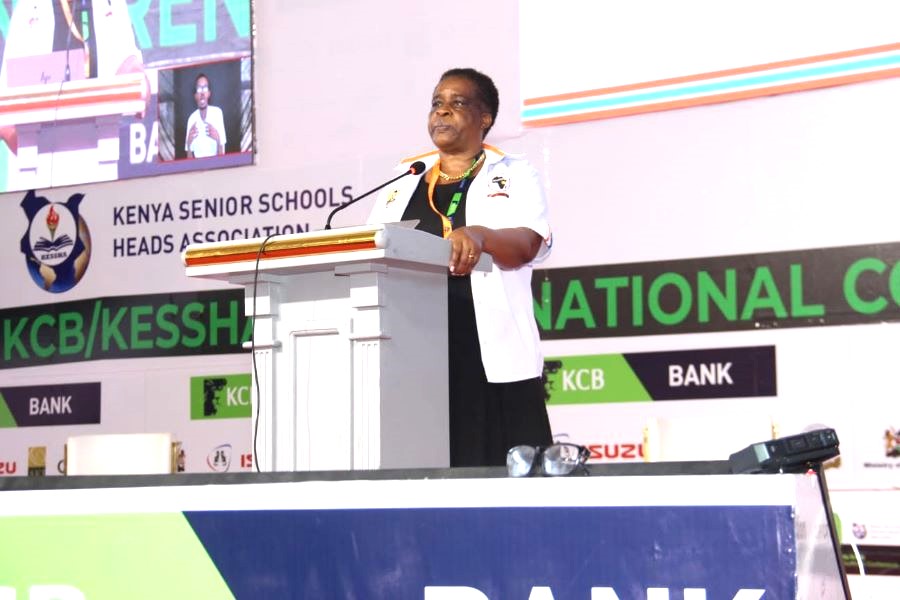
- CEMASTEA has reaffirmed its commitment to strengthening STEM education as Kenya advances the implementation of Competency-Based Education.
- The institution says continuous teacher professional development remains key to improving science, technology, engineering and mathematics learning.
- Schools have been urged to strengthen collaboration with CEMASTEA to enhance innovation, digital learning and classroom practice.
The Centre for Mathematics, Science and Technology Education in Africa (CEMASTEA) has reaffirmed its commitment to strengthening Science, Technology, Engineering and Mathematics (STEM) education as Kenya accelerates the implementation of the Competency-Based Education (CBE) curriculum and embraces digital transformation in learning.
Speaking during the 2026 Kenya Secondary School Heads Association (KESSHA) Conference, Acting Chief Executive Officer Mrs Gladys Masai underscored the institution’s central role in improving the quality of STEM education by building teachers’ professional capacity and supporting schools in adopting innovative teaching and learning approaches.
Strengthening teacher capacity
Mrs Masai noted that CEMASTEA, a State Corporation under the Ministry of Education, remains committed to equipping teachers with modern pedagogical skills that enable them to deliver quality education in science, technology, engineering and mathematics.
She said the institution continues to provide professional development programmes aimed at enhancing teachers’ practical knowledge, digital competencies and innovative instructional approaches to prepare learners for a rapidly changing world.
According to Mrs Masai, the demands of the 21st century require learners who are creative, critical thinkers, problem-solvers and innovators capable of competing in a global knowledge economy.
She observed that quality STEM education provides the foundation for developing these competencies and preparing learners for careers driven by science, technology and innovation.
Supporting Competency-Based Education
The Acting CEO further stated that as Kenya continues implementing Competency-Based Education, teachers remain the most important resource in translating curriculum reforms into meaningful learning outcomes.
She said CEMASTEA will continue working closely with the Ministry of Education and other stakeholders to ensure teachers receive continuous professional support that enhances classroom instruction and improves learner achievement.
With digital technologies becoming increasingly integrated into education, Mrs Masai emphasised the need for schools to embrace innovation through digital tools, virtual laboratories and learner-centred teaching methodologies.
She explained that technology is no longer optional but an essential component of education that enhances classroom engagement, expands access to learning resources and equips learners with the digital literacy skills required in today’s world.
Call for stronger partnerships
Mrs Masai urged school heads and other education stakeholders to strengthen partnerships with CEMASTEA in order to maximise the institution’s expertise.
She encouraged schools to seek professional guidance on the implementation of STEM programmes, Competency-Based Education, laboratory management, technology integration and innovative classroom practices.
According to her, closer collaboration will enable schools to access timely technical support, mentorship and professional guidance that can significantly improve teaching and learning outcomes.
Education experts have consistently argued that strengthening STEM education requires collective action involving government agencies, school administrators, teachers, parents, development partners and the private sector.
They note that increased investment in modern science laboratories, digital infrastructure, reliable internet connectivity and continuous teacher training remains essential if Kenya is to produce graduates equipped with the skills required to drive industrialisation, innovation and economic transformation.
Regular engagement with CEMASTEA will also expose schools to professional development programmes, workshops, research findings and best practices that continue to shape STEM education across Africa.
By seeking technical support whenever challenges arise, schools will be better positioned to implement Competency-Based Education effectively while ensuring learners acquire practical competencies, creativity, collaboration and problem-solving skills.
Preparing future innovators
As Kenya positions itself as a regional hub for science, technology and innovation, CEMASTEA will continue playing a strategic role in preparing teachers to nurture the next generation of scientists, engineers, technologists and innovators.
The institution’s continued investment in teacher capacity building reflects the Government’s broader vision of producing a globally competitive workforce capable of addressing emerging national and global challenges.
READ ALSO: Big boost for Embu’s St Boniface Mugui Senior School as leaders raise millions for facelift
Mrs Masai said CEMASTEA remains steadfast in its mission of promoting excellence in mathematics, science and technology education across Kenya and the African continent through sustained collaboration with schools, continuous professional development and innovative teaching approaches.
By Hillary Muhalya
You can also follow our social media pages on Twitter: Education News KE and Facebook: Education News Newspaper for timely updates.
>>> Click here to stay up-to-date with trending regional stories
>>> Click here to read more informed opinions on the country’s education landscape