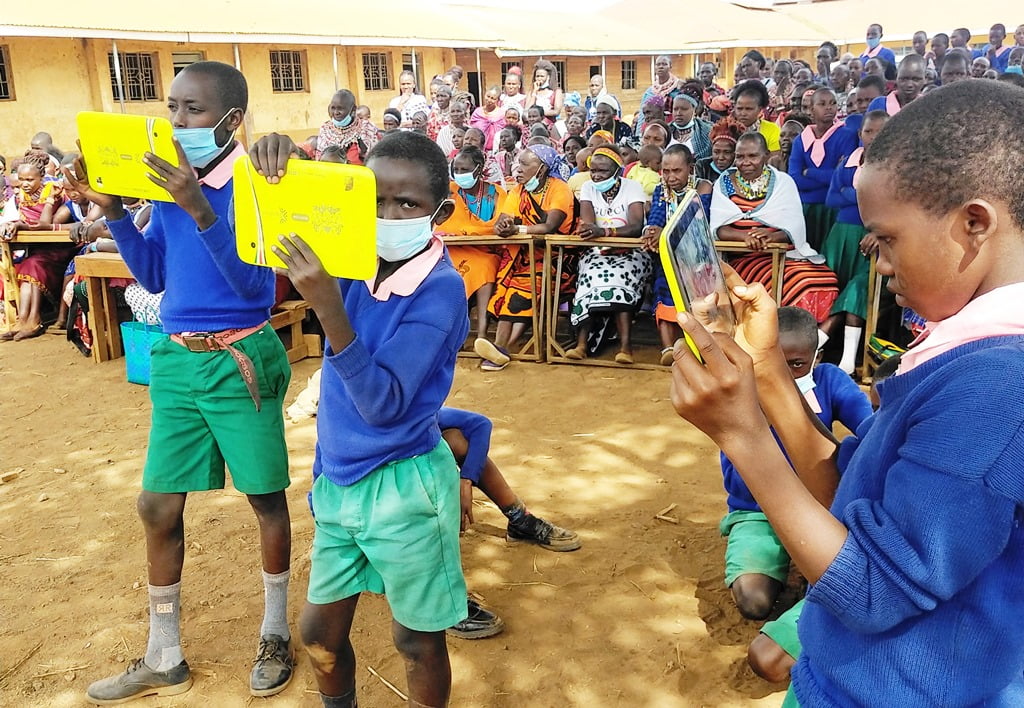
- Polycap Ateto argues that Artificial Intelligence, digital learning, virtual reality and other emerging technologies can help address challenges facing Competency-Based Education in Kenya.
- Emerging technologies offer practical solutions to many challenges facing Competency-Based Education.
- Artificial Intelligence, digital learning and virtual reality can improve teaching, assessment and learner engagement.
- Strategic investment in educational technology will help Kenya realize the full promise of CBE.
Kenya’s transition to the Competency-Based Education (CBE) curriculum represents one of the most significant educational reforms in the country’s history. The new curriculum seeks to nurture learners’ talents, competencies, creativity, critical thinking and problem-solving skills necessary for success in the 21st century.
However, despite the noble intentions behind CBE, its implementation has faced several challenges, including the high cost of assessments, expensive textbooks and learning materials, heavy teacher workloads, inadequate learning resources and disparities in access to quality education across different regions.
As an advocate for the use of technology to enhance learning and a passionate champion of Competency-Based Education, I strongly believe that emerging technologies provide practical and sustainable solutions to many of these challenges.
Technology and the future of assessment
One of the concerns frequently raised by parents, teachers and school administrators is the cost associated with continuous learner assessments under CBE. Teachers spend considerable time developing, administering, marking, recording and analysing assessment data.
Artificial Intelligence (AI) presents an opportunity to transform assessment practices. AI-powered systems can automate the marking of objective assessments, generate learner progress reports and provide immediate feedback.
Digital assessments can significantly reduce printing costs while improving efficiency and accuracy.
By embracing digital assessment platforms, schools can save valuable resources while ensuring that assessment remains meaningful, continuous and learner-centred.
Digital learning resources can reduce textbook costs
The cost of textbooks continues to place financial pressure on many Kenyan families. With multiple learning areas and pathways under CBE, schools often require numerous learning materials.
Cloud-based digital libraries offer a cost-effective solution. A single tablet or laptop can provide access to hundreds of textbooks, videos, simulations and interactive learning materials.
Digital content can be updated regularly without requiring schools to purchase new editions.
Government partnerships with publishers and technology providers can further reduce costs and improve access to quality educational resources for all learners.
Empowering teachers through Artificial Intelligence
Teachers remain the backbone of successful curriculum implementation. However, many educators are overwhelmed by increasing administrative demands and assessment requirements.
AI-powered teaching assistants can help teachers generate lesson plans, develop assessment activities, track learner progress and organize classroom data.
Such tools free teachers to focus on what matters most: facilitating learning, mentoring learners and nurturing talent.
Technology should never replace teachers. Rather, it should empower them to become more effective facilitators of learning.
Virtual and augmented reality can transform learning
Many schools face challenges in providing practical learning experiences due to limited laboratories, equipment or resources for educational trips.
Virtual Reality (VR) and Augmented Reality (AR) can bring learning to life by allowing learners to explore historical sites, conduct virtual science experiments, visit museums and interact with complex concepts in immersive environments.
These technologies make learning more engaging, memorable and accessible regardless of geographical location or economic circumstances.
Mobile learning can bridge educational gaps
Kenya has experienced remarkable growth in mobile technology adoption. Mobile devices provide an opportunity to expand learning beyond classroom walls.
Learners can access educational content anytime and anywhere through smartphones and tablets.
Mobile learning applications support self-paced learning, revision, research and collaboration.
For learners in remote areas, mobile learning can help bridge the gap between urban and rural schools by providing access to the same high-quality educational resources.
Technology can promote equity and inclusion
One of the key goals of CBE is to ensure that every learner reaches their full potential. Technology can support this vision by creating more inclusive learning environments.
Assistive technologies can help learners with disabilities access educational content. Translation tools can support multilingual learning. Adaptive learning platforms can personalize instruction according to individual learner needs and abilities.
Technology has the power to ensure that no learner is left behind.
Building schools for the future
To fully realize these benefits, Kenya must invest strategically in digital infrastructure, teacher training, internet connectivity, electricity access and local content development.
Educational technology should not be viewed as a luxury but as a necessity for preparing learners for a rapidly changing world driven by innovation and digital transformation.
The successful implementation of CBE will require collaboration among government agencies, schools, parents, teachers, technology providers and development partners.
The future of education in Kenya lies at the intersection of Competency-Based Education and emerging technologies. By embracing Artificial Intelligence, cloud computing, mobile learning, virtual reality, blockchain technology and the Internet of Things, Kenya can address many of the challenges currently facing its education system.
Technology offers a pathway towards reducing assessment costs, lowering textbook expenses, improving teacher efficiency, enhancing learner engagement and expanding access to quality education.
As Kenya continues its CBE journey, innovation must be embraced not as an option but as a strategic necessity. Learners deserve an education system that equips them with the competencies, skills and values needed to thrive in the 21st century.
The future is digital, and education must lead the way.
By Polycap Ateto
Polycap Ateto is an education leader, CBE champion and advocate for the integration of technology in teaching and learning. He is passionate about leveraging innovation to improve educational outcomes and prepare learners for the future.
You can also follow our social media pages on Twitter: Education News KE and Facebook: Education News Newspaper for timely updates.
>>> Click here to stay up-to-date with trending regional stories
>>> Click here to read more informed opinions on the country’s education landscape