Ideally, teachers that handle Form Four candidates in any secondary school should help them seal or fill learning gaps. As a peripatetic speaker in several schools, I consider it as one of the best academic practices that entices nonpareil performance in KCSE. Principals should ensure that this important practice takes place at the right time in teaching and learning (TL) process. Form Four candidates should not be left to face final exams when they feel that they are inadequate or ill-prepared.
Ostensibly, in most cases, sealing or filling learning gaps happens after proper syllabus coverage. Some of the gaps my pen can point out in this piece include: Gaps in emerging trends in KCSE, gaps in Forms 1-4 content mastery, gaps in in-depth interpretation of questions, gaps in exam presentation, gaps in Forms 1 and 2 content, gaps in morale and motivation, and gaps in character and discipline.
- Gaps in Emerging Trends in KCSE
Firstly, this gap manifests when Form Four candidates fail flat to evince both high and low order thinking skills in exams. It also manifests when Form Four candidates evince poor content mastery, and utter ignorance in changes in setting and marking of KCSE. Form Four candidates can find medicine to this disease only when they pay meticulous attention to subject experts and examiners. Teachers should sedulously study the KNEC reports, and implement the raft of recommendations therein.
Consequently, schools also manage to seal or fill this gap when they expose Form Four candidates to standard exams, which are in fine line with the Bloom’s Taxonomy. For in 1956, University of Chicago Professor Benjamin Bloom, with four collaborators – Max Englehart, Edward Furst, Walter Hill and David Krathwohl – published a framework for categorising educational goals known in popular parlance as Taxonomy of Educational Objectives also known as Bloom’s Taxonomy. In Multiple Intelligences in the Classroom, a heroic book I read in the recent past, Thomas Armstrong cogently contends: Bloom’s Taxonomy provides a kind of quality-control mechanism through which educators can judge how deeply the students’ minds have been stirred by a multiple-intelligence curriculum.
Therefore, it is a cognitive domain, with 6 levels of complexities educators us to gauge how instruction stimulates and develops students’ low-and-high-order-thinking capacities. The 6 levels are: One, Knowledge, which tests the rote memory skills such as knowing facts, terms, procedures and classification of systems. Two, comprehension, which is the ability to translate, paraphrase, interpret, or extrapolate material. Three, application, which is the capacity to transfer knowledge from one setting to another. Four, analysis, which is discovering and differentiating the component parts of a larger whole. Five, synthesis, which is weaving together component parts into a coherent whole. Six, evaluation, which is judging the value or utility of information using a set of standards.
- Gaps in Forms 1-4 Content Mastery
Secondly, peerless performance in KCSE comes with proper syllabus coverage, content mastery, content retention and content delivery. After serving any exam, teachers should detect glaring gaps in content mastery when candidates leave some blank spaces in exams. The perfect antidote to the sealing or filling of gaps in content mastery is cyclic reading of notes and more exposure to core-course books. Form Four candidates should read and review notes from Form 1-4 more frequently. They should also read the KCSE set texts (both in English and Kiswahili) for the umpteenth time. They should not forget about recommended reference books such as the Bible in CRE. Gaps in content mastery also manifest when candidates fail to score more or full marks in exams. Schools can cure this disease when they compel the candidate class to focus on intensive review and revision of past papers. This helps Form Four candidates to conceptualise the pattern in setting and marking of KCSE. It also exposes Form Four candidates to the format of exams. Likewise, focusing on remedial lessons can also entice hope and help.
Then, as part of remedy, there is the making of marking schemes, which entails getting question papers, and using them to mine for appropriate responses from the core-course books. In this approach, books remain the object of study, but questions act as the good guide on what and how to study. Likewise, let there be guided exams. In this stupendous strategy, teachers guide Form Four candidates to read given areas where they have set examinations. By the same token, there is the approach of topical revision, whereby at the tail-end of every topic, Form Four candidates make notes and respond to end-of-topic-questions through evaluation.
More importantly, research-based learning can wrought miracles. In this learning model, Form Four candidates should get the work requiring research. They make presentations in the full glare of their peers in class. Meaning, Form Four candidates should read ravenously. Schools should use symposiums and hot sittings to seal or fill more learning gaps. In hot sittings, they field questions from other students. Any question that they find challenging becomes a gap that requires some serious sealing or filling. Broadly, Form Four candidates grasp the content when they participate in subject-based contests. Meaning, they read given topics. Then they sit for an exam in those selected areas.
- Gaps in in-depth Interpretation of Questions
Thirdly, this gap manifests when Form Four candidates sit for an exam, but fail to respond appropriately to exam questions. Some even end up setting their own questions. What is the solution? Schools should expose Form Four candidates to oodles of exams. Failure to respond to questions in the required breadth and depth end when schools train candidates on how to provide main points in exams, which must also be supported with proper illustrations. Form Four candidates should change their attitudes towards exams, and get prepared to sit for shedloads of exams as a means of practice and preparation. Form Four candidates should sit for several sets of exams. Marked and revised. The glaring goof that is committed by some schools is that candidates sit for exams just for the sake of formality. Teachers handling the candidate class serve the exams to please the top guns of the institution. They just do it because it’s on the school calendar of events. Or it is spelt out in the Academic Action Plans (AAPs).
4. Gaps in Exam Presentation Strategies
Withal, this gap depicts itself when candidates fail to plot work on paper in an appropriate manner. This could be a lackadaisical layout of essays, lousy labelling of diagrams, bad balance of work on paper, bad handwriting, laziness, carelessness, wrong flow of Mathematical work and failure to present balanced chemical equations in Chemistry. To mitigate it, there should be personal administration of complete exams and group exams. There should be intensive and extensive practice. Let them study marking schemes in an in-depth manner. Let them give every exam the seriousness it deserves.
- Gaps in Forms 1 and 2 Content
Moreover, this comes when Form Four candidates fail dismally to score marks in questions that test topics taught in Forms 1 and 2. This gap is sealed or filled through cyclic reading of notes and quality quizzes. If a Form Four candidate only grasps Form 1 and 2 work, s/he stands a chance of scoring a D+. Mastery of Forms 1 and 2 content can possibly attract a C (Plain). Mastery of Forms 1, 2 and 3 content can beckon a B- (Minus). From this train of thought, it is clear as crystal that mastery of Form 4 work positions a Form Four candidate to scoop a good grade A. I can assert: Comprehensive analysis of KCSE 2019 props up my proposition. It was 25% Form 1 work. 25% Form 2 work. 25% Form 3 work. 25% Form 4 work. Form Four candidates who grasped Form 1 and 2 work escaped the D+ and below mark. Unfortunately, some top achievers lost it, because they saw no need to focus on Form 1 and 2 work. They missed A’s.
- Gaps in Morale and Motivation
Furthermore, this manifests when we see low levels of targets set. Lack of commitment. Absence of sense. No awareness and awakening. Low levels of dedication and devotion. Lack of self-drive and or poor data analysis. The teachers handling Form Four candidates should help them set and stick to targets. Schools should organise academic and career talks to inspire students to evince excellence. Form Four candidates should see sense in what John C. Maxwell writes in The 15 Invaluable Laws of Growth: “Motivation keeps us going, but discipline keeps us growing.”
- Gaps in Character and Discipline
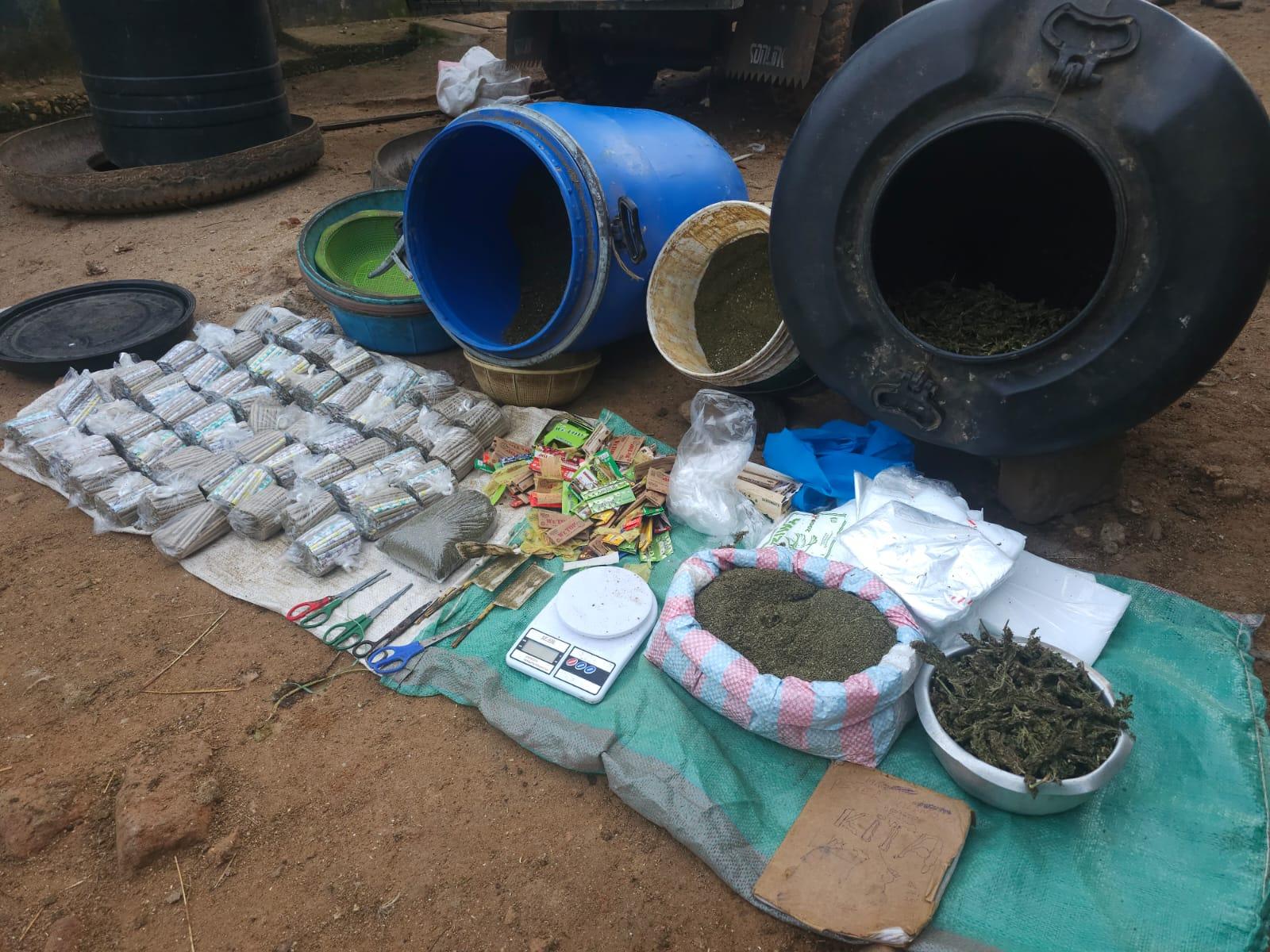
Finally, the candidate class can be quite promising. But their Achilles’ heel can be a lack of comely character. Close to that is indiscipline. In Proverbs 12, the wise man wrote: Whoever loves discipline, loves knowledge. So, Achilles’ heel is a fatal weakness or vulnerable point in spite of overall strength. It can be a bad habit. Or structural weakness in a particular plan. In a typical Form Four candidate class, gaps in character and discipline can manifest as abuse of drugs, homosexuality (gayism or lesbianism), wasting time, disrupting the terms calendar, focusing on entertainment more than studies, defeatist attitude, stupid solidarity, stupid pride, skiving lessons, refusal to do exams, cheating in exams, refusal to do assignments, disobedience, rebellion, defiance of authority, incitement, organising or participating in strikes, burning the school, fights, assault, theft, lateness, absenteeism or truancy, wearing wrong school uniform, unacceptable hairstyles, et cetera. Just call it Achilles’ heel.
READ ALSO: Confusion as TSC cancels transfers of regional directors
In Greek Mythology, according to the legend, the sea-nymph Thetis dipped her infant son, Achilles, into the River Styx to make him immortal and invulnerable to harm. However, because she held him by his heel as she submerged him, the mystical water did not touch that area. Achilles grew into a nearly invincible warrior, but was ultimately killed during the Trojan War when a poisoned arrow struck directly into his unprotected heel.
By Victor Ochieng’
The writer rolls out academic talks and training services in schools. He retools principals and teachers on the Great Management of Form Four Candidates.
vochieng.90@gmail.com. 0704420232
You can also follow our social media pages on Twitter: Education News KE and Facebook: Education News Newspaper for timely updates.
>>> Click here to stay up-to-date with trending regional stories
>>> Click here to read more informed opinions on the country’s education landscape