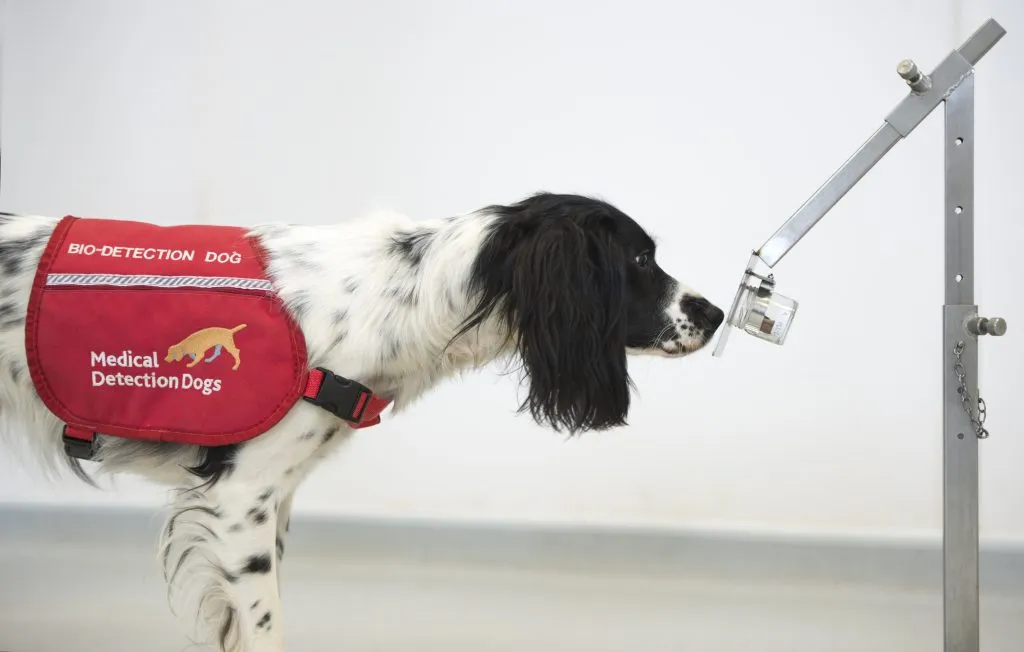
Specially trained dogs in the United Kingdom (UK) are at the centre of groundbreaking medical research after demonstrating an extraordinary ability to detect cancer through scent in biological samples such as urine and breath.
Research led by the charity Medical Detection Dogs in collaboration with UK universities including The Open University and the University of Bristol has shown that dogs can accurately identify cancer-related odour signatures known as volatile organic compounds (VOCs).
These compounds are released by malignant cells and can be detected in trace amounts.
In key studies focusing on prostate and bowel cancer, trained detection dogs were able to distinguish cancer-positive urine samples from healthy ones within seconds.
Some trials reported detection accuracy rates of up to 93 percent, raising hopes for a future non-invasive screening method.
Dogs involved in NHS-linked evaluations at Milton Keynes University Hospital successfully completed assessment stages following earlier promising research findings.
The trials are part of a wider effort to validate whether canine olfactory detection can complement existing diagnostic tools.
ALSO READ:
Parents protest appointment of Homa Bay’s Moi Girls new principal
Because dogs cannot be deployed at scale in hospitals, scientists are now working to replicate their abilities using artificial intelligence and sensor technology.
Researchers from the Open University and partner institutions are mapping how dogs identify cancer odours in order to develop electronic “noses” capable of similar detection.
Further studies involving the Royal Veterinary College and the University of Bristol have also shown that trained dogs can detect disease indicators in animals, including signs of bladder cancer in canine patients themselves.
Scientists explain that cancerous cells produce unique chemical signatures that are carried through breath, sweat and urine.
Dogs possess up to 300 million scent receptors compared to about 6 million in humans, enabling them to detect extremely faint odour patterns.
Ongoing research supported by organisations such as Cancer Research UK continues to explore how canine olfaction can be translated into clinical tools for early cancer detection.
While scientists emphasize that dogs will not replace medical diagnostics, their role is increasingly seen as a foundation for developing next-generation screening technologies.
By Our Reporter
You can also follow our social media pages on Twitter: Education News KE and Facebook: Education News Newspaper for timely updates.
>>> Click here to stay up-to-date with trending regional stories
>>> Click here to read more informed opinions on the country’s education landscape