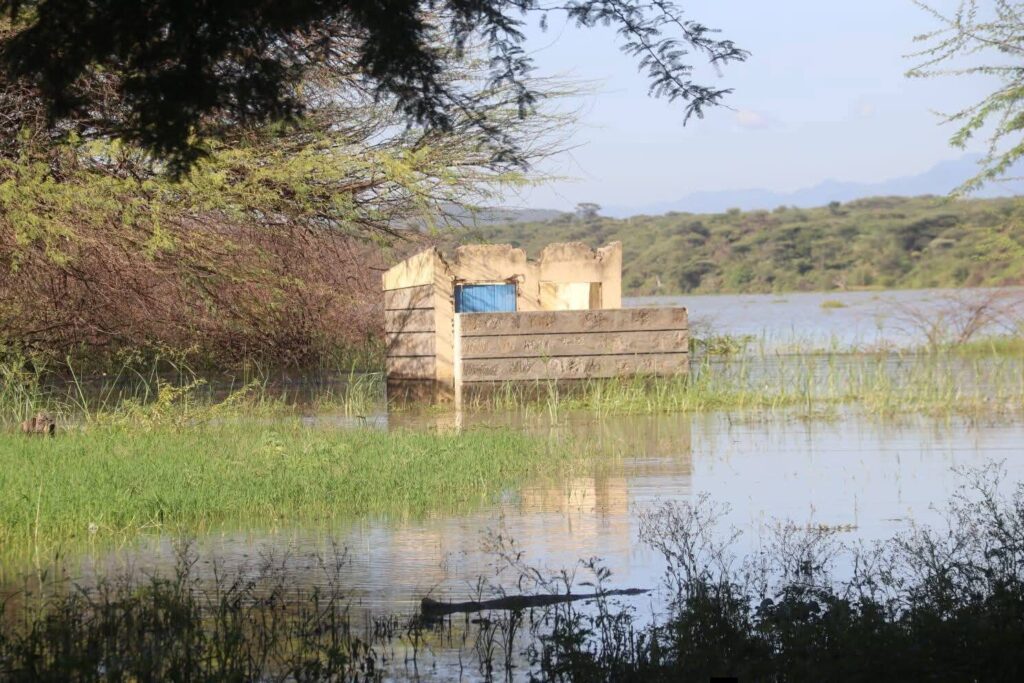
Residents of Baringo County have appealed to the government to urgently intervene as the swelling of Lakes Baringo and Bogoria continues to submerge schools, threatening the education of learners.
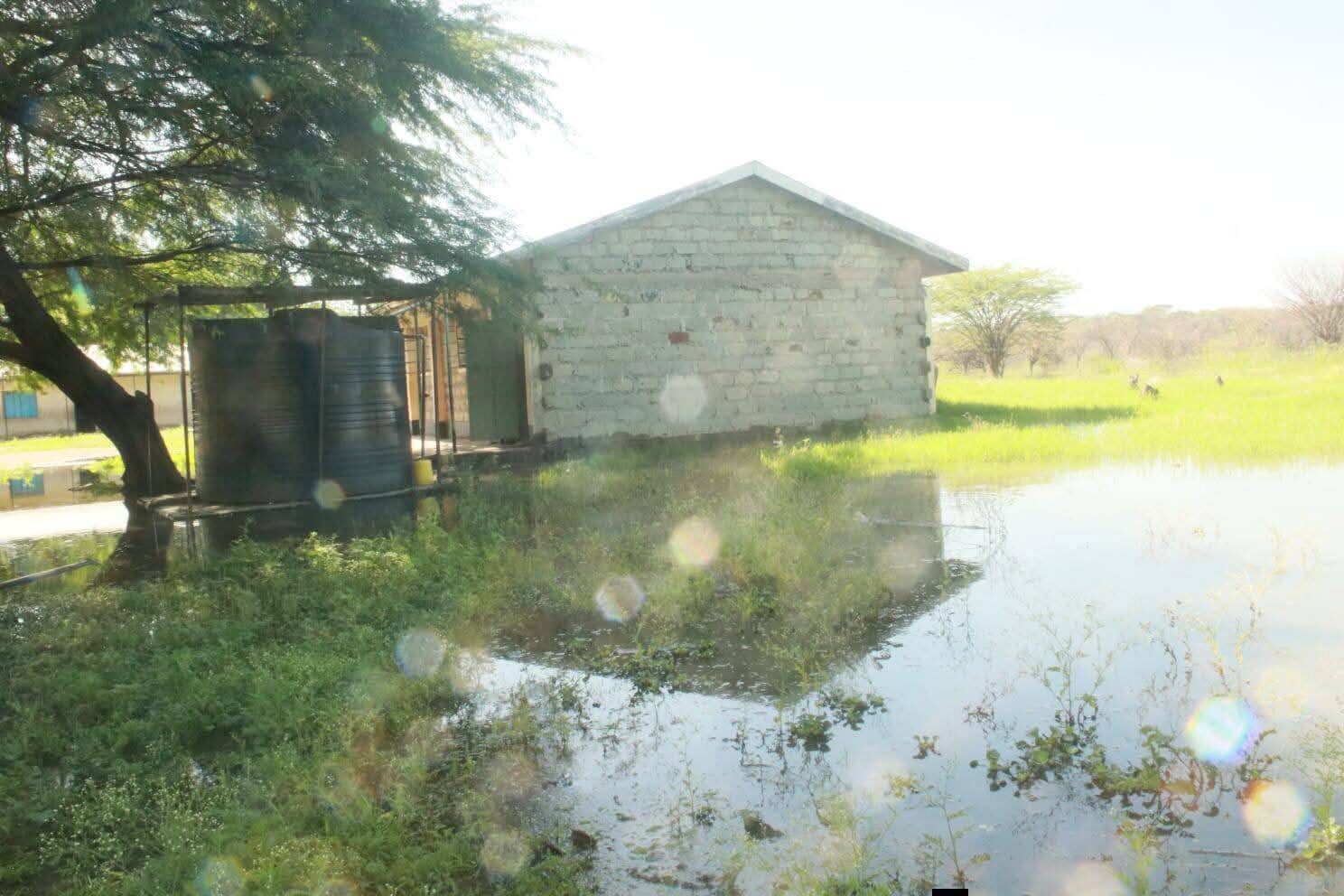
The latest institution affected is Olkokwe Primary School, where rising water levels have forced students to discontinue learning as floodwaters consume classrooms and access routes.
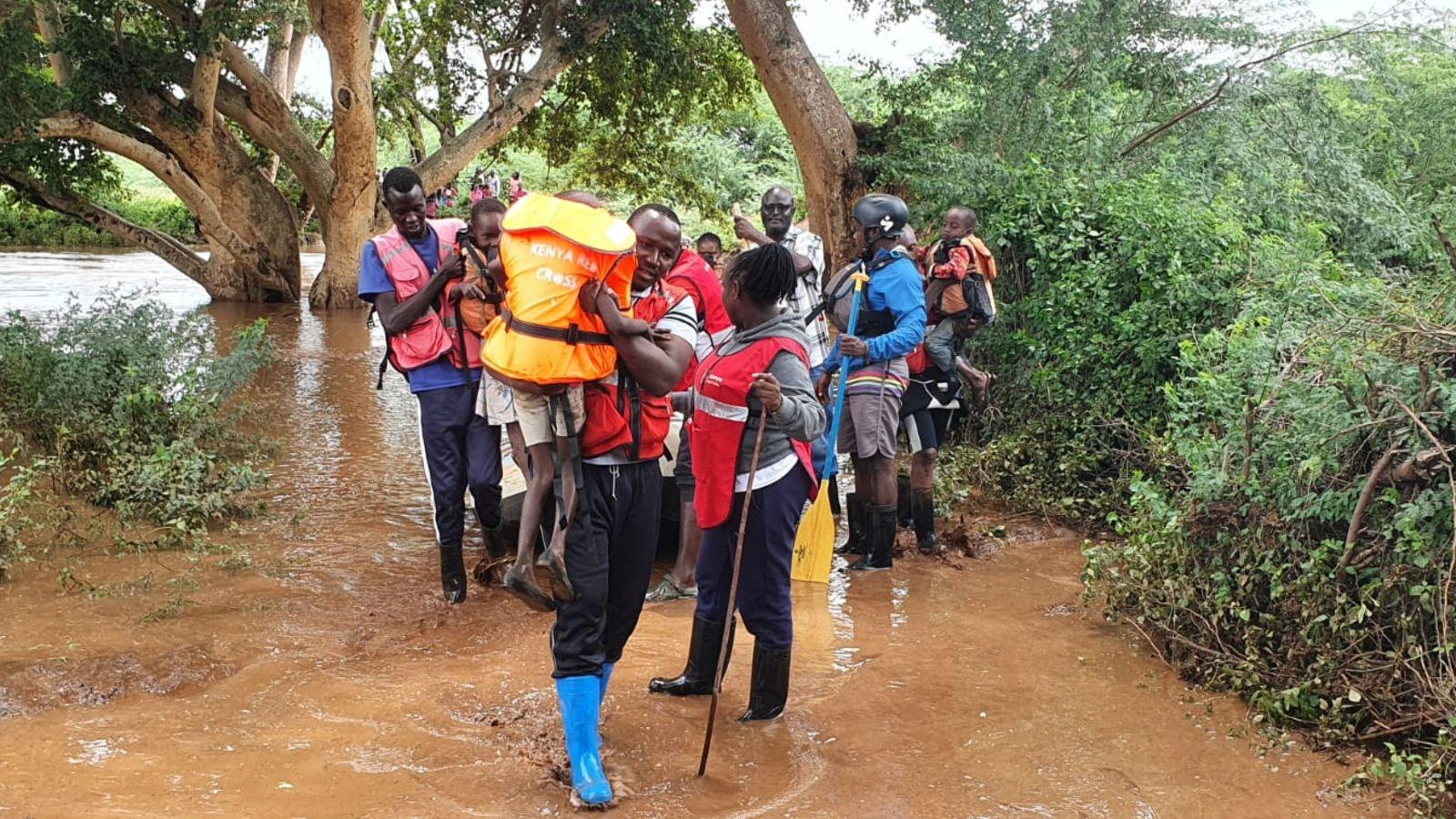
At Loruk Primary School in Baringo North, pupils now rely on boats to reach school after floodwaters cut off roads leading to the institution.
Each learner pays about Ksh20 per trip, translating to nearly Ksh1,200 monthly, a burden many parents say they cannot sustain.
Led by Loyamorok Member of County Assembly (MCA) Mary Losile and Tirioko MCA Sam Lokales, residents warned that the expanding lakes were creating fear and uncertainty across the county.
“The safety of our children must come first because several schools have already been submerged,” said Losile. “The government must move with speed before we lose more institutions and livelihoods.”
Lokales described the situation as a humanitarian crisis, saying many families had already abandoned their homes.
“We are witnessing massive destruction. Homes, schools and grazing lands are disappearing every day,” he said.
The flooding has turned education into a dangerous journey for learners in the affected areas.
Some pupils from Loruk Primary School paddle through flooded sections in improvised wooden canoes known locally as kaldich, risking attacks from crocodiles and hippos lurking near the school compound.
“You have to be brave to come to school here,” one resident remarked as children navigated the flooded waters.
Loruk Primary School headteacher Luka Kandie said only 32 out of 318 pupils reported to school on Monday due to the flooding crisis.
“Transport is very risky as young learners face the danger of attacks by fierce crocodiles and hippos. The light boats can capsize in heavy waves,” said Kandie.
ALSO READ:
What you need to know about Ebola virus as pandemic causes panic in East Africa
He noted that children from Chelelyo, Kiplelchony and Barchar islands are among the worst affected.
“Since the lake water rose, most families were displaced and moved several kilometres away. This makes it hard for students to get to school and other facilities,” he said.
Kandie explained that learners who previously used five-kilometre shortcuts are now forced to walk more than 15 kilometres around flooded areas to reach school.
A spot check in the region indicated that more than 5,000 pupils were absent across at least 18 affected schools.
The institutions include Katuwit, Loruk, Salabani Secondary, Ng’ambo Girls Secondary, Lake Baringo Mixed Secondary, Sintaan, Leswa, Loropil, Kiserian and Sokotei primary schools among others.
At Loruk Boarding Primary School, boys’ dormitories and latrines have already been submerged by floodwaters, while classrooms are beginning to crack under prolonged exposure to water.
“The classrooms are beginning to crack due to effects of flood water, putting the learners’ lives at high risk in case the shaky structures collapse,” said resident Harun Cherutich.
Major roads, including the Loruk-Chemolingot road and sections of the Marigat-Loruk highway, have also been submerged, paralysing transport and making it nearly impossible for learners to report to school.
“We’re trying our best to ensure all our learners report back to school but everywhere, including the major highway, is submerged,” Kandie said.
ALSO READ:
Senators begin oversight tour to assess ECDE and VTCs across four counties
Salabani Secondary School headteacher Joshua Chemjor said the lake had advanced dramatically within a year.
“The lake was about five kilometres away from the school last year, but it has now swallowed the entire institution,” Chemjor said.
In Elkokwe village, residents are also grappling with mysterious underground water eruptions believed to be linked to tectonic or geothermal activity.
Witnesses reported water violently gushing from the ground, accompanied by foam, unusual odours and discoloured soil, sparking fears among locals.
More than 250 acres of land in the area have already been submerged, destroying grazing fields and threatening dozens of homes.
The flooding crisis has displaced more than 40,000 residents across Baringo North, South and Tiaty sub-counties, according to local leaders and humanitarian agencies.
Families in the affected areas are now in urgent need of food, shelter, medicine and clothing as livelihoods tied to farming, fishing and tourism continue to collapse.
Residents say crocodiles, hippos and snakes are now frequently spotted near homes and trading centres.
Scientists and environmental experts have linked the crisis to prolonged heavy rainfall, environmental degradation and possible underground tectonic changes altering natural drainage systems.
The government has since formed multi-agency technical teams involving the Water Resources Authority and the National Environment Management Authority to study the phenomenon and propose long-term solutions.
Among the proposals under consideration are the construction of water dykes, drainage tunnels and the relocation of affected communities and institutions to safer grounds.
However, residents say immediate action is needed before the situation worsens further.
“We cannot continue watching our children risk their lives every day just to get an education,” said Losile. “This disaster requires urgent national attention.”
The Kenya Wildlife Service senior warden said Lake Baringo has expanded by 60 percent over the past seven years and now covers about 270 square kilometres, while Lake Bogoria has grown by 25 percent to cover 43 square kilometres.
By Kimutai Langat
You can also follow our social media pages on Twitter: Education News KE and Facebook: Education News Newspaper for timely updates.
>>> Click here to stay up-to-date with trending regional stories
>>> Click here to read more informed opinions on the country’s education landscape