
Kimutai Langat reports on the growing impact of tea mechanisation in Kericho and Bomet counties, where job losses linked to machine harvesting are being blamed for school closures and rising education challenges in tea-growing communities.
The famous words of French writer Victor Hugo that “the invasion of armies can be resisted, but not an idea whose time has come” have found new meaning in the tea fields of Kericho and Bomet counties, where mechanisation has steadily replaced manual tea harvesting.
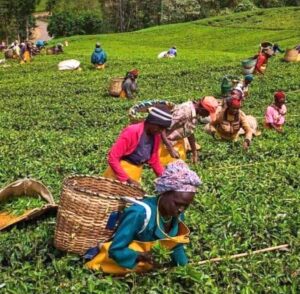
Across multinational tea estates, machines now glide through green plantations that for decades depended on thousands of workers armed with baskets and skilled hands.
While the transition has brought efficiency and reduced production costs for tea companies, it has also triggered far-reaching social and economic consequences, with education emerging as one of the biggest casualties.
In the once vibrant tea-growing zones, several schools have shut down after families lost jobs and migrated in search of alternative livelihoods.
In Bomet County alone, at least four schools have reportedly closed over the past five years due to dwindling learner populations linked to job losses caused by mechanisation.
Some of the abandoned schools have since been turned into grazing fields, while classrooms and other infrastructure are slowly being vandalised.
A similar trend is being witnessed in neighbouring Kericho County, where schools such as Masobet Primary School, Marinyin Primary School, Kapsongoi Primary School, and Kitumbe Primary School have closed their doors due to a lack of learners.

The closures have alarmed education stakeholders and residents, who argue that the social cost of mechanisation is becoming too heavy for local communities to bear.
Education stakeholders Ann Langat and Mary Sinei faulted the closure of the schools, describing it as a violation of children’s right to education.

“It is painful to see schools being abandoned because parents can no longer afford to live and work in these estates,” said Langat. “Children’s rights should come first. Companies should slow down the closure of schools and engage communities before making such decisions.”
Mary Sinei warned that the continued closure of schools risks creating long-term educational disparities in tea-growing regions.
“When schools close, children suffer the most. Some are forced to travel very long distances to access education, while others eventually drop out altogether,” she said.
The introduction of tea harvesting machines did not sit well with workers and communities within the former Brown’s Plantation estates, previously owned by Unilever and now operating under Browns Plantations Kenya.
Employees and residents had hoped that workers’ unions and political leaders would intervene to halt or slow down mechanisation, but many now feel abandoned.
Several workers accused labour leaders of failing to adequately defend their interests despite public opposition to mechanisation.
The Central Organisation of Trade Unions (COTU) Secretary General Francis Atwoli had previously opposed the use of tea harvesting machines during visits to the region. However, workers claim little changed after he engaged with the companies.
“Atwoli came, spoke strongly against the machines, and left. Nothing changed. We still lost jobs, and schools continued closing,” lamented a former tea worker in Kericho.
Some disgruntled employees went further and accused labour leaders of collusion, saying workers were left frustrated and helpless as mechanisation expanded.
Efforts to seek comments from the management of some multinational tea companies did not bear fruit, with phone calls going unanswered.
Tea estates in Kericho and Bomet have increasingly embraced mechanisation as part of efforts to lower production costs and remain competitive in the volatile global tea market.
Industry players argue that manual tea plucking is expensive, often accounting for more than half of production costs.
Studies within the tea sector indicate that one machine operated by a small team can replace between 20 and over 100 manual tea pickers, drastically reducing labour expenses.
Tea companies also cite declining interest in plantation jobs among younger generations, labour unrest, and an ageing workforce as reasons behind the shift to mechanised harvesting.

“Many young people no longer want plantation jobs. They prefer urban opportunities or informal businesses. Companies are therefore turning to machines to sustain production,” explained an agricultural economist based in Kericho.
Apart from reducing labour costs, mechanisation allows faster harvesting during peak tea-growing seasons and ensures consistency in maintaining tea bushes.
Modern fuel-driven and battery-powered harvesting machines can also continue operating during rainy conditions that would otherwise interrupt manual harvesting.
However, the economic benefits enjoyed by companies have come at a high social cost for communities that traditionally depended on tea estates for employment and social support.
The job losses have severely affected local economies in Kericho and Bomet, where thousands of households relied directly or indirectly on tea plantations.
Businesses such as food kiosks, public transport operators, boda boda riders, and entertainment joints have recorded sharp declines in income as the purchasing power of former workers continues to diminish.
“We used to serve many workers every evening, but business has gone down significantly. Most people no longer have money,” said a shop owner near one of the estates in Bomet.
The shrinking workforce has also reduced demand for social services previously supported by tea estates, including schools and health facilities.
Historically, multinational tea estates maintained schools, clinics, housing, and water systems for their large labour force. However, mechanisation has reduced the need for extensive worker settlements, leading to the scaling down of such facilities.
Education stakeholders say the decline in school enrolment reflects a broader socio-economic crisis unfolding within tea-growing regions.
“Education is directly linked to household income. Once parents lose jobs, children are the first to suffer,” said Sinei.
The mechanisation process has also sparked tension and unrest in some areas.
In parts of Kericho, including Tagabi, residents have in the past protested against machines, leading to the destruction of property, vandalism of tea estates, and clashes with police.

Workers argue that while companies are pursuing profits and efficiency, little consideration has been given to the welfare of communities that sustained the tea sector for decades.
There are also growing concerns that increased reliance on machines could compromise the quality of Kenyan tea, which has traditionally enjoyed a premium reputation internationally because of hand-plucking standards.
Some experts warn that machine-harvested tea may affect quality due to the inclusion of coarse leaves compared to manually plucked tea.
Despite the controversy, tea companies maintain that mechanisation remains necessary for survival in an increasingly competitive global market.
Analysts note that countries competing with Kenya in tea production have heavily mechanised, enabling them to produce large volumes at lower costs.
Some leaders and stakeholders have proposed alternative measures to cushion affected communities.
Among the proposals is increasing land rates charged on multinational tea companies to compel them to create more employment opportunities or generate more revenue for county governments.
Others have called for the establishment of community empowerment programmes and the expansion of vocational training to help former tea workers transition into alternative livelihoods.
Researchers and policy experts now argue that a balance must be struck between technological advancement and social protection.
“There is a need for a transition model that protects communities while allowing the industry to modernise,” said one labour rights advocate. “Technology should not come at the expense of education and livelihoods.”
Amid the criticism, some tea companies have continued investing in social programmes through corporate foundations.
The Finlays Community Trust, funded by Browns Plantations Kenya, has reiterated its commitment to supporting education, water, infrastructure, and health initiatives within tea-growing communities.
The trust says its focus is on promoting sustainable development and creating long-term social and economic benefits for residents.
READ ALSO: Tea growers in Bomet decry low bonuses, say children’s education at risk
However, for many former tea workers and affected families, the loss of jobs and closure of schools remain painful reminders of a changing industry where technology is rapidly replacing human labour.
As mechanisation continues expanding across Kenya’s tea sector, communities in Kericho and Bomet are now grappling with a difficult question — how to embrace technological progress without sacrificing the welfare and future of the very people who built the industry.
More than 60,000 workers in Kenya’s tea industry, particularly in Kericho and Bomet counties, have reportedly lost their jobs following increased mechanisation and aggressive cost-cutting measures by multinational tea firms.
The wave of retrenchments, which has unfolded over the past several years, has triggered economic hardship, social unrest, and growing concern among labour unions and local communities that depend heavily on tea estates for survival.
Industry estimates indicate that the number of jobs lost could be as high as 100,000, making it one of the biggest labour disruptions ever witnessed in the South Rift tea belt.
Major multinational companies, including Sasini PLC and Browns Plantations Kenya, formerly James Finlay Kenya, have increasingly adopted tea harvesting machines in efforts to reduce production costs and remain competitive in the global market.
The mechanisation drive has drastically reduced the need for manual tea pickers, many of whom had worked in the plantations for decades.
Data from the sector shows that Sasini PLC alone reduced its workforce by more than 2,100 employees over five years, with staff numbers dropping from 4,656 workers to approximately 2,520.
In another major restructuring exercise, Browns Plantations announced plans in late 2025 to retire about 2,000 employees under a voluntary retirement scheme.
Apart from layoffs, workers who remained employed also experienced reduced working hours, with some estates cutting shifts from eight hours to six hours per day.
The developments have sparked anxiety among workers and residents who say the mechanisation process is destroying livelihoods and destabilising communities built around the tea sector.
“We depended entirely on tea work to educate our children and support our families. Now many people have nothing to do,” said a former tea worker in Kericho.
The loss of jobs has significantly increased unemployment levels in the two counties, where tea farming remains the backbone of the local economy.
Local businesses that relied on the spending power of tea workers are also struggling to survive.
Shop owners, transport operators, food vendors, and boda boda riders say business has sharply declined due to reduced circulation of money within tea-growing centres.
“Before mechanisation, workers were paid regularly, and businesses thrived. Today, many shops are empty because people no longer have disposable income,” said a trader in Bomet town.
The economic downturn has also affected social services within tea estate zones.
Reports indicate that several schools and medical facilities established to serve tea plantation workers have either scaled down operations or closed completely due to declining populations.
Education stakeholders say migration of families after job losses has led to drastic drops in school enrolment.
Some schools within tea estates in Kericho and Bomet have already shut down because of a lack of learners, leaving classrooms abandoned and infrastructure deteriorating.
Health centres that once served large worker populations are also reportedly experiencing reduced activity as families relocate in search of alternative livelihoods.
The growing crisis has attracted the attention of labour unions, with the Kenya Plantation and Agricultural Workers Union (KPAWU) repeatedly opposing the mass layoffs.
The union has argued that tea companies should adopt a balanced approach that protects workers while embracing technological advancement.
KPAWU officials estimate that more than 80,000 workers may have already been displaced in earlier phases of mechanisation.
“We are not against technology, but the transition must consider the welfare of workers and their families,” said a union official. “Thousands of people are suffering because of sudden job losses.”
Despite protests from workers and local leaders, tea companies maintain that mechanisation is necessary to sustain profitability in an increasingly competitive global tea market.
Industry players argue that manual tea harvesting has become too expensive and unsustainable due to rising labour costs and changing market dynamics.
According to tea sector analysts, mechanised harvesting significantly lowers operational costs and enables faster harvesting during peak production seasons.
One machine operated by a small team can reportedly replace dozens of manual tea pickers, allowing companies to reduce expenses while increasing efficiency.
However, critics argue that the social cost of mechanisation is too high and warn that continued layoffs could worsen poverty and inequality in tea-growing regions.
READ ALSO: Bomet raises alarm over heavy rains ahead of school reopening
Community leaders are now calling on both the national and county governments to intervene and cushion affected families through alternative employment programmes, vocational training, and economic empowerment initiatives.
“There is a need for urgent intervention because entire communities are collapsing economically,” said a community leader in Kericho. “If nothing is done, unemployment and poverty will continue rising.”
As the tea industry continues to modernise, stakeholders say the challenge remains finding a balance between technological progress and protection of livelihoods for thousands of workers who have long depended on the sector.
By Kimutai Langat
You can also follow our social media pages on Twitter: Education News KE and Facebook: Education News Newspaper for timely updates.
>>> Click here to stay up-to-date with trending regional stories
>>> Click here to read more informed opinions on the country’s education landscape
>>> Click here to stay ahead with the latest national news.