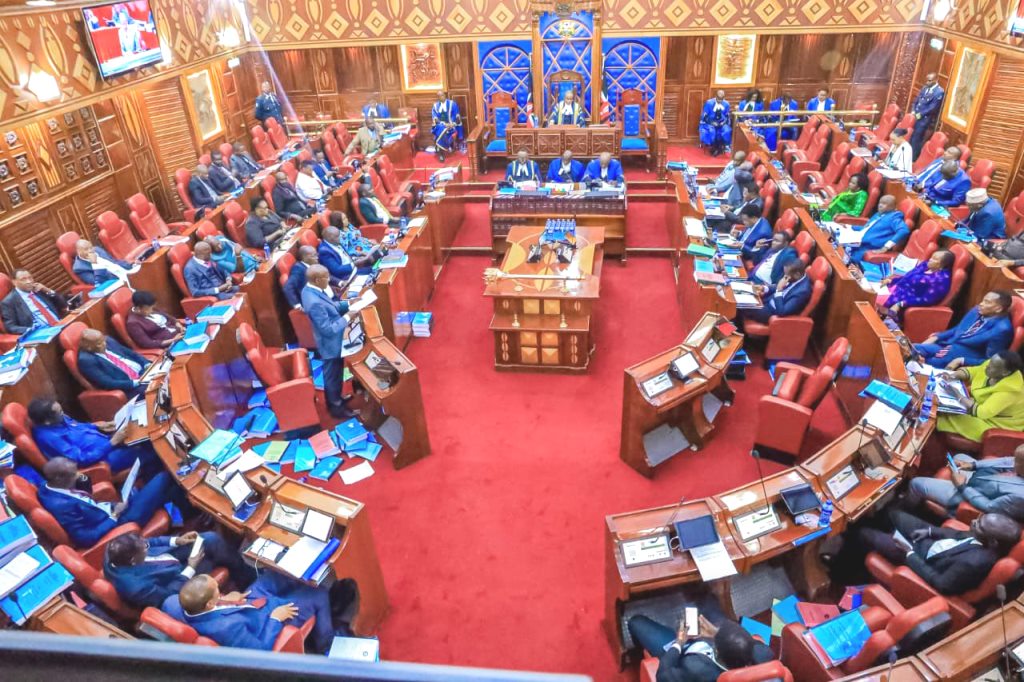
A female Grade 10 student from Nairobi’s Braeburn Garden Estate International School arrived at the Senate on March 25, 2026, with one goal: to learn how Kenya’s legislature works. What she witnessed instead has sparked a national conversation about the dignity of children in public institutions, and whether those entrusted with power are fit to model it.
The student was attending the Senate under the School Voluntary Service Scheme, a programme designed to give learners civic exposure by observing parliamentary proceedings firsthand. She was there as a guest of the institution. She left as the subject of inappropriate and degrading remarks made during the very session she came to observe.
The remarks, made by a nominated senator, questioned what “service” the student would be offering the Senate. They were immediately condemned as sexual in nature and wholly unsuitable for a formal parliamentary setting, let alone one in which a minor was present.
The Senate Speaker’s panel later ruled the comments unparliamentary and directed the senator to issue an unreserved apology to the student, her family, the Senate and the public.
The apology, when it came, was itself contentious. The senator suggested it had been written for her and did not fully represent her position, prompting another intervention from the chair. Critics said the reluctance to own the apology only compounded the original harm.
ALSO READ:
Public figures across Kenya have since weighed in. Former Law Society of Kenya (LSK) President Faith Odhiambo described the incident as a gross violation of the dignity of a child, saying a student who went to Parliament to learn was instead met with remarks that objectified her. Odhiambo called on the Senate to go beyond accepting what she termed a theatrical apology and take concrete accountability measures.
Mumias East Member of Parliament (MP) Peter Salasya urged leaders to be more cautious in their communication, particularly when minors are present. He described the incident as a reminder that words in Parliament carry weight and responsibility. Rapper and activist Octopizzo went further, calling the remarks a violation of standing orders and demanding that resignation be part of the conversation where misconduct undermines public trust.
The incident has reignited debate about child safety in public spaces, the Senate’s School Outreach and Mentorship Programme, and the standard of conduct expected of elected and nominated officials when children are in the room.
Senate Speaker Amason Kingi described the comments as remarks that fell short of the standards of decorum expected of members of the House. Calls for sterner institutional action beyond the apology continue to grow.
For a student who came to Parliament to be inspired, the experience has instead become a case study in how institutions can fail the very young people they are meant to serve.
By Benedict Aoya
You can also follow our social media pages on Twitter: Education News KE and Facebook: Education News Newspaper for timely updates.
>>> Click here to stay up-to-date with trending regional stories
>>> Click here to read more informed opinions on the country’s education landscape