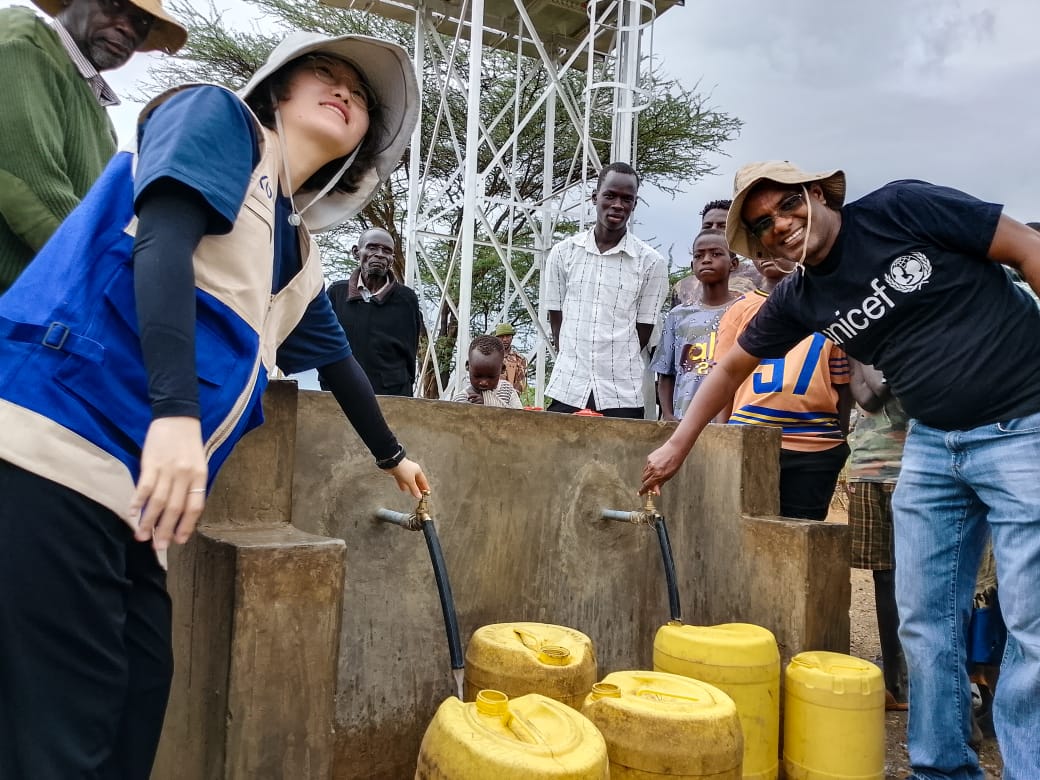
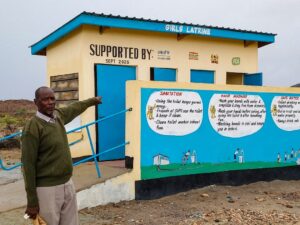
A new project jointly implemented by the Turkana County Government and UNICEF, with funding from the Korea International Cooperation Agency (KOICA), is expanding access to menstrual health and sanitation services for girls through application of the Integrated Water Resource Management approach.
The initiative, part of the wider program to strengthen community resilience against climate change, is designed to connect learning institutions with water supply and Menstrual Health Hygiene products to help keep girls in school.
According to Father Joseph Ebenyo, the vicar general of the Diocese of Lodwar, a survey was conducted to map areas in need before choosing Lochoredome, Kaalem, Nadunga and 12 other locations for the project.
“Each borehole project is designed to integrate girl-child-friendly WASH facilities. So far, girls at Lochoredome, Aterika and Kaalem have started enjoying the services,” he said.
ALSO READ:
KNUT members to benefit from 16% tuition waiver in new deal with Open University of Kenya
The headteacher of Lochoredome school in Kachoda village unit in Turkana North confirmed that schoolgirls used to skip classes and even walk up to Kao or Kachoda, more than five kilometres away, to access water services.
“The girls no longer lose time in search of water and dignity. We have it in the school compound, and they spend more time learning,” the headteacher said.
YOUTUBE VIDEO:
During an inspection tour of the project, UNICEF head of WASH program Haile Gashew asked members of the community to use the water for a variety of projects that could bring economic opportunities and food security, such as agriculture.
In addition to water infrastructure, the project has injected KSh 900 million to support hygiene promotion, formation and capacity building of water committees, making sub catchment management plans and strengthening WASH governance systems.
Head of UNICEF field office at Lodwar, Rotuno Kipsang, said that the project builds on the success realized from the first phase, where 76 boreholes and 10 sand dams were successfully delivered, reaching more than a quarter of Turkana’s population with water services.
“The second phase is a three-year program not just to improve access to clean drinking water, but to work towards ensuring learning institutions and health facilities are connected to the vital resource,” he said.
While the Diocese of Lodwar implements mostly in Turkana North and Kibish, Welthungerhilfe, Team and Team International and Plan International have been co-opted as implementing partners in locations including Turkana Central and Loima sub-counties.
At the end of the three-year implementation period, it is expected that Turkana will have 41 new boreholes, 620 villages free from open defecation and up to 31 facilities connected with water services to directly benefit 139,500 people across the county.
By Otieno Sadat
You can also follow our social media pages on Twitter: Education News KE and Facebook: Education News Newspaper for timely updates.
>>> Click here to stay up-to-date with trending regional stories
>>> Click here to read more informed opinions on the country’s education landscape