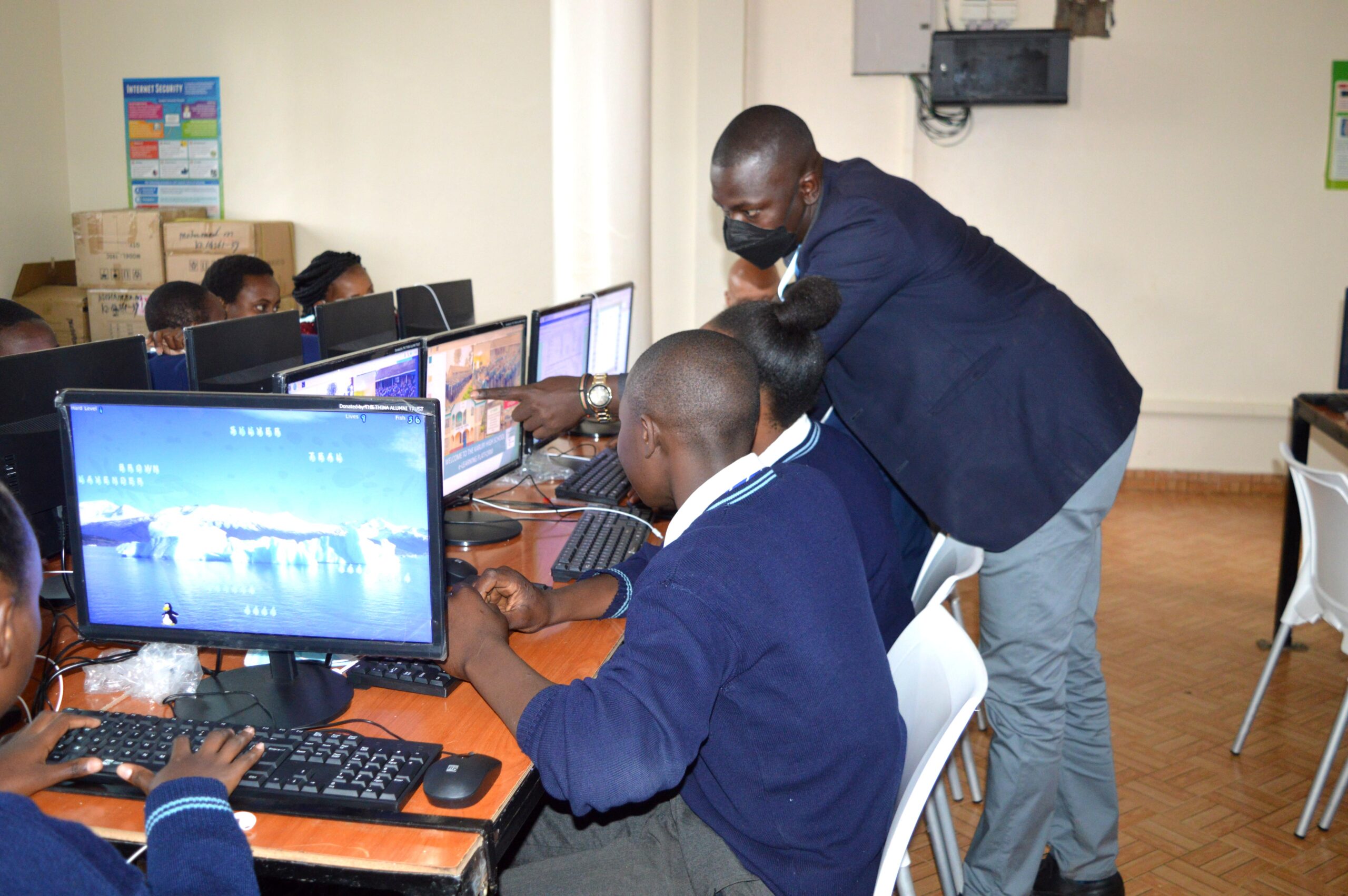
Kenya did not start late in integrating technology into education. In fact, the country showed early promise. Computer studies were introduced, digital literacy programmes rolled out, and schools across the nation proudly set up computer labs as symbols of progress. But today, a difficult truth must be confronted. We built computer labs but we did not build a digital education system.
Across many schools, ICT remains locked in rooms accessed occasionally, disconnected from daily teaching, and largely absent from real learning experiences. Technology exists, but transformation does not. Now, with the full rollout of Competency-Based Education (CBE), the cracks are no longer hidden they are exposed.
CBE is built on skills, creativity, problem-solving, and real-world application. It demands learners who can think, adapt and innovate. Yet in many classrooms, teaching methods remain unchanged teacher-centered, rigid, and disconnected from the digital reality learners live in every day.
This contradiction is dangerous. We cannot claim to prepare learners for the future while teaching them using systems of the past. Walk into a typical classroom today.
The learner has access to a smartphone, interacts with digital platforms, and can access information instantly. But once in school, that same learner is expected to sit, listen, memorize, and reproduce. That is not just outdated it is ineffective. ICT integration must now move from symbolism to substance. It is no longer about how many computers a school has. It is about how those tools are used to improve teaching and learning.
ALSO READ:
Nzioka Waita mourns Prof. Raphael Munavu, says Kenya has lost a builder and a thinker
A computer lab that does not influence daily instruction is not integration it is decoration. The shift required is clear. Technology must move into the classroom not as an occasional activity, but as a daily teaching tool.
A science lesson should be interactive. A mathematics concept should be visualized. A language class should be engaging and dynamic. ICT must become part of the learning process not separate from it. But this transformation cannot happen without the teacher. Teachers are not the problem they are the key.
For too long, ICT integration has focused on infrastructure while neglecting the educator. Many teachers are willing to adopt technology but lack the tools, training, and support to do so effectively. Without empowering teachers, even the best systems will fail.
At the same time, the conversation must move to the next level intelligent systems. The world is no longer just using technology; it is using Artificial Intelligence (AI). AI can personalize learning, analyze performance, and provide real-time feedback.
It can reduce teacher workload and improve learning outcomes. This is not a distant future. It is already happening. The question is where is Kenya in this shift? If ICT integration remains limited to basic usage, the country risks falling behind not because of lack of vision, but because of lack of execution. And government cannot do this alone.
ALSO READ:
Technology companies must step up not as vendors, but as partners in transformation. The role of the private sector is not just to supply devices, but to build systems, train educators, and support long-term implementation. This is not charity it is an investment in the country’s future workforce.
At the same time, equity must remain at the center of this conversation. ICT integration must not benefit only a few well-resourced schools while leaving others behind. A digital education system that excludes part of the population is not progress it is division.
Kenya stands at a crossroads. We can continue celebrating access counting devices, building labs, and ticking boxes. Or we can confront reality and take the harder, more meaningful path integrating technology into the heart of education. Because the truth is simple: Technology in schools is not about machines it is about outcomes.
It is about how well learners are prepared for the world they are entering. If we fail to act, we will not just fall behind we will fail the very generation we are meant to prepare. If we act boldly, we have the opportunity to lead not just in ICT adoption, but in building an education system that truly reflects the demands of the 21st century. Kenya does not need more computer labs. Kenya needs a complete reset of how technology is used in education.
By Nick Odundo
ICT Specialist | Education Technology Integration ICT Specialist Advocate
You can also follow our social media pages on Twitter: Education News KE and Facebook: Education News Newspaper for timely updates.
>>> Click here to stay up-to-date with trending regional stories
>>> Click here to read more informed opinions on the country’s education landscape