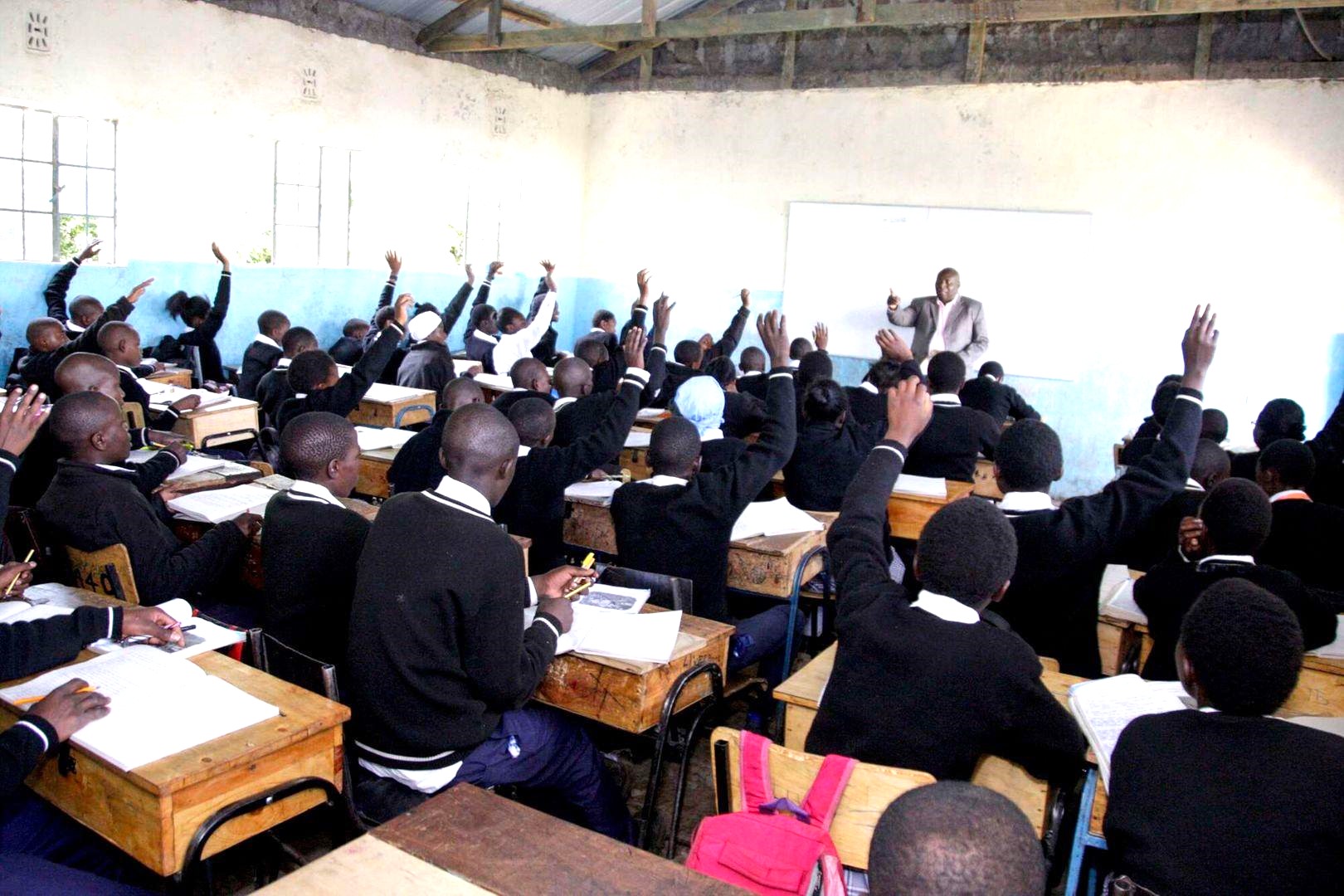
As schools across Kenya reopen, a familiar rhythm returns. Uniforms are dusted off, some fitting perfectly, others negotiating new body realities. Exercise books are covered with last year’s leftover brown paper and parents suddenly rediscover class WhatsApp groups they muted in December for ‘peace of mind.’ The energy is fresh, hopeful; and slightly chaotic.
But beneath this annual reset lies a stubborn national tradition: the Great Holiday Homework Mystery. Every teacher knows it. Every experienced parent has sensed it. And every learner, at some point, has participated in it; whether as a bold actor, a nervous accomplice or a silent observer praying not to be noticed. It begins innocently enough.
Monday morning. First lesson. The teacher walks in, composed, confident and mentally prepared for the term ahead. Greetings are exchanged. A few smiles here and there. Then comes the sentence that instantly rearranges the emotional climate of the room:
‘Kindly submit your holiday homework.’
Silence. Not ordinary silence. Strategic silence.
Desks open. Bags unzip with exaggerated urgency. Papers shuffle like leaves in a storm. Suddenly, everyone is busy; painfully busy. If productivity could be measured by noise, this would be the most hardworking class in Kenya.
Then, as expected, the hero; or villain; emerges.
One learner steps usually with the confidence of someone who has rehearsed this moment in their head. ‘Teacher, I did the work.’
The teacher nods slowly. Not convinced. Not surprised either. Just experienced.
‘Good,’ the teacher responds. ‘Where is your book?’
Now the performance truly begins.
ALSO READ:
No injuries reported as fire destroys teachers’ houses at Oriwo Boys
The learner checks the desk. Nothing. Opens the bag. Still nothing. Checks again, as if the book might have developed a personality and hidden itself out of fear. The shelf is inspected. Other books are flipped dramatically, as though the homework might have slipped into a different subject out of curiosity.
The class is watching. The teacher is watching. Even the walls seem invested. Seconds stretch. Tension builds.
Then comes the twist.
‘Teacher… I did the work… but I think I forgot the book at home.’
Think.
Not forgot. Think.
That single word carries the weight of uncertainty, creativity and mild desperation. It is not a statement. It is a negotiation.
Welcome to the Kenyan classroom, where storytelling meets survival.
It is easy to laugh; and we should; but beneath this well polished drama lies something deeper. This is not just about a missing book. It is about a missing system.
In many homes, holiday homework exists in theory. It is announced at the end of term, acknowledged briefly and then quietly buried under travel plans, family visits, church events and the sweet, addictive freedom of long holidays. By the time January; or April, August; rolls around, homework is less of a task and more of a rumor.
Some parents genuinely do not know it exists. Others know, but hope the child has ‘handled it.’ A few attempt to supervise but are quickly outmaneuvered by creative excuses and well timed distractions.
And so, the learner returns to school armed with three things: confidence, imagination and absolutely no written evidence.
Meanwhile, the teacher returns from the holiday refreshed, recharged and ready to inspire; until exactly 8:17 a.m. on opening day, when the first ‘I forgot at home’ speech is delivered with emotional commitment.
At that moment, the holiday ends officially.
What follows is not just a disciplinary situation. It is an emotional test.
Because the temptation to react is real. To raise your voice. To deliver a speech that begins with ‘In this life…’ and ends somewhere near ‘You people will suffer.’
But teaching, especially in today’s Kenyan classroom, demands more than knowledge. It demands control. Emotional discipline. The ability to look at a half truth wrapped in confidence and respond without losing your authority; or your sanity.
A seasoned teacher does not rush. They do not argue with the performance. They simply reset the script.
‘Alright,’ the teacher says calmly.
‘Tomorrow, you bring the book. If it does not come, we take the next step.’
Short. Clear. Unshakeable.
And just like that, the drama loses power.
ALSO READ:
Kwale teachers trained on AI to boost digital skills in schools
Because now, the responsibility has been returned to its rightful owner; the learner.
But let us not leave parents out of this story. Education is not a solo performance where teachers act and parents spectate. It is a partnership. A shared responsibility. A joint investment.
Before schools open, ask the uncomfortable question: ‘Do you have holiday homework?’
Do not accept vague answers. Inspect the bag. Yes, physically. Create a simple routine. Follow up. Because ‘I didn’t know’ is no longer a convincing excuse; it is a costly oversight.
And to the learners, the undisputed champions of last minute creativity, a gentle reminder: teachers have heard it all.
I left it in the matatu.
My cousin borrowed it.
The dog chewed it…even in estates where dogs have deep respect for human property.
Innovation is admirable. But honesty? Far more efficient.
As term 2 term begins, let everyone play their role. Learners should do the work; not the drama. Parents should check the work; not just the report form. Teachers should guide the process; without sacrificing their peace of mind.
Because education in Kenya is not just about grades. It is about responsibility, discipline and learning how to show up; prepared.
And to every teacher reading this: if you skipped anger management classes, this term will register you automatically.
No application required. Only endurance.
By Angel Raphael
Angel Raphael is a seasoned English and Literature teacher and trainer who blends classroom experience with humor and insight to reflect real school life.
You can also follow our social media pages on Twitter: Education News KE and Facebook: Education News Newspaper for timely updates.
>>> Click here to stay up-to-date with trending regional stories
>>> Click here to read more informed opinions on the country’s education landscape