The implementation of the Competency-Based Education (CBE) in Kenya has received a major boost following the adoption of Communities of Practice (CoP), an innovative approach aimed at addressing persistent gaps in curriculum interpretation in schools.
The model, which promotes structured collaboration, peer learning and continuous professional development among teachers, is increasingly being hailed as a game changer in strengthening Competency-Based Education (CBE) and enhancing Science, Technology, Engineering and Mathematics (STEM) learning nationwide.
The initiative came into sharp focus during the closing session of a three-day workshop for In-Service Education and Training (INSET) Centre Principals and county trainers held at the Centre for Mathematics, Science and Technology Education in Africa (CEMASTEA).
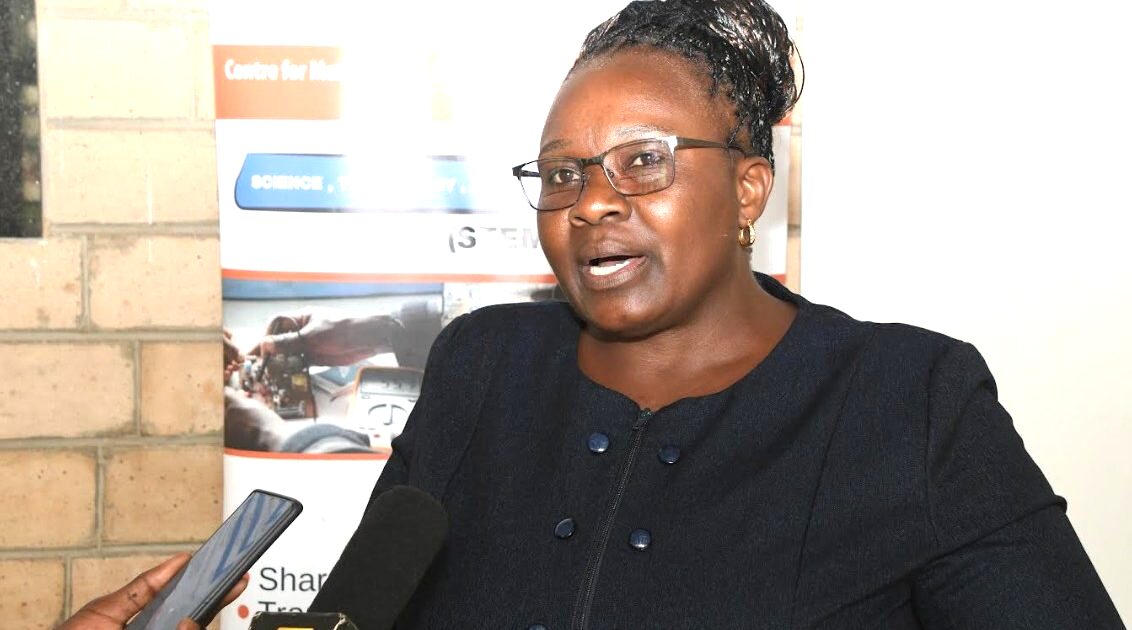
County Trainer Representative and teacher at Timaa Primary and Junior School in Trans Nzoia County, Alice Liyosi, said the CoP model has significantly improved curriculum implementation in her region.
“The Community of Practice was established primarily to bridge serious gaps in the interpretation of CBE curriculum designs. These gaps had been affecting effective curriculum delivery in our schools,” she said.
Liyosi explained that many teachers initially struggled to translate curriculum designs into practical classroom strategies, necessitating a collaborative platform where educators could jointly address challenges and build capacity.
She noted that CoPs bring teachers together to unpack curriculum requirements, share experiences and co-create solutions that improve teaching and learning outcomes.
“I am grateful to CEMASTEA because this programme has brought us together as CTRs and INSET Centre Principals. We are here to enhance our capacity as leaders in curriculum implementation, particularly in matters related to CBE,” she added.
A key feature of the model is lesson study, where teachers collaboratively plan, observe and review lessons to improve classroom practice and address learning gaps.
Through such sessions, teachers identify weaknesses, design interventions and refine teaching approaches to better meet learners’ needs.
Liyosi revealed that the concept of Communities of Practice was adopted following County Teacher Capacity Development Committee (CTCDC) meetings in late 2024, where stakeholders identified widespread challenges in curriculum interpretation.
“This was a programme that the CTCDC resolved was necessary to help teachers interpret the curriculum, and we subsequently rolled it out,” she said.
The programme, launched in October 2024 in Trans Nzoia County, has since grown rapidly, with membership increasing from 21 to 141 teachers—a reflection of its growing impact and demand.
“We formed an action plan where we were supposed to interpret the curriculum, looking at the whole process from the national goals of education, right to assessment,” Liyosi explained.
Teachers involved in the programme collaboratively develop key instructional materials, including schemes of work, lesson plans, assessment tools, rubrics, score sheets, progress records and Individualised Education Plans (IEPs), all aligned with competency-based principles.
“After unpacking the curriculum, we went ahead and developed CBE-compliant schemes of work, lesson plans, assessment tools, rubrics, score sheets and progress records, as well as Individualised Education Plans,” she said.
The communities operate through both physical meetings and digital platforms such as WhatsApp, enabling continuous engagement and real-time sharing of ideas among teachers.
Liyosi said trained teachers are expected to return to their schools and establish school-based Communities of Practice in collaboration with heads of departments to ensure knowledge is cascaded effectively.
“After receiving training, teachers return to their schools to work with heads of departments in forming school-based action plans and Communities of Practice,” she said.
She noted that the initiative has already transformed classroom practices, with a shift from traditional lecture methods to learner-centred approaches.
“Now we can see learners sitting in groups, participating in activities and solving problems. This is the real transformation we are achieving through these communities,” she said.
Liyosi added that the approach has boosted learners’ confidence and engagement, enhancing critical thinking, collaboration and communication skills.
However, she acknowledged that some teachers are still using outdated 8-4-4 methods, underscoring the need for continued training and wider adoption of the CoP model.
“Interpretation of the curriculum design requires a multi-sectoral approach. We need teachers themselves to fully embrace CBE, as well as support from institutions responsible for training and policy implementation,” she said.
She called on key stakeholders, including the Teachers Service Commission and the Ministry of Education, to support and scale up the initiative.
On STEM and digital learning, Liyosi welcomed government efforts to equip schools with digital tools but emphasised the need for more investment in infrastructure and teacher training, particularly in emerging technologies.
READ ALSO: Why effective Senior School facilitators must maintain professional files under CBE
“We appreciate the government’s efforts to provide digital tools in schools, but more needs to be done, especially in training teachers on emerging technologies like artificial intelligence,” she said.
Stakeholders at the workshop expressed optimism that expanding Communities of Practice across the country will enhance collaboration, strengthen teacher capacity and accelerate effective implementation of Competency-Based Education.
The workshop was held under the theme “Enhancing management of CEMASTEA activities at the county level for effective implementation of STEM education.”
By Kimutai Langat
You can also follow our social media pages on Twitter: Education News KE and Facebook: Education News Newspaper for timely updates.
>>> Click here to stay up-to-date with trending regional stories
>>> Click here to read more informed opinions on the country’s education landscape