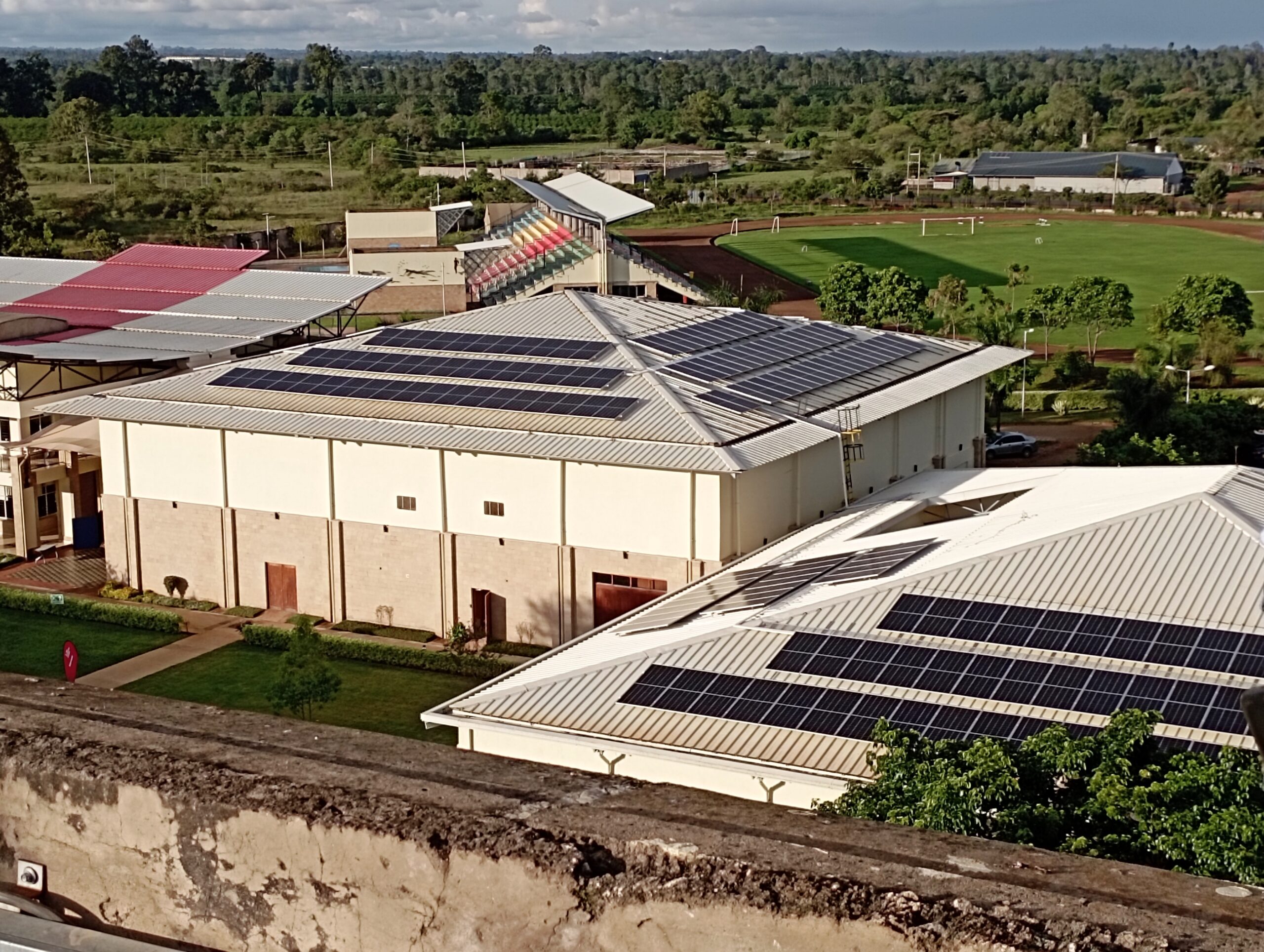
A total of 3,200 secondary schools are set to benefit from the solar energy programme under the new Memorandum of Understanding (MoU) undertaken between the Ministry of Education (MoE) and the Kenya Commercial Bank (KCB.
The senior schools spreadout in all the 47 counties are part of the initial bunch of the 9,000 learning institutions under the new CBE system targeting mainly the C2 and C3 categories.
Priority will also be given to schools in rural areas that are disadvantaged with access to electricity connections. With the adoption of the renewable energy, the learning institutions will be able to cover for digital learning which has been described as the fountain of the CBE system.
President William Ruto launched the two- year national programme recently when he officiated at Alliance Boys High School during the school’s 100 years of celebration.
The first phase which commenced in January 2025 will cover for the uninterrupted learning durations to be followed by seeking for solar cooking solutions.
ALSO READ;
Four Makueni Boys’ students qualify for East Africa debating championship
According to a renewable energy consultant involved in the programme within the North Rift Region and Western Kenya Mr Paul Watila, the partnership between the MoE and KCB had seen another 270 learning institutions last year piloted and added to the list of the beneficiaries of the project. Under the plan, the North Rift area will cover 180 schools while Western Kenya has been allocated 50 institutions.
Mr Watila said the programme which powered 100 per cent on the solar energy was a major shift from the use of unreliable fuel and fossils in the learning institutions with less or poor grid to electricity.
Under the programme, apart from the benefiting schools paying for the consumed energy at the end of every term, they were assured of the sustainability for the commodity 24 hours to facilitate studies especially for the ICT subjects.
Among the schools in Trans Nzoia County that have been captured within the project include Wiyeta Girls, Kolongolo Girls, Kabuyefwe Boys, St Angelica and Charles Academy, Holy Trinity Saboti, Namanjalala Boys and Geta Mixed.
ALSO READ;
Matili TTI to graduate 3004 as demand for polytechnic status intensifies
Others are Kipkekei Boys, Namandala Mixed, St Johns’ Makutano, Kapkoi Central Girls, Nakami Mixed, Bwake Boys, Kaplamai Senior, Nakami Friends and Bwake Girls.
Speaking in Kitale, Mr Watila explained that the connectivity of the alternative solar energy system to schools was a great relief to carbon health dangers exposed within the learning institutions and adjoining environment adding that it was within the adaption of the policy towards the global warming of climate change.
” This will also give the management of schools a relief to organize themselves for the settling of the bills that are averagely constant and paid after every three months of each term”, Mr Watila said.
By Abisai Amugune
You can also follow our social media pages on Twitter: Education News KE and Facebook: Education News Newspaper for timely updates.
>>> Click here to stay up-to-date with trending regional stories
>>> Click here to read more informed opinions on the country’s education landscape