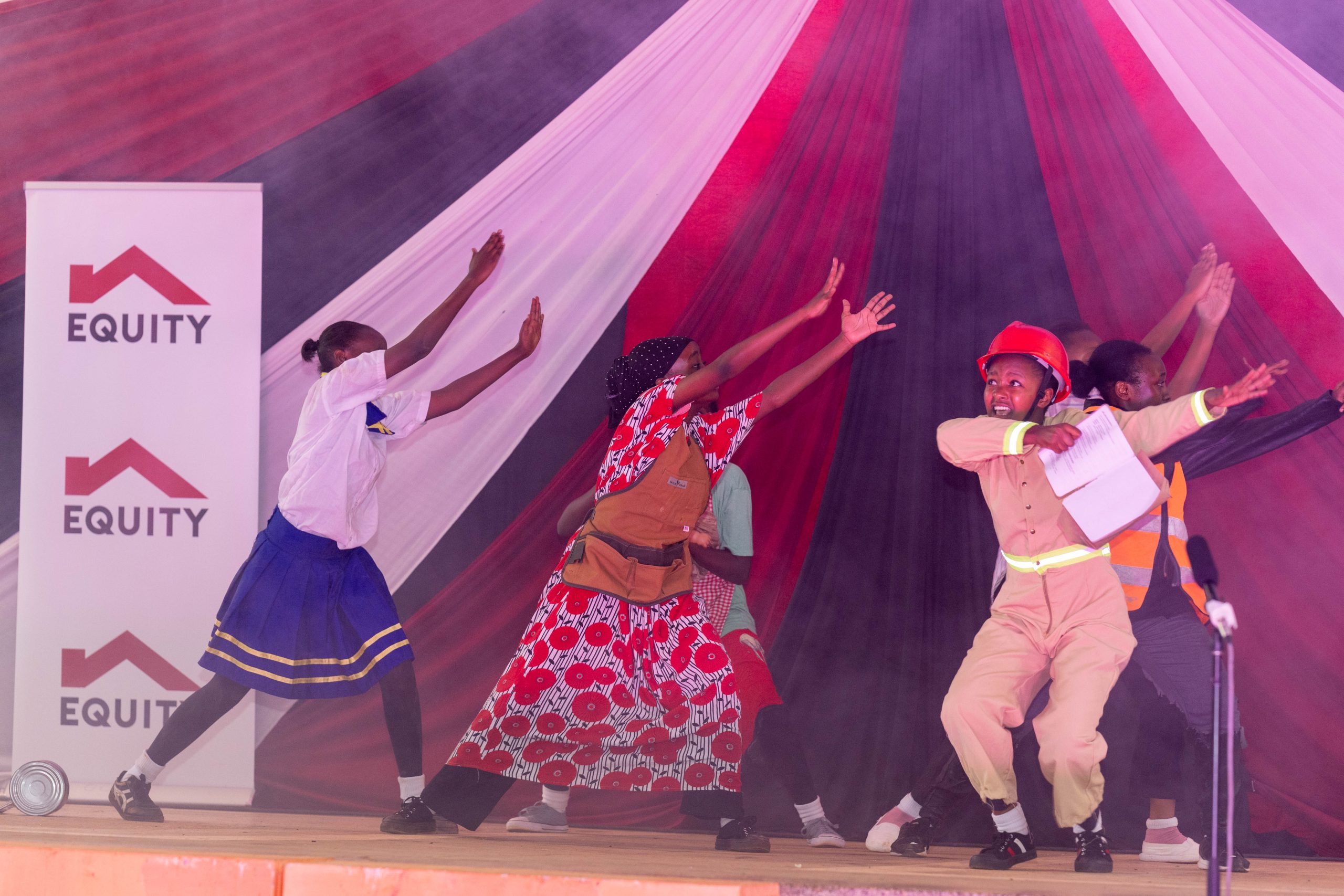
The curtain has risen on a new era of school drama in Kenya—an era defined not only by creativity, but by compliance.
The 2026 guidelines for the Kenya National Drama and Film Festival released by the government ahead of the event at Kagumo Teachers Training College in Nyeri County have fundamentally reshaped the stage, introducing strict rules that demand discipline, precision, and professionalism.
Yet, as schools adjust to this new order, a parallel narrative is unfolding: one of disqualifications, limitations, and increasingly cautious creativity.
Cases such as Moi High School Mbiruri and the constraints faced by Butere Girls High School have brought this reality into sharp focus. These are not obscure institutions struggling to find their footing; they are symbols of what school drama in Kenya has long represented—boldness, depth, and excellence. Their experiences under the new rules raise a critical question: are the reforms refining school theatre, or quietly restraining it?
For decades, drama festivals in Kenyan schools have been more than competitions. They have been platforms of expression, reflection, and sometimes resistance. Students have used the stage to explore themes of justice, morality, governance, education, and identity. Through satire, symbolism, and storytelling, they have held mirrors to society—often in ways that formal classroom settings cannot.
Schools like Butere Girls built a formidable reputation in this space. Their performances were known for emotional depth, layered narratives, and fearless engagement with real-life issues. Audiences did not just watch their plays—they experienced them. Their stage became a space where difficult conversations were not avoided, but confronted.
However, with this creative boldness came growing concern. Over time, some performances became excessively long, stretching audience attention and complicating adjudication. Cast sizes ballooned, sometimes turning the stage into a crowded spectacle rather than a focused artistic presentation. More significantly, there was a creeping tendency for some plays to drift into politically sensitive territory, raising questions about the role of school drama in a politically charged environment.
ALSO READ:
It is against this backdrop that the 2026 reforms were introduced.
At the heart of the new framework is a firm insistence on time discipline. Secondary school plays are now capped at 40 minutes, with similarly strict limits applied across other levels. These are not flexible guidelines; they are binding rules. A play that exceeds its allotted time risks being stopped mid-performance or penalized heavily.
This shift has had a profound impact on how drama is conceived and executed. Scriptwriters must now compress complex narratives into shorter formats. Scenes that once allowed for slow emotional build-up must be trimmed or eliminated. Dialogue must be sharper, more purposeful. Every second on stage must count.
On one hand, this has improved efficiency. Performances are now tighter, more focused, and easier to evaluate. On the other hand, it has introduced a sense of urgency that can undermine depth. Stories that require gradual development risk feeling rushed. Emotional arcs may not fully mature. The richness that once defined some productions is, in some cases, being sacrificed for the sake of compliance.
Closely linked to time discipline is the enforcement of cast size limits. Secondary schools are restricted to a maximum of 25 performers. This marks the end of an era where large ensembles dominated the stage. The intention behind this rule is clear: to encourage quality over quantity, and to ensure that every performer has a meaningful role.
For schools like Butere Girls, however, this has required a significant shift in approach. Their productions often thrived on strong ensemble dynamics, where multiple characters contributed to a layered narrative. With fewer performers, directors must now make difficult choices—condensing roles, merging characters, and reimagining scenes.
Yet, perhaps the most controversial aspect of the new rules is the blanket ban on political content. The directive is unequivocal: school drama must not engage in politics, whether directly or indirectly. This includes references to current leaders, governments, policies, or even symbolic representations that could be interpreted as political commentary.
In theory, this rule is meant to protect students and maintain the educational integrity of the festival. In practice, it has created a grey area that is difficult to navigate.
Many of the themes that drama naturally seeks to address—corruption, leadership, justice, inequality—are inherently linked to governance. Drawing a clear line between social commentary and political messaging is not always straightforward. What one director sees as a moral lesson, an adjudicator may interpret as a political statement.
It is within this ambiguity that a case like Moi High School Mbiruri emerges whereby the school was knocked out of the festival last year’s winner of the play category after satirically made reference to Singapore.
Similarly, schools like Butere Girls now find themselves navigating a narrow creative corridor. Their strength has always been their ability to tackle real issues with honesty and courage. Under the new rules, that courage must be carefully measured. The risk of crossing an invisible line is ever-present.
This has introduced a new dynamic into school drama: The fear of misinterpretation.
Directors and teachers are increasingly cautious. Scripts are reviewed multiple times, not just for clarity and impact, but for compliance. Lines are softened, metaphors adjusted, and themes reframed. In some cases, entire storylines are abandoned out of concern that they may be misunderstood.
The result is a subtle but significant shift in tone. Performances are becoming safer. They adhere to the rules, but sometimes at the cost of boldness. The edge that once defined school drama is, in some cases, being blunted.
Another critical factor behind disqualifications is the strict requirement for adherence to approved scripts. Every school must submit its script in advance for vetting. What is approved on paper must be replicated exactly on stage. Any deviation—whether through improvisation, added dialogue, or altered scenes—can attract penalties or disqualification.
This rule underscores a deeper concern: trust. Festival organizers want assurance that schools will not introduce prohibited content during performance. However, it also places a heavy burden on creative teams. Theatre, by its nature, is dynamic. Actors respond to audiences, adjust timing, and sometimes improvise to enhance impact. Under the new system, such flexibility is curtailed.
The stage, once a space of spontaneity, is now tightly controlled.
Equally stringent is the rule that only bona fide students may participate. The use of external actors, former students, or professionals is strictly prohibited. This ensures fairness and preserves the educational purpose of the festival. However, it also means that teachers must invest more time and effort in training learners to achieve high standards.
Beyond these structural considerations, plays can also be disallowed for inappropriate content. This includes offensive language, explicit scenes, or culturally insensitive portrayals. While these guidelines are necessary, their interpretation can vary, adding another layer of complexity.
What is becoming increasingly clear is that disqualification is no longer an exception—it is becoming part of the festival narrative. Schools are not only competing to win; they are striving to avoid mistakes. A single oversight can undo months of preparation.
Amid the introduction of new rules, critics argue that the strict enforcement risks stifling creativity. Drama, they contend, thrives on freedom—the freedom to explore, question, and provoke thought. When boundaries become too rigid, there is a danger that performances will lose their authenticity and emotional power.
Supporters of the reforms, however, offer a different perspective. They argue that discipline enhances creativity. By working within clear guidelines, students learn to refine their ideas, sharpen their scripts, and present their messages more effectively. Constraints, in this view, are not barriers but tools for excellence.
By Hillary Muhalya
You can also follow our social media pages on Twitter: Education News KE and Facebook: Education News Newspaper for timely updates.
>>> Click here to stay up-to-date with trending regional stories
>>> Click here to read more informed opinions on the country’s education landscape