There is no country in the world where it is legally mandatory for every citizen to learn technical skills. Yet, there are nations whose education systems are so deliberately structured around practical training that acquiring technical competence becomes almost inevitable.
In such countries, the question is not whether one should learn technical skills, but rather which skills one will master. The result is a workforce that is not only educated but also productive from the very moment individuals step out of school.
One of the most striking features of these systems is how seamlessly they connect education to employment. In countries like Germany and Switzerland, the transition from classroom to workplace is not a distant dream—it is a lived reality. These nations have perfected the art of blending theory with practice through structured apprenticeship programmes. Students split their time between school and real work environments, learning not just concepts but also how to apply them using real tools of the trade. By the time they complete their education, they are already familiar with the demands of the workplace, employers’ expectations, and the discipline required to succeed.
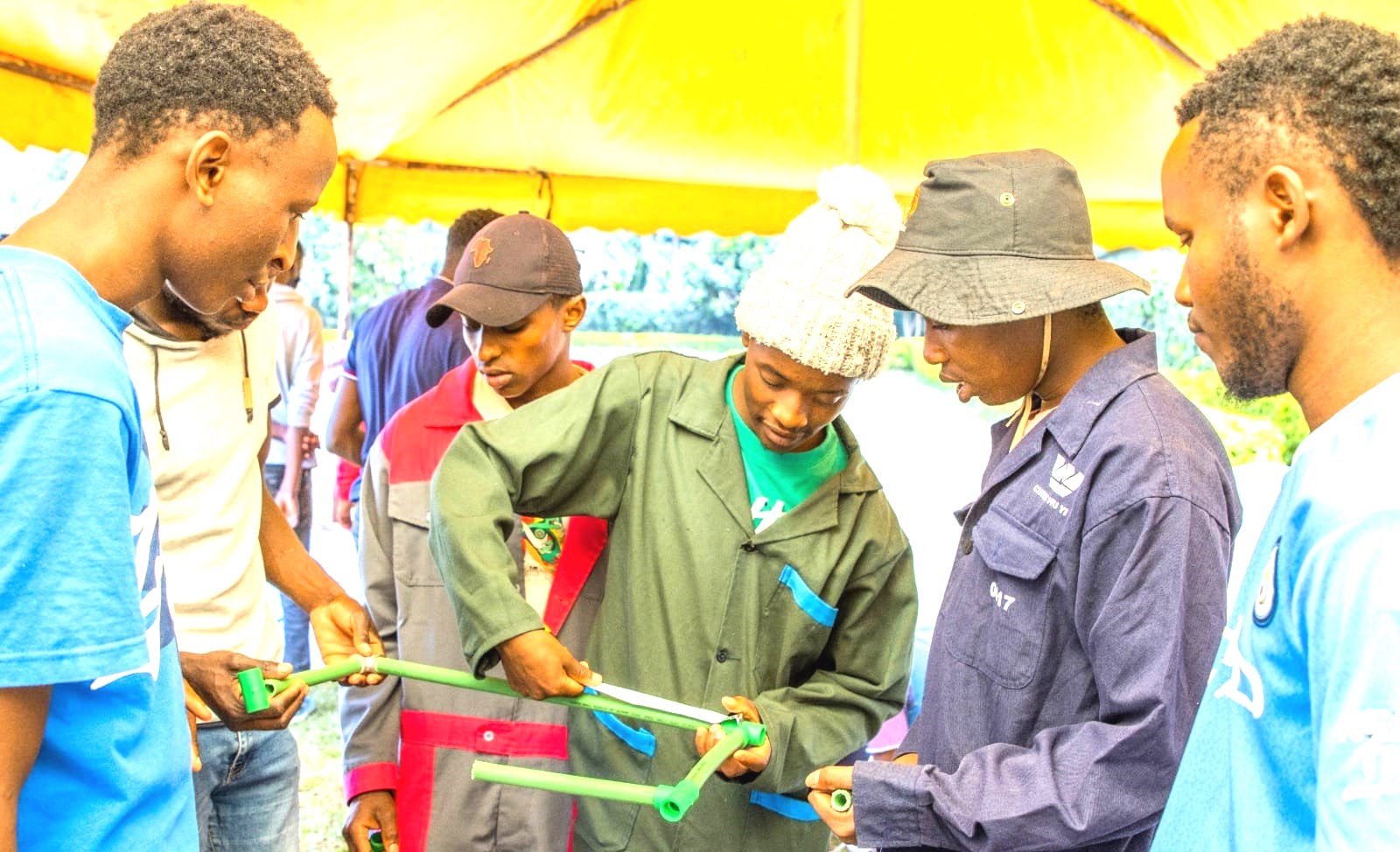
How much experience have you had with simple technical tools such as handsaws, the try square, the spirit level, and the plumb line? How often have you handled pliers, tightened bolts with spanners, or worked with a pipe wrench to fix a simple problem? These are not just tools; they are the foundation of practical knowledge and self-reliance. For many learners, the answer is uncomfortable. Despite spending years in school, they leave without ever holding these basic tools, let alone using them confidently. They can explain theories, pass examinations, and write long essays, yet struggle with simple hands-on tasks that define everyday life. This gap between knowledge and practice is where many education systems fall short.
In contrast, learners in countries such as Germany and Switzerland interact with tools from an early age. A student does not just learn about measurement—they use a spirit level to align surfaces. They do not merely study angles—they apply a try square to achieve precision. They do not just read about construction—they handle handsaws, cut materials, and build real structures. Exposure to tools transforms abstract learning into lived experience, building confidence and competence that cannot be gained through theory alone.

This approach produces a powerful outcome: young people begin earning almost immediately after school. In fact, many apprentices in these countries receive stipends during their training, so they do not have to wait until graduation to achieve financial independence. Whether it is handling spanners in automotive workshops, using welding machines in fabrication, or operating precision instruments in engineering plants, learners are immersed in practical environments that prepare them for immediate productivity. The dignity of earning while learning instils confidence, responsibility, and a sense of purpose.
The same philosophy is evident in Singapore, a country that has intentionally aligned its education system with industry’s needs. Through institutions such as the Institute of Technical Education, learners are equipped with hands-on skills using modern equipment and technology. Students train with computer-aided design (CAD) software, electrical testing devices, refrigeration gauges, and digital diagnostic tools. By the time they graduate, they are not just knowledgeable—they are operational. They can step into a workshop, hotel, factory, or tech environment and begin delivering results from day one.
What makes this model particularly powerful is its respect for technical careers. In many societies, there has long been a misguided belief that success is only found in white-collar professions. However, countries that prioritise technical education have shattered this myth. A skilled electrician working with multimeters and wiring kits, a mechanic using diagnostic scanners and hydraulic jacks, or a carpenter handling saws, drills, and planers is not viewed as less accomplished than a university graduate. Instead, they are recognised as essential contributors to the economy. This cultural shift plays a crucial role in encouraging young people to embrace technical pathways without stigma or hesitation.
In Finland, the education system reinforces this balance by giving equal weight to academic and vocational tracks. Students are guided based on their strengths and interests, and those who pursue technical paths are exposed to high-quality training environments. Workshops are well-equipped with tools such as 3D printers, metal lathes, woodworking machinery, and robotics kits. Learners are encouraged to innovate, design, and solve real-world problems using these tools, making education both practical and creative.
Meanwhile, China has increasingly recognised the strategic importance of technical skills in driving economic growth. The country has invested heavily in equipping vocational institutions with modern machinery and industrial tools. Students train using CNC machines, automated production systems, and advanced electronics equipment. This ensures that they are prepared not just for today’s jobs but also for the industries of the future.
At the heart of all these examples lies a simple but profound truth—technical skills, supported by the right tools, shorten the distance between education and earning. A student trained in carpentry with access to basic tools such as hammers, saws, chisels, measuring tapes, and a try square does not need to wait for formal employment. They can begin making furniture, repairing structures, or taking on small construction jobs within their community. An electrical trainee with pliers, testers, and wiring tools can start offering installation and repair services immediately. A mechanic with spanners, jacks, and diagnostic devices can begin servicing vehicles and earning an income.

These tools are not just instruments—they are gateways to independence. They transform knowledge into action and ideas into income. With even a modest set of equipment, a skilled individual can create value and build a livelihood. This is what makes technical education so powerful: it equips learners not only with skills but also with the means to apply them.
This early entry into income-generating activities has far-reaching implications. It fosters financial independence, reduces youth unemployment, and encourages entrepreneurship. Many technically skilled individuals start small, using basic tools, and gradually expand their operations. Over time, they invest in more advanced equipment, hire additional workers, and grow into established businesses.
Equally important is the confidence that comes with competence. A young person who knows how to use tools effectively—whether physical tools like handsaws, plumb lines, and pipe wrenches or digital tools like software and diagnostic systems—carries a sense of assurance that they can always find or create opportunities. They are not limited by the availability of formal jobs; they are empowered to generate their own income.
The contrast with purely academic systems is often stark. Students may spend years studying theory without ever handling the tools required in their fields. When they eventually enter the job market, they may struggle to adapt due to a lack of practical experience. Employers, on the other hand, are increasingly looking for individuals who can demonstrate hands-on ability. Technical education fills this gap by ensuring that learners are not just thinkers but doers.
It is important to emphasise that promoting technical skills does not mean abandoning academic learning. The most effective systems integrate both, producing individuals who can think critically and work practically. Knowledge and tools must go hand in hand. A well-trained technician understands not only how to use a tool but also why it works the way it does.
For countries seeking to empower their youth and strengthen their economies, the lesson is clear. Investment in technical education must go beyond classrooms and textbooks. It must include workshops, equipment, and exposure to real working environments. When learners have access to the right tools, their potential is unlocked.
READ ALSO: Youth encouraged to embrace technical skills as CBET gains momentum
Young people no longer leave school uncertain and dependent. They step into the world equipped, confident, and ready to contribute. With tools in their hands and skills in their minds, they do not wait for opportunities—they create them. They turn effort into income, knowledge into productivity, and ambition into reality.
Ultimately, technical skills, supported by practical tools, restore the true purpose of education. They make learning meaningful, relevant, and immediately useful. They ensure that education is not just about passing exams but about building a life. And in doing so, they give young people the greatest gift of all—the ability to stand on their own feet from the very first day after school.
By Hillary Muhalya
You can also follow our social media pages on Twitter: Education News KE and Facebook: Education News Newspaper for timely updates.
>>> Click here to stay up-to-date with trending regional stories
>>> Click here to read more informed opinions on the country’s education landscape
>>> Click here to stay ahead with the latest national news.v