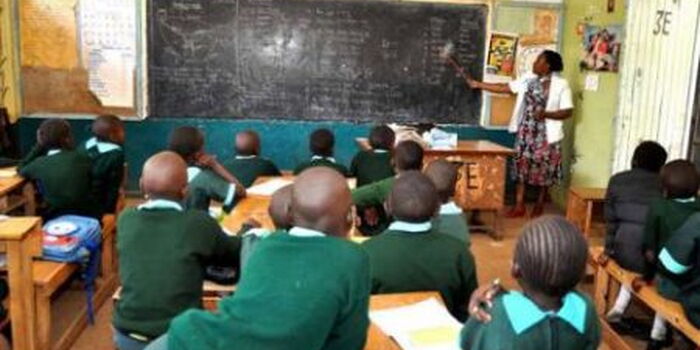
Kenya is managing to keep more children in school than its East African neighbours, according to findings released in the 2026 Global Education Monitoring (GEM) Report by UNESCO.
The study highlights Kenya’s comparatively stronger performance in enrolment and completion rates, even as the wider region struggles with dropouts, limited early learning access, and uneven progression through the education system.
Globally, the report estimates that 273 million children, adolescents, and youth were out of school in 2024, despite decades of expansion in education systems. Nearly half of these learners are in Sub-Saharan Africa, underscoring the scale of exclusion in the region. While 1.4 billion learners were attending primary and secondary school worldwide, millions remain outside classrooms, reflecting persistent challenges despite increased enrolment.
Within East Africa, Kenya records relatively better outcomes in primary education access. About 15 per cent of children of primary school age are not in school, compared to 14 per cent in Uganda, 17 per cent in Tanzania, and a staggering 64 per cent in South Sudan. The disparities highlight uneven access across neighbouring countries.
ALSO READ:
KMTC Board, management convene for strategic workshop on institutional growth
Kenya also leads in progression through the education system. Around 87 per cent of children complete primary school, compared to 76 per cent in Tanzania, 69 per cent in Rwanda, and about 30 per cent in Uganda. Additional UNESCO data shows Kenya nearing universal primary completion, with 99 per cent of boys and 100 per cent of girls finishing primary education. In contrast, Uganda continues to face retention difficulties, with completion rates of 52 per cent for boys and 54 per cent for girls.
The report further draws attention to gaps at earlier and later stages of education across East Africa. Less than a quarter of children are enrolled in pre-primary education, while only about two-thirds complete secondary school. Globally, progress in improving education transitions has slowed in recent years. Between 1985 and 2000, transition rates rose from 78 per cent to 88 per cent, but gains have since stalled.
Cost remains a barrier in several countries. In Uganda, public education spending dropped to 6.6 per cent of total government expenditure in 2024/25, while private institutions dominate urban centres such as Kampala, where 84 per cent of schools from pre-primary to secondary level are privately run.
Kenya, meanwhile, has expanded education options through private institutions and distance learning platforms, helping to improve access. However, UNESCO cautions that diversification, while useful, can also deepen inequality if not properly managed, as learners from low-income households may still face barriers despite more schooling options.
“The countries that made the fastest gains combined steady investment with maintaining core policies and gradually adjusting them in light of emerging evidence and experience,” the report notes. It calls for coordinated policy measures, stronger legal frameworks, improved school infrastructure, and targeted financial support to ease the burden on disadvantaged learners.
RELATED:
UNESCO report warns 273 million children out of school globally as exclusion crisis deepens
UNESCO concludes that consistent investment and balanced reforms remain key to sustaining progress, warning that without renewed focus, improvements in access and completion may continue to stall across the region.
By Masaki Enock
You can also follow our social media pages on Twitter: Education News KE and Facebook: Education News Newspaper for timely updates.
>>> Click here to stay up-to-date with trending regional stories
>>> Click here to read more informed opinions on the country’s education landscape