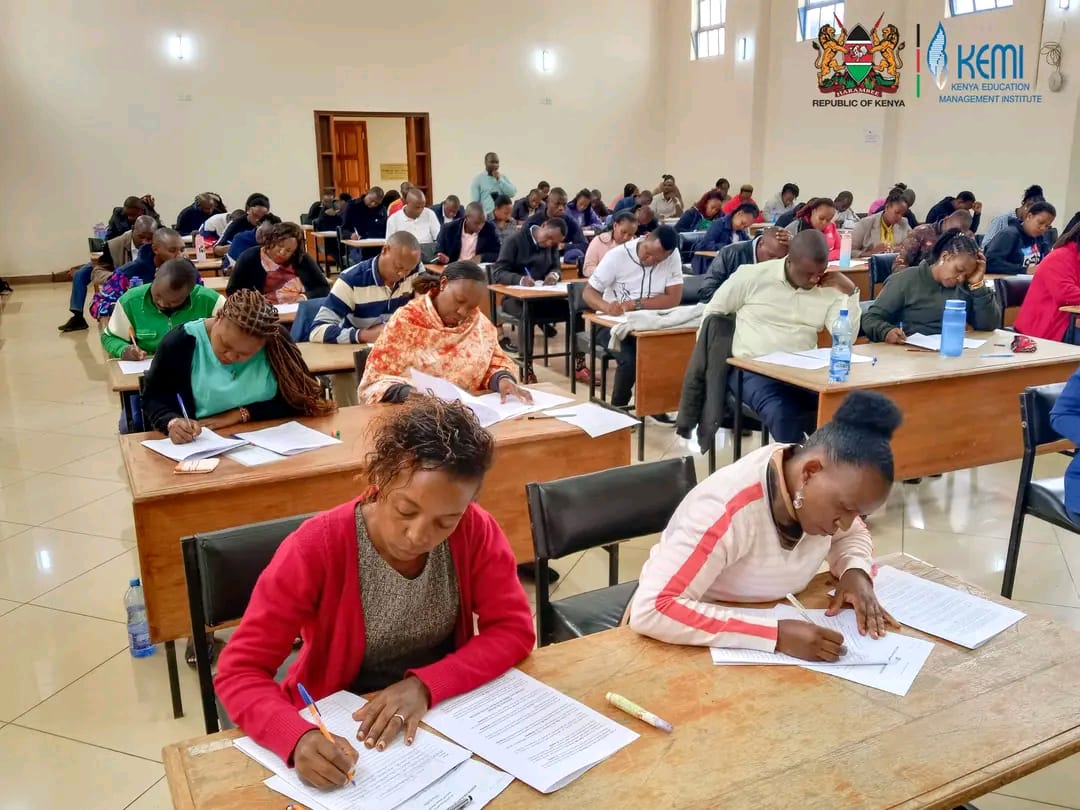
Across Kenya, education leaders are sitting the Diploma in Education Leadership and Management (DELM) examinations. Administered by the Kenya Education Management Institute (KEMI), these assessments are part of a rigorous year-long professional programme designed to strengthen leadership and management competencies among school leaders and aspiring education managers.
For many candidates, this is the culmination of months of study, reflection, and practical application in areas that are reshaping Kenya’s educational landscape. On this day, candidates are assessed in two pivotal papers: Leadership in ICT Integration in Education and Leadership in Curriculum Delivery. These subjects reflect the demands of 21st-century school leadership and the expectations placed on principals, deputy heads, heads of departments, and senior teachers.
The DELM programme is one of KEMI’s flagship initiatives, structured around eight core modules and an Action Research Project. Participants explore education law and reforms, institutional resource management, leadership in science and innovation, child-friendly school strategies, and guidance and counselling. The Action Research Project requires candidates to identify a real challenge in their institution, design an intervention, and evaluate its impact — ensuring theory translates into practice.
Each module builds a specific dimension of leadership competence, from understanding legal and policy frameworks to implementing practical strategies for inclusive and effective school environments.
ALSO READ:
TSC directs senior schools nationwide to nominate KEMIS champion teachers
Why These Subjects Matter
Leadership in ICT Integration in Education
The integration of Information and Communication Technology in schools has evolved from a desirable innovation to a core requirement for effective teaching and learning. This module prepares leaders to drive digital transformation, from adopting e-learning platforms and digital content to ensuring that teachers and students are confident ICT users. Schools increasingly employ blended and digital learning practices, making the ability to lead and sustain ICT initiatives a critical leadership skill.
The focus goes beyond device usage, emphasising strategic leadership, designing ICT-enabled learning activities, supporting staff adaptation to new technologies, and aligning technology initiatives with the school’s vision for quality education.
Leadership in Curriculum Delivery
Curriculum leadership lies at the heart of a school’s instructional core. This module encourages candidates to examine how curriculum decisions are made and implemented, ensuring alignment with national policy and fair, robust assessments that reflect learning goals. With the introduction of competency-based curriculum reforms and continuous assessment models, the demand for leaders capable of translating policy into practice has never been higher.
Together, these modules highlight the need for leaders who are not only administrators but also instructional leaders and individuals who use technology and curriculum coherence to drive meaningful learning outcomes.
As a semi-autonomous agency under the Ministry of Education, KEMI builds management capacity, conducts research, and offers consultancy services. Its portfolio includes specialised diplomas in guidance and counselling, short courses in financial management, ICT integration, project management, and customised training for county directors, ECDE managers, and boards of management.
ALSO READ:
From honour to hazard: Why teachers are reluctant to administer KNEC exams
In addition to diplomas in education leadership, it provides specialised diplomas such as Guidance and Counselling, giving staff deeper expertise to support learners’ psychosocial well-being. Short and specialised courses further develop practical skills for various educational roles,
KEMI also coordinates county-level and customised training for County Directors of Education, ECDE centre managers, Boards of Management, and quality assurance officers, ensuring leadership capacity is strengthened at all levels of the education system.
While exact figures for the current DELM exam cycle are not publicly released, previous years show broad engagement. In 2025, assessments were conducted across multiple centres nationwide, drawing a large cohort of education leaders who had undergone intensive year-long training. Participants, ranging from urban principals to heads of rural schools, bring diverse experiences, but share a common belief in the transformative power of professional leadership training. Graduates report measurable improvements in teacher supervision, resource management, and community engagement.
Voices from the field underscore this impact. One candidate noted, “The DELM course has transformed my view of leadership. I now understand how policy connects to practice. I am confident about using ICT and improving curriculum delivery in ways that genuinely enhance learning.” A coastal principal highlighted the value of the Action Research Project: “This wasn’t just theory. I implemented a strategy to improve teacher collaboration, monitored the results, and documented the impact on student performance. That experience was invaluable.”
Challenges remain, particularly in rural schools where ICT adoption is hindered by limited infrastructure and unreliable internet. Yet, KEMI equips leaders with strategies to mobilize resources and innovate within constraints, turning obstacles into opportunities.
ALSO READ:
Why Wilson Sossion is still not fully out of the woods ahead of KNUT poll
As Kenya’s education system evolves through competency-based reforms, digitization, and heightened accountability, the role of school leaders grows ever more critical. By investing in leadership training, KEMI ensures that education managers are not just administrators but visionaries capable of shaping inclusive, resilient, and high-performing institutions
Through its training and examinations, KEMI continues to shape the learning journeys of thousands of students, inspiring teachers, and cultivating school communities that thrive. Therefore, helping Kenya’s education leaders lead with vision, competence, and impact.
By Hillary Muhalya
You can also follow our social media pages on Twitter: Education News KE and Facebook: Education News Newspaper for timely updates.
>>> Click here to stay up-to-date with trending regional stories
>>> Click here to read more informed opinions on the country’s education landscape