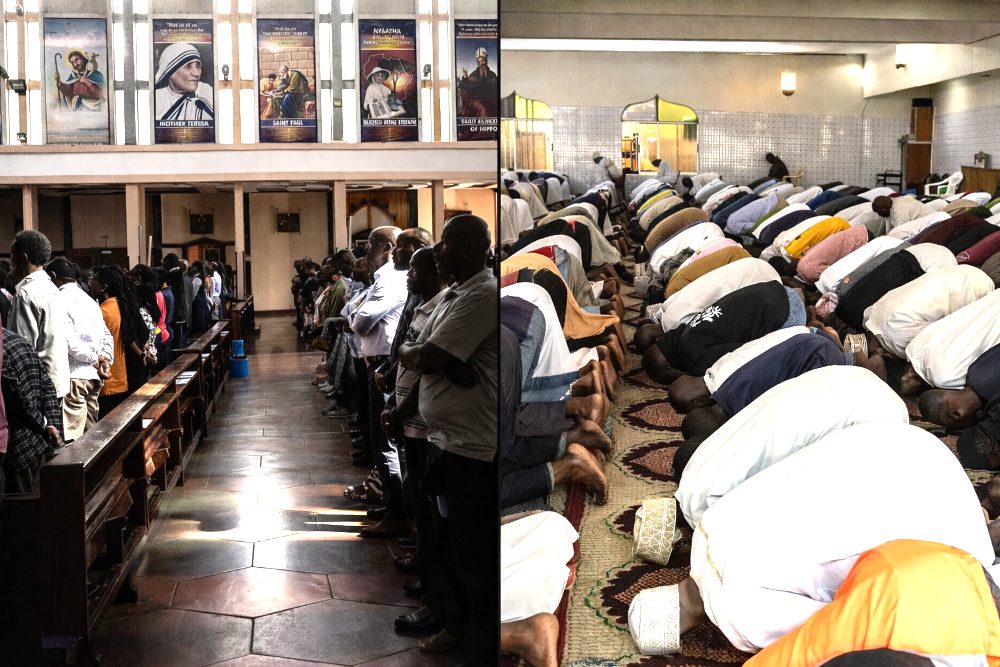
In a rare and beautiful rhythm of the calendar, the sacred seasons of Lent and Ramadan often overlap or draw close to one another. During such moments, the world witnesses an extraordinary spiritual convergence: millions of Catholic Church faithful entering forty days of prayer, fasting, and almsgiving, while the global Muslim community observes a month of fasting from dawn to sunset, intensified devotion, and charity.
Though rooted in distinct theological traditions, these seasons share striking parallels. They invite reflection not only within each faith but also across religious boundaries. In a fractured world often marked by suspicion and division, this convergence offers profound lessons on discipline, humility, sacrifice, and coexistence.
- Fasting is a universal language of discipline.
At the heart of both Lent and Ramadan lies fasting. For Catholics, Lent recalls the forty days Jesus spent fasting in the wilderness. For Muslims, Ramadan commemorates the month in which the Qur’an was revealed. In both traditions, fasting is not merely the denial of food; it is a spiritual discipline meant to reorder the soul.
Fasting teaches self-control in an age of excess. It reminds believers that human beings are more than appetites. In societies increasingly driven by consumption—of food, media, power, and material goods—these sacred seasons proclaim a countercultural truth: restraint strengthens the spirit.
The shared commitment to fasting demonstrates that discipline is not oppression but liberation. By voluntarily limiting themselves, believers reclaim mastery over impulses. The lesson here transcends religion. Communities flourish when individuals practice restraint—whether in speech, spending, or the use of authority.
- Prayer as a reorientation of priorities.
Both seasons intensify prayer. Catholics gather for Stations of the Cross, daily Mass, and personal devotion. Muslims increase nightly prayers (Taraweeh), Qur’anic recitation, and supplication.
In both cases, prayer reorients life. It shifts focus from the horizontal pressures of work, politics, and social competition to the vertical dimension of accountability before God. Prayer humbles the believer. It acknowledges dependence on a higher power and cultivates gratitude.
In a noisy world saturated with information and distraction, these seasons model the value of silence and contemplation. Nations grappling with moral confusion might draw from this: decisions shaped by reflection are often wiser than those driven by impulse.
- Charity is the fruit of spiritual renewal.
Lent emphasises almsgiving. Ramadan institutionalises charity through Zakat and Sadaqah. Both traditions insist that authentic spirituality must overflow into generosity.
Hunger during fasting awakens empathy. When one feels thirst or emptiness, the suffering of the poor becomes less abstract. Charity ceases to be a distant moral obligation and becomes a personal urgency.
READ ALSO:
This convergence underscores a powerful social lesson: spiritual renewal must translate into social responsibility. Faith that does not care for the vulnerable risks becoming hollow ritual. Whether through feeding programs, hospital visits, or educational sponsorships, both communities demonstrate that devotion and justice are inseparable.
For multi-religious societies like Kenya, this shared commitment to charity can inspire interfaith collaboration. When churches and mosques partner to address hunger, unemployment, and inequality, faith becomes a force for national healing rather than division.
- Repentance and moral accountability.
Lent calls Catholics to repentance and confession. Ramadan is likewise a season of seeking forgiveness and moral purification. Both traditions recognise human fallibility and the need for renewal.
In public life, accountability is often resisted. Yet these sacred seasons teach that admitting wrongdoing is not weakness but strength. A society that embraces repentance becomes capable of reform. Leaders who acknowledge mistakes build trust.
The lesson is timely: communities flourish when they cultivate cultures of honesty and correction rather than denial and blame.
- Shared humanity beyond doctrinal differences.
While theological distinctions between Christianity and Islam remain significant, Lent and Ramadan reveal a shared moral grammar. Both affirm that life has purpose beyond material gain. Both teach that sacrifice refines character. Both elevate compassion.
This convergence invites interfaith respect. When a Catholic neighbour understands why a Muslim colleague is fasting – or when a Muslim friend appreciates the meaning of Lenten sacrifice – mutual suspicion gives way to empathy.
Religious literacy strengthens social harmony. It reminds citizens that diversity need not threaten unity. Instead, it can enrich it.
- The power of community.
Both Lent and Ramadan are communal experiences. Families wake before dawn to prepare Suhoor. Catholic parishes gather for communal worship and service. These rituals strengthen bonds.
Modern life often isolates individuals. Digital connectivity has not always translated into an authentic community. Yet these seasons demonstrate that shared sacrifice deepens belonging. Eating together after sunset or praying together in church creates solidarity.
Societies fractured by ethnic or political rivalry might rediscover cohesion through shared moral commitments and communal rituals.
- Hope through sacrifice.
Ultimately, both seasons point beyond themselves. Lent culminates in Easter—a celebration of resurrection and hope. Ramadan concludes with Eid al-Fitr, a festival of joy and gratitude. Sacrifice gives way to celebration. Fasting yields to feasting.
This rhythm teaches a vital lesson: hardship endured with purpose produces renewal. Whether in personal struggles or national challenges, endurance anchored in hope transforms suffering into growth.
As Catholics journey through Lent and Muslims observe Ramadan, the convergence of these sacred seasons offers more than parallel rituals. It provides a shared witness to the enduring power of faith in shaping character and community.
In a time when religion is sometimes portrayed as a source of conflict, this moment reminds us that faith can also cultivate discipline, compassion, humility, and solidarity. The lessons drawn from these seasons extend beyond church and mosque walls. They speak to classrooms, parliaments, markets, and homes.
Perhaps the greatest lesson is this: when communities commit to self-examination, generosity, and prayerful reflection, they become better neighbours and better citizens. In honouring their distinct traditions, Catholics and Muslims together illuminate a path toward a more compassionate and morally grounded society.
The convergence of Lent and Ramadan is therefore not merely a calendar coincidence. It is a quiet testimony that amid diversity, shared virtues can build bridges – and that through sacrifice, humanity discovers its highest calling.
By Ashford Kimani
Ashford teaches English and Literature in Gatundu North Sub-county and serves as Dean of Studies.
You can also follow our social media pages on Twitter: Education News KE and Facebook: Education News Newspaper for timely updates.
>>> Click here to stay up-to-date with trending regional stories
>>> Click here to read more informed opinions on the country’s education landscape