A school bus is not just a vehicle. It is a moving promise. A promise to parents that their children will leave home safely and return safely. A promise to learners that their journey to knowledge will not be interrupted by preventable accidents, mechanical failures, or poor planning. A promise to the community that the institution values life, responsibility, and long-term vision.
For many schools, purchasing a bus is one of the most significant capital investments they will ever make. Properly selected and well-maintained, it can serve faithfully for ten to fifteen years. Yet too often, institutions rush into the decision driven by excitement, competition, or parental pressure. Later, reality sets in—rising maintenance costs, regulatory penalties, mechanical breakdowns, and financial strain. What was meant to symbolise progress becomes a burden.
Selecting the right school bus demands sober judgment and strategic foresight. It is not about paintwork, branding, or ceremony during commissioning. It is about safety, model suitability, fuel efficiency, spare parts availability, durability, compliance, and long-term sustainability.
Safety must stand at the centre of the decision. Before administrators discuss seating capacity or price, they must interrogate safety features. A modern bus should be equipped with an Anti-lock Braking System (ABS) to prevent skidding, especially during rainy seasons. High seatbacks with proper padding reduce the risk of injury during sudden braking. Seat belts, whether lap belts or three-point harnesses, are increasingly essential. Emergency exits at the rear, sides, and roof must be functional and accessible. Fire extinguishers and first aid kits are not decorative accessories; they are lifesaving tools.
In today’s environment, GPS tracking systems and CCTV cameras are no longer luxuries. They enhance accountability and reassure parents. A GPS tracker ensures routes are monitored and speed limits are observed. Speed governors, required under national transport regulations, protect learners and shield institutions from legal consequences. A bus that meets inspection and insurance requirements, and has proper school markings, demonstrates seriousness and professionalism.
Yet beyond safety features lies the technical backbone of the investment: the model.
The bus model must align with the school’s context. In Kenya, brands such as Isuzu FRR and NQR series, Toyota Coaster, Mitsubishi Fuso Rosa, and Hino 300 or 500 series dominate because they have proven reliable under local conditions. But popularity alone is not enough. Suitability is key.
A 29-seater Toyota Coaster may serve a small urban school efficiently, manoeuvring through tight streets with relative ease. A growing institution in a rural or hilly region may require a 46-seater or 67-seater Isuzu or Hino model with more substantial torque and an engine capacity of 5.0 to 7.0 litres, producing approximately 130 to 210 horsepower. That power ensures the bus climbs steep terrain without strain and carries full loads without overheating.
Capacity planning must look three to five years ahead. Buying a bus that is too small leads to congestion and regulatory violations. Buying one that is excessively large inflates fuel and operational costs. Strategic enrollment projections must guide the decision.
Fuel efficiency is where financial wisdom is either exercised or neglected. Diesel consumption among school buses varies significantly. Older or heavily loaded buses may average four to five kilometres per litre. Newer, efficient models can achieve six to eight kilometres per litre. That difference appears modest until calculated over time.
READ ALSO:
One man stood firm: How Kisumu resident saved children’s home from looters
Consider a bus that covers 120 kilometres daily. At 4 km/L, it consumes 30 litres per day. At 7 km/L, it uses about 17 litres. That is a difference of 13 litres daily. At roughly KSh 200 per litre, the institution spends about KSh 2,600 more each day on the less efficient bus. Over 200 school days, that equals more than KSh 500,000. Over the past 10 years, the difference has surpassed KSh 5 million. Fuel efficiency is not a minor statistic; it is a decade-long financial determinant.
Spare parts availability and service ecosystem follow closely. A bus that remains grounded for weeks waiting for imported components disrupts learning schedules and erodes parental confidence. Established brands such as Isuzu and Toyota enjoy widespread distribution of spare parts and familiarity among mechanics across countries. Routine service items such as oil filters, brake pads, clutch components, and suspension parts are accessible. Oil changes may be required every 5,000 to 10,000 kilometres. Brake pads may last between 30,000 and 50,000 kilometres, depending on driving conditions. Predictable maintenance cycles allow schools to budget accurately.
Durability ties all factors together. A well-maintained bus from a reputable manufacturer can last 10 to 15 years or more. Durability depends on strict preventive maintenance, proper driving habits, avoiding overloading, and promptly repairing minor faults. Storage conditions also matter. Exposure to harsh weather accelerates corrosion and wear.
Equally important is body fabrication quality. Many buses are purchased as chassis and then fitted locally. Poor welding, weak reinforcement, or inadequate rust protection can compromise safety long before the engine fails. A robust body structure must match a strong chassis.
The question of new versus second-hand also demands caution. A new bus offers warranty coverage and minimal initial maintenance but requires higher capital. A second-hand option reduces upfront costs but carries the risk of hidden mechanical defects or tampered mileage. If purchasing used, schools must insist on thorough mechanical inspection and verified service history.
Security considerations have expanded beyond road safety. CCTV deters misconduct. GPS enhances route transparency. Panic buttons and driver monitoring systems add layers of protection. Parents today expect evidence of oversight.
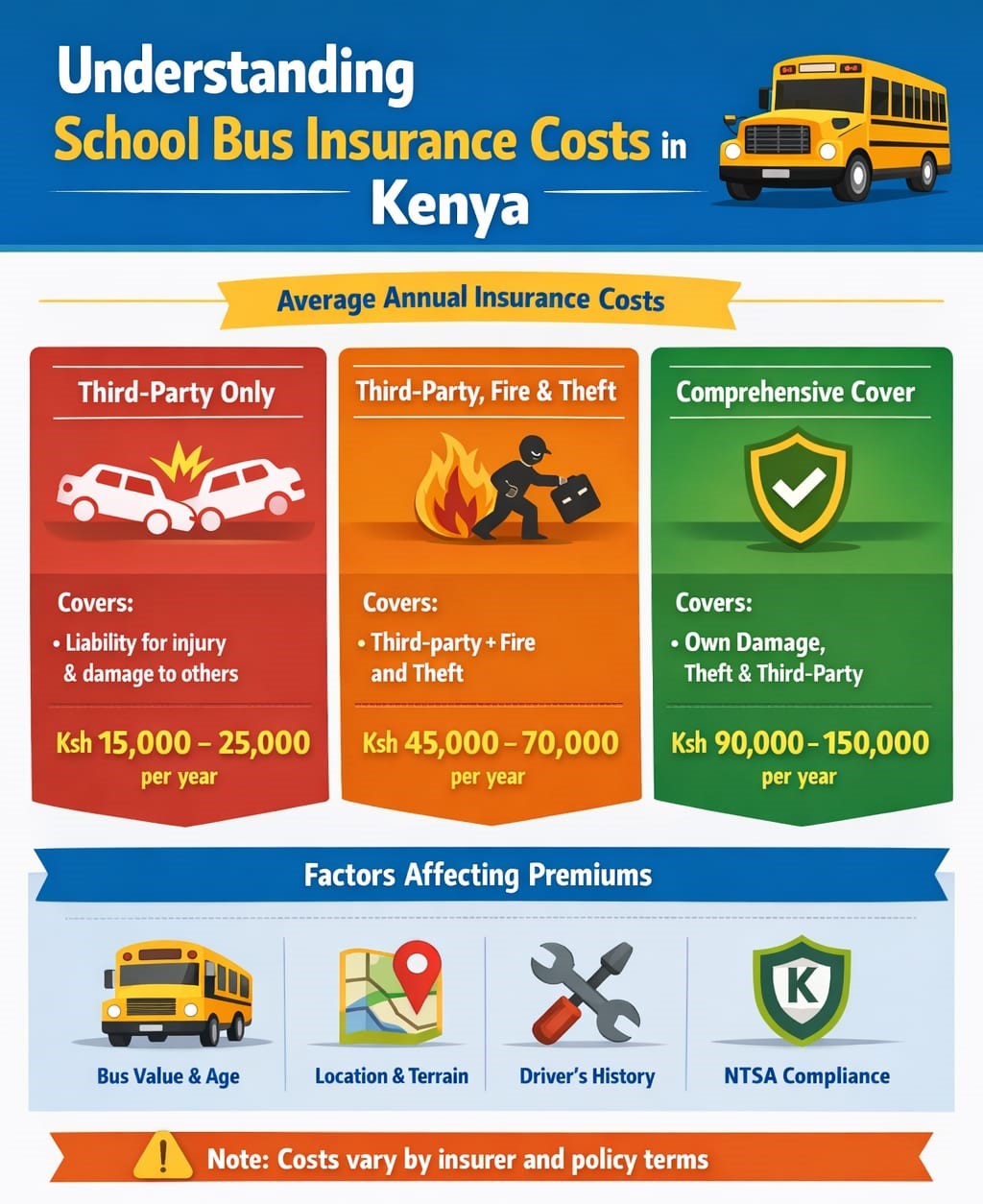
Budgeting must be comprehensive. Beyond purchase price, schools must account for insurance premiums, painting in prescribed school bus colours, installation of tracking systems and speed governors, recruitment and training of drivers, and ongoing maintenance. Asset financing options such as bank loans or SACCO facilities may assist, but institutions must avoid overstretching their cash flow.
The human factor remains decisive. Even the most advanced bus cannot compensate for a reckless driver. Schools must recruit experienced drivers with clean records and defensive driving certification. Continuous training reinforces safety culture. Courtesy and patience reflect the institution’s values.
Ultimately, a school bus carries more than students. It carries institutional reputation and parental trust. Every morning, ignition represents responsibility. Every afternoon return represents a fulfilled promise.
Wheels of steel may appear ordinary. But in education, they become moving guardians of young lives. Choosing the right bus is not merely mechanical or financial. It is moral and strategic. When administrators weigh model suitability, fuel efficiency, spare parts ecosystem, durability, safety compliance, and long-term cost, they are not simply purchasing a mode of transport. They are safeguarding dreams seated in neat rows, heading toward classrooms where futures are shaped.
A wise purchase strengthens a school for a decade or more. A careless one drains resources and confidence. In the end, the bus that pulls out of the gate each morning must embody reliability, foresight, and unwavering commitment to protection.
That is the true meaning of wheels of trust.
By Hillary Muhalya
You can also follow our social media pages on Twitter: Education News KE and Facebook: Education News Newspaper for timely updates.
>>> Click here to stay up-to-date with trending regional stories
>>> Click here to read more informed opinions on the country’s education landscape